About Nesta
We are Nesta, the UK's innovation agency for social good. We design, test and scale solutions to society's biggest problems. Our three missions are to give every child a fair start, help people live healthy lives and create a sustainable future where the economy works for both people and the planet.
For over 20 years, we have worked to support, encourage and inspire innovation.
We work in three roles: as an innovation partner working with frontline organisations to design and test new solutions, as a venture builder supporting new and early stage businesses and as a system shaper creating the conditions for innovation.
Harnessing the rigour of science and the creativity of design, we work relentlessly to change millions of lives for the better.
Find out more at nesta.org.uk
If you'd like this publication in an alternative format such as Braille or large print please contact us at [email protected]
Authors
Dr Filippo Bianchi (Nesta, BIT), Dr Jonathan Bone (Nesta), Filip Murar (BIT), Jovita Leung (BIT), James Farrington (BIT), Stefan Kelly (Nesta, BIT), Dr Abigail Mottershaw (BIT).
Summary
Obesity is one of the biggest health challenges in the UK. The majority of adults in England are overweight, a condition that leads to serious health problems and huge costs to the NHS, . Most people would like to keep to a healthy weight but this has become extremely difficult in a world that constantly pushes us towards eating too much.
At the innovation charity Nesta we aim to reverse this trend by ensuring that the way in which food options are presented to us does not push us to consume too much food and too many unhealthy products. As part of this mission, we are exploring how to promote lower-calorie foods on delivery apps such as Deliveroo and UberEats.
Takeaways can be a great treat but tend to contain many more calories than meals cooked at home and are linked with higher risks of gaining too much weight, , . So what could delivery apps do to enable us to continue enjoying our takeaways whilst taking steps to protect our health?
Behavioural sciences suggest that people are more likely to select options that are presented prominently in online shops, irrespective of our food preferences, . In our latest project with the Behavioural Insights Team and the University of Oxford, we explored if simply repositioning lower-calorie foods more prominently on delivery apps could help people to purchase fewer excess calories without the need to remove less healthy options.
We invited more than 7,000 adults to do a hypothetical food order using one of four versions of a simulated food delivery app and compared the number of calories ordered by people using the different versions. The four app versions were completely identical except for the order in which restaurants and foods were displayed.
1. Control app
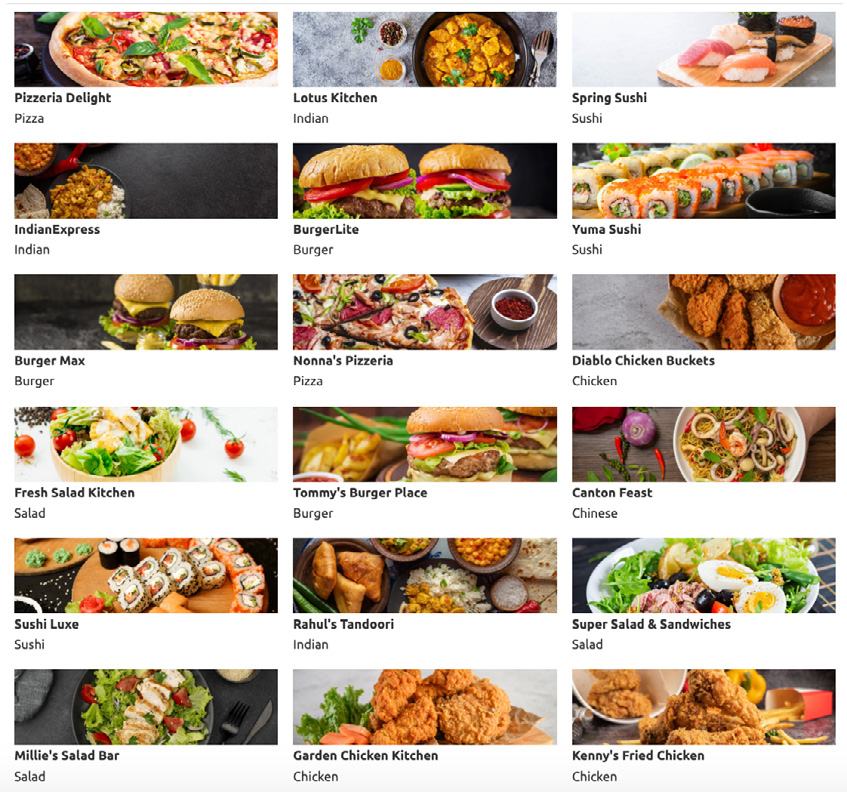
In the control app, restaurants and foods were positioned at random, irrespective of calorie content.
2. App repositioning foods
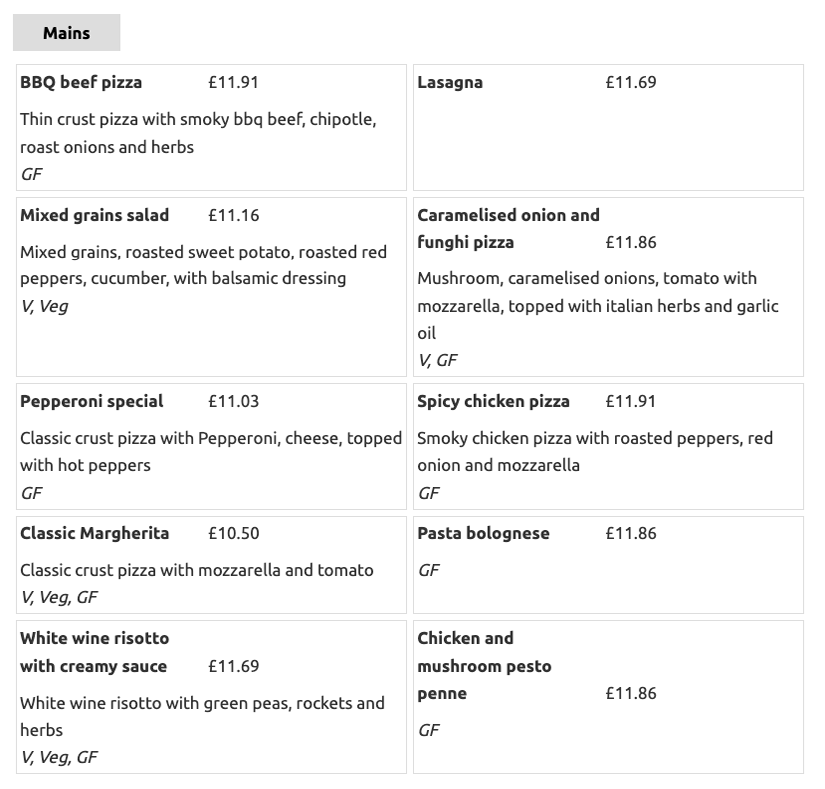
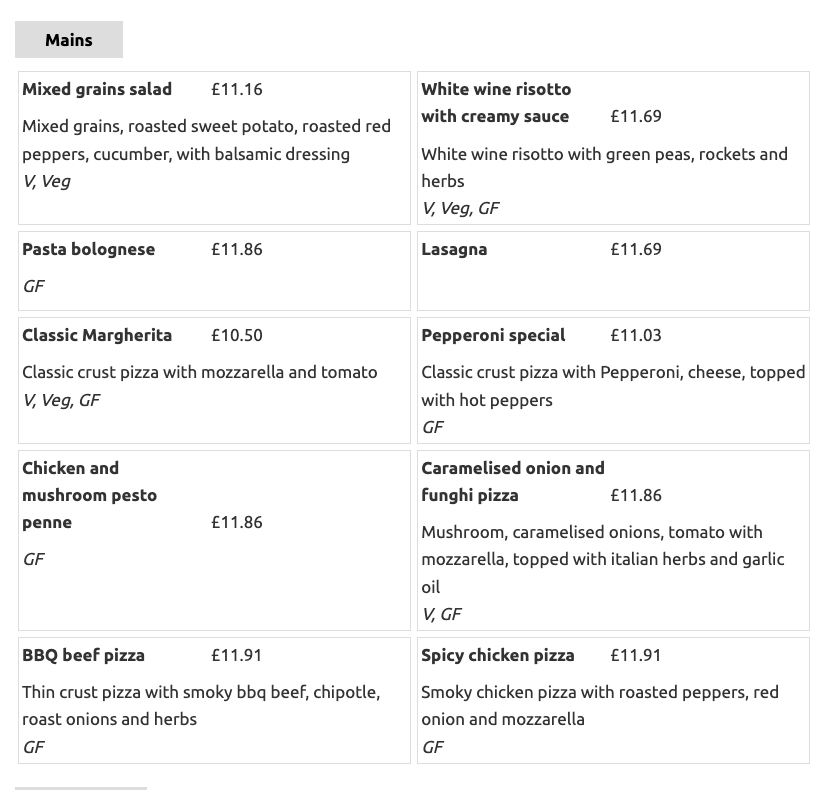
In the second app, lower-calorie foods were positioned at the top of menus and higher-calorie foods at the bottom. Restaurants continued to be positioned at random.
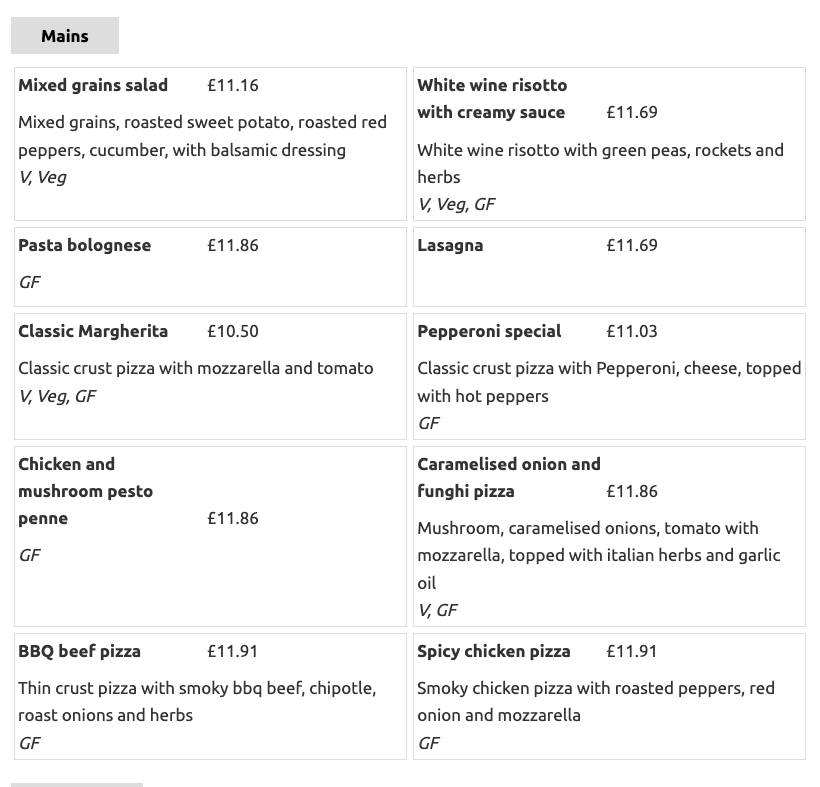
3. App repositioning restaurants
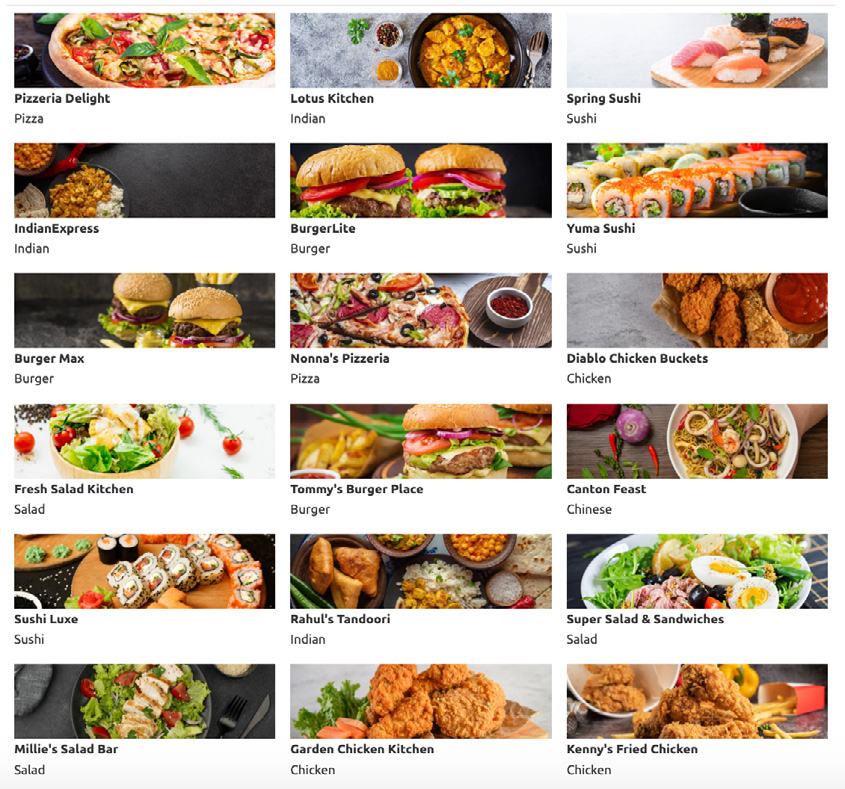
In the third app, restaurants with lower-calorie mains were positioned at the top and restaurants with higher-calorie mains were positioned at the bottom. Foods were positioned at random on menus.
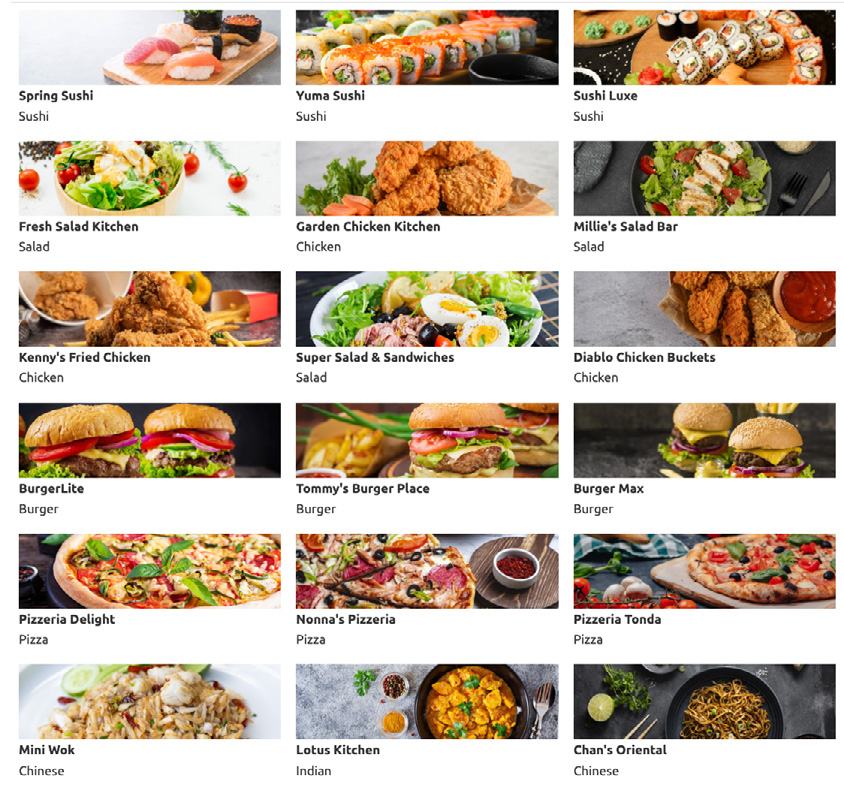

4. App repositioning foods and restaurants
In the fourth app, restaurants with lower-calorie mains were positioned at the top of the restaurant selection page and lower-calorie foods were positioned at the top of food menus.
Grid of restaurant options:
The grid shows various restaurants with their cuisine types. Examples include "Spring Sushi Sushi", "Yuma Sushi Sushi", "Sushi Luxe Sushi", and "Fresh Salad Kitchen Salad". This grid represents the restaurant selection page where restaurants with lower-calorie mains are positioned at the top.
Did these initiatives work?
Yes.
The goal of these initiatives was to give more prominence to lower-calorie options and to ensure that users were not required to scroll down the page to get to lower-calorie options.
When placing a hypothetical food order on the control app, people ordered a whopping 1,382 kcal. This is 55-70% of an adult's recommended daily calorie intake in a single takeaway meal. Participants using any of the other three apps ordered significantly fewer calories simply as a result of giving more prominence to lower-calorie options.
Compared to users engaging with the control app, participants using the app that repositioned foods ordered 6% fewer calories and participants using the app that repositioned restaurants ordered 12% fewer calories. Initiatives that help us to identify healthier restaurants therefore work better than initiatives that help us to identify healthier food in less healthy restaurants.
Unsurprisingly, the app version repositioning both restaurants and foods to display lower-calorie options at the top was the most effective initiative, leading to a 15% reduction in the calorie content of takeaways relative to the control. In absolute terms, participants using this platform still ordered 1,173 kcal - which is still quite a lot of food.
But even small reductions in calories can help us move in the right direction. A government tool estimates that if - on average - we consumed 10kcal less per day, the NHS could save £700M over 25 years. This means that we don't always need to swap our favourite pizza for plain green salad: even initiatives that help us make small changes to what we eat could help to slowly reduce obesity.
Chart showing Calories ordered (Mean intervention effect, 95% confidence intervals) by intervention group.
The Y-axis represents 'Calories ordered' ranging from 1100 to 1400 kcal. The X-axis shows different intervention groups.
- Control (1,819 participants): Restaurants and foods are positioned at random. Ordered 1382 kcal.
- Repositioning foods (1,858 participants): Restaurants are positioned at random. Foods are positioned in ascending order of kcal. -6% reduction (95% CI: -9% to -3%). Ordered 1294 kcal. Indicated with
** significance marker.
- Repositioning restaurants (1,812 participants): Restaurants are positioned in ascending order of kcal/main. Foods are positioned at random. -12% reduction (95% CI: -15%, -9%). Ordered 1221 kcal. Indicated with
** significance marker.
- Combined intervention (1,749 participants): Restaurants and foods are in ascending order of kcal/main and kcal, respectively. -15% reduction (95% CI: -18%, -12%). Ordered 1173 kcal. Indicated with
** significance marker.
The chart visually demonstrates a progressive reduction in calories ordered with increasingly effective repositioning strategies.
What about the impact on the price of our takeaways?
In our study, positioning lower-calorie options more prominently on delivery apps reduced the basket price. For consumers this is like having our takeaway and eating it too: a win for our health and for our wallet. But public health scientists need to be realistic: restaurants and delivery apps are unlikely to implement initiatives that cut their bottom line. So can we develop initiatives that ensure we are not encouraged to purchase too much food without harming the income of businesses?
In our study, we explored this by asking 1,765 people to place a hypothetical order using a fifth version of our simulated delivery app. In this version, food options were positioned based on their calorie content and price: restaurants and foods that were lower in calories but higher in price were positioned at the top.
This last initiative reduced the number of excess calories in participants' takeaways whilst increasing the (hypothetical) price of the takeaway basket. This result could encourage food businesses to implement initiatives that help people maintain a healthy weight. However, we think it is crucial to do further research to ensure that these types of initiatives help us make healthier choices without increasing the negative impact of rising food costs.
For example, we could investigate how to reposition food options in ways that help us to reduce excess calories in our takeaways whilst being neutral on the price of our basket. Or, perhaps, we could explore how to encourage healthy swaps of products with similar prices, since researchers have found swaps to be a promising aid for people looking to make healthier choices in supermarkets.
What next?
We are planning to use our simulated delivery app to conduct more experiments and learn more about how we can help everyone make healthier choices when ordering takeaways.
We are interested in working with policymakers, retailers, restaurants and delivery platforms of all sizes to explore ways of making services better for our health whilst continuing to be equitable and viable.
Testing similar initiatives with real restaurants and delivery apps will be important to see if the effects observed in this simulated study generalise to the real world.
If you have any ideas for how to improve this work or if you want to collaborate with us, please get in touch with [email protected].
58 Victoria Embankment
London EC4Y ODS
+44 (0)20 7438 2500
[email protected]
@nesta_uk
nesta.uk
www.nesta.org.uk
ISBN: 978-1-913095-64-2
Nesta is a registered charity in England and Wales with company number 7706036 and charity number 1144091. Registered as a charity in Scotland number SCO42833. Registered office: 58 Victoria Embankment, London EC4Y ODS.
(CC BY NC SA)