Understanding, mitigating and preventing the harms caused by digital technologies is a fundamental challenge for all of us. But we believe it also fundamental to propose alternatives - to imagine the future we want to see, so that we have a better chance of reaching it.
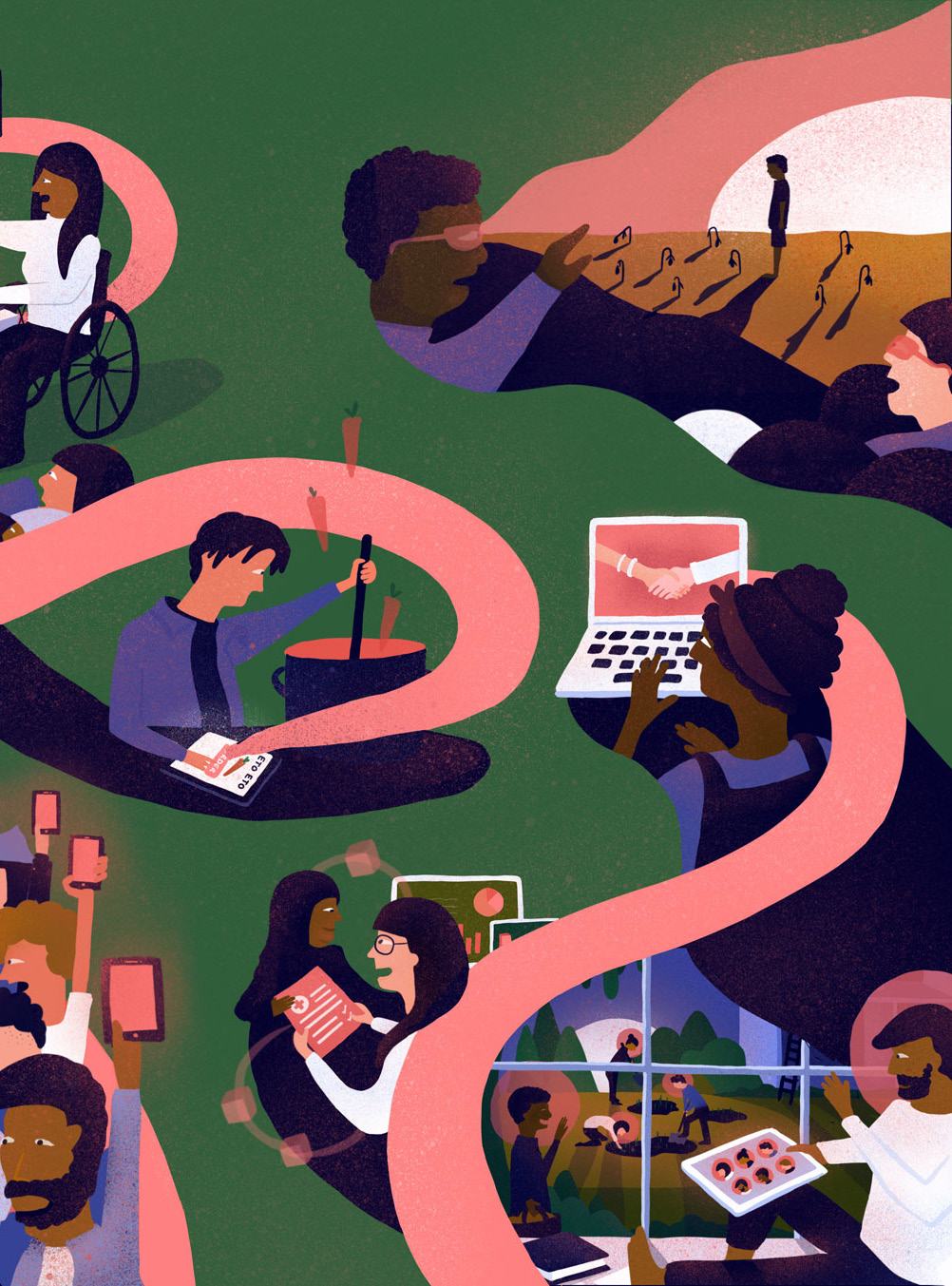
As part of the DSI4EU project, we have put together this collection of ten fictional, fun, accessible and thought-provoking stories, set in the year 2030, to begin building a vision for a more positive future, where technology is shaped and harnessed as a force for good.
The stories purposefully focus on tech as a tool, not an end, placing as much importance on political, social, economic, demographic and environmental trends as on technological ones. They are centred on people, not technologies, as it is people who will be at the heart of our envisioned future. All of them draw upon existing DSI examples from across and beyond Europe.
To put together the collection, DSI4EU held three workshops in London, Berlin and Barcelona and created a card game, 'Cards for the future', alongside desk research. Both the materials from our workshops and the print-and-play edition of 'Cards for the future' are available to download under a Creative Commons license.
We hope the collection inspires people to think about the future, and that the stories will play a small part in helping us achieve technology’s potential as a tool for empowerment, education, democracy, sustainability, equality and social justice.
Authors
Oliver Zanetti, Matt Stokes, Codrina Creţu
Illustrations by:
Anna Broadhurst
With thanks to:
Tom Symons, Harry Armstrong, Georgia Ward Dyer, Matías Verderau, Stephan Peters, Nora Hauptmann, Jenni Lloyd, Rosalyn Old, Felix Szabó, Florence Engasser and all those who attended our workshops and session at re:publica in the first half of 2019.
European Union, 2018. This work is licensed under a Creative Commons AttributionNonCommercial-ShareAlike 4.0 International License.
DSISCALE, operating under the DSI4EU brand, is funded by the European Commission.
Directorate General for Communications Networks, Content & Technology, Net Futures, Administration and Finance, under Grant Agreement No. 780473.
DISCLAIMER The information and views set out in this deliverable are written by the DSISCALE project consortium under EC grant agreement 780473 and do not necessarily reflect the views of the European Commission. The European Commission is not liable for any use that may be made of the information contained herein.
This work is licensed under a Creative Commons AttributionNonCommercial-ShareAlike 4.0 International License


Introduction
We hear a lot about the harmful effects technological developments are having, and will continue to have, on our societies – from mass surveillance to discrimination and from loneliness to malfunctioning democracies. Understanding, mitigating and preventing these harms is a fundamental challenge for all of us.
We believe it is also fundamental to propose alternatives. We cannot just fight back, mitigate harms and regulate retrospectively. We must build a vision for a more positive future, where technology is shaped and harnessed as a force for good. By imagining the future we want to see, we stand a better chance of reaching it.
Our tech, our future: Digital social innovation in 2030 aims to be a first step in that journey. It is a collection of ten fictional, fun, accessible and thought-provoking stories, set in the year 2030, exploring different areas of society and the role technology might play. While they're designed to be read as a whole, they can be read individually.
They purposefully focus on tech as a tool, not an end, and we have placed as much importance on political, social, economic, demographic and environmental trends as we have on technological ones.
Each one is centred around a person, rather than a technology, as it is people who will be at the heart of our envisioned future. All of them draw upon existing DSI examples from across and beyond Europe, too many to list comprehensively, but some of which we have listed at the end of the collection.
We hope you enjoy the collection, and that it inspires you to think about technology and society in new ways.
Background to the Collection
Our tech, our future: Digital social innovation in 2030 is part of the EU-funded DSI4EU project’s Futures work, which over six months involved more than 100 people in building and shaping alternative, positive visions for the future of DSI through three workshops and a new card game. As our colleagues at Nesta have pointed out, futures work is at its best when it is participatory, and radical and provocative visions of what a society could, or even should become, can't rely on a few privileged minds alone.
We held three workshops in December 2018, January and February 2019 in London, Berlin and Barcelona respectively, each bringing together 20-30 people. Participants explored how digital technologies might be used to address some of the social and environmental challenges we might face in a decade, and together came up with tens of ideas, some more fleshed out than others, some more controversial than others, some more radical than others.
Our aim was not just to come up with ideas, but also to find good ways of getting people to think about the future. We want to share the methods we used, so we're delighted to publish the material we used for the workshops under a Creative Commons license for you to use, edit and adapt.
However, we wanted to make thinking about the future even more accessible, so we developed a card game, Cards for the future, which we played for the first time at re:publica in Berlin in May 2019. Based on The Situation Lab's The Thing From The Future, it gets people thinking about possible futures in a fun and engaging way. We hope you might want to try your hand at it, and you can download the print-and-play edition if so.
Alongside this, we drew inspiration from existing research and literature in the field of tech futures from organisations like Nesta, the Joint Research Centre, the European Parliament, the UK Government, Civil Society Futures, DotEveryone, the Open Data Institute, the Open Knowledge Foundation, Stanford Social Innovation Review, the Berkman Klein Center, the MIT Media Lab and Stanford University. And we also developed our own ideas using our workshop and game tools.
Finally, we brought this inspiration together to develop ten scenarios for the future of DSI. We hope they inspire people to think about the future, and that the stories will play a small part in helping us achieve technology’s potential as a tool for empowerment, education, democracy, sustainability, equality and social justice.
Stories
- Jesse (p. 6)
- Amelie (p. 8)
- Lethabo (p. 10)
- Lucas (p. 12)
- Nikolay (p. 14)
- Isabella (p. 16)
- Davide (p. 18)
- Katerina (p. 20)
- Stefan (p. 22)
- Omar (p. 24)
Jesse
What if governments put citizen-led tech development at the heart of what they do?
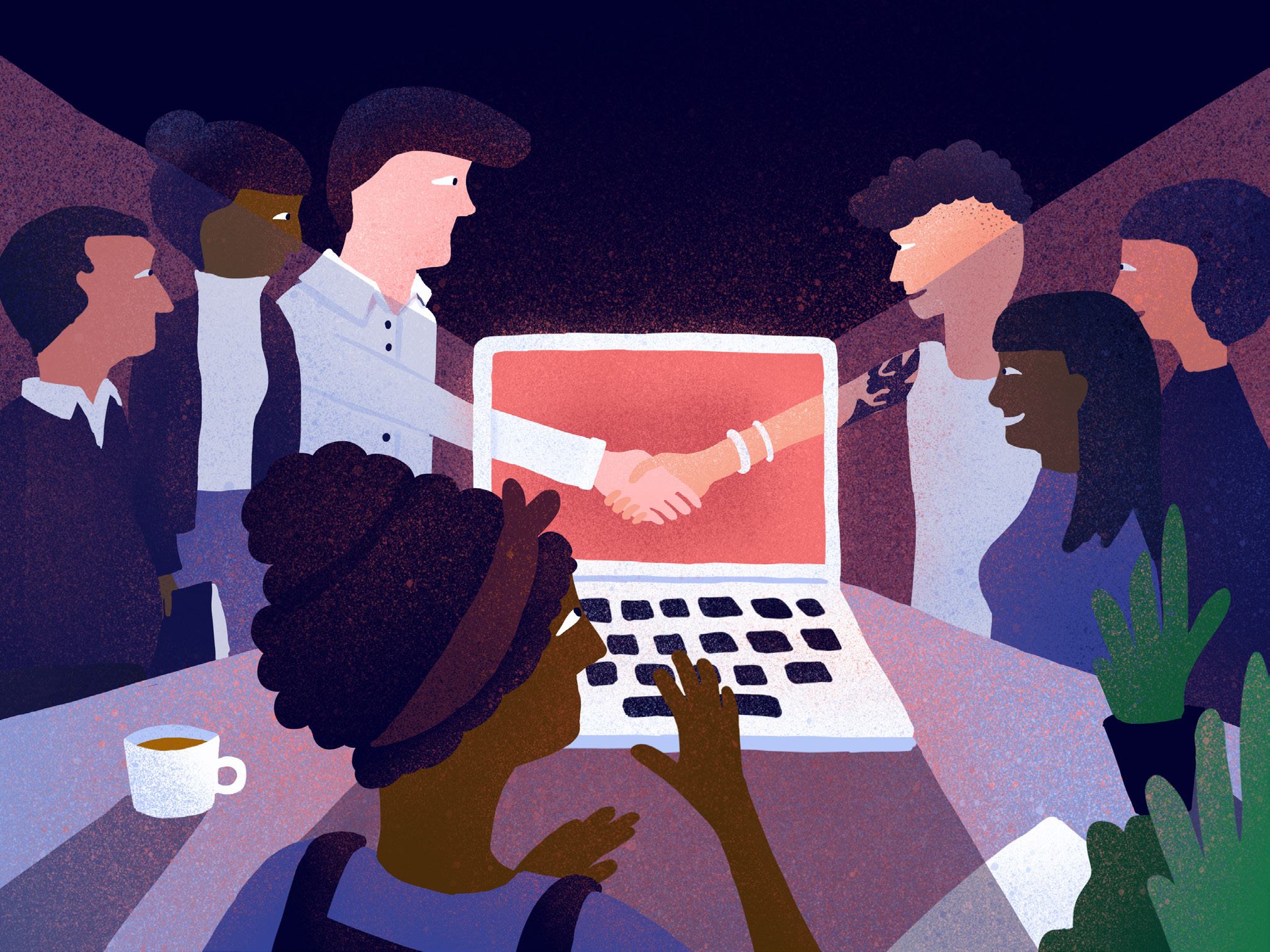
It's Monday morning, and Jesse wants to get into the office early. Citizens' Agency is celebrating its third birthday this month and today she has a couple of press interviews alongside her usual work. Set up in 2027, Citizens' Agency is, as its tagline puts it, the 'tech firm for the people'. It works with citizens, researchers, tech firms and NGOs to develop and improve digital tools, products and services which enable citizens to interact with government.
Jesse has worked in govtech for some time. Back in 2025, she was working in the private sector. Seeing the potential for a different approach, she and eleven others began developing a worker-owned co-op for govtech. They were successful at bidding for projects, mainly winning small contracts with local authorities. From the beginning, they benefited from a competitive advantage; since 2023, public procurement integrated social impact into all scoring by law, and the co-op gave half of any profits to local charities and community groups.
A couple of years later, with govtech now closer to incumbent than upstart, the government revamped its entire digital strategy. Citizens were not happy seeing their taxes paid to big firms making equally big profits, they didn't understand why tech they'd paid for wasn't open source, and they felt that citizens didn't have enough say in what the government prioritised or what digital government services looked like. The government reacted, seeking proposals for a new approach to respond to public concerns and to build more collaborative relationships between the tech world and civil servants.
Jesse and her colleagues' proposed turning their nascent worker-owned co-op into an arms-length government body, beyond the wranglings of party politics, with a mission to develop open-source technologies with and for citizens. Going beyond the usual practice of involving users in the design and development stage, the co-op would also work on projects proposed by citizens and commit to monitoring the impact of their projects in the long term.
A team of independent experts judged the proposals and selected three preferred approaches. In an online public vote, Citizens' Agency received the most upvotes and was formally born in February 2027. They signed up to the International Charter of Ethical Design, the gold standard internationally, and their responsibilities to the general public were set in statute when the new government strategy went through the House of Deputies.
Before she speaks with journalists, Jesse's first task is to sift through new proposals. Anyone can make a proposal for new tech-driven approaches to improve government and public services. Ideas come from citizens and representatives from across the public and private sector. If an idea is deemed workable by Citizens' Agency's independent expert panel, it is put onto a deliberation platform. Of those that receive sufficient support, the relevant government department commissions a project. To maintain financial security, Citizens' Agency also works on selected social-purpose private and third sector projects.
Jesse is working on an update of Qarar, software used in citizen's juries nationwide. When called to service, citizens' juries assemble members of the public to debate new policy approaches. To involve the public in those deliberations, Qarar allows jurors to use blogging and discussion tools. Jesse has spent the past four Fridays with a group of jurors observing how they use the platform. Her next task is to work through her notes in preparation for some prototyping with members of the public. She wants to make the interactive deliberation part of the platform more intuitive so jurors can make notes or blog without being distracted from the evidence they're being shown during the jury hearings.
In the afternoon, she has a briefing session with the Department for Decarbonisation. They want to expand the trials for local renewable energy grids and they need to update their blockchain micropayment infrastructure. Jesse will be convening a workshop with coders, energy companies, consumer groups and users to work out how to make the payments more accurate and more secure. She wants to take ten minutes to refresh herself on the inner workings of blockchain.
She begins scrolling through an explainer, and is lost in thought when the telephone rings. “Hi Jesse,” the caller says, "Happy Birthday to Citizens' Agency. It's Louis from the People's Press, is now a good time to talk?"
Amelie
What might secure working conditions in the gig economy look like?
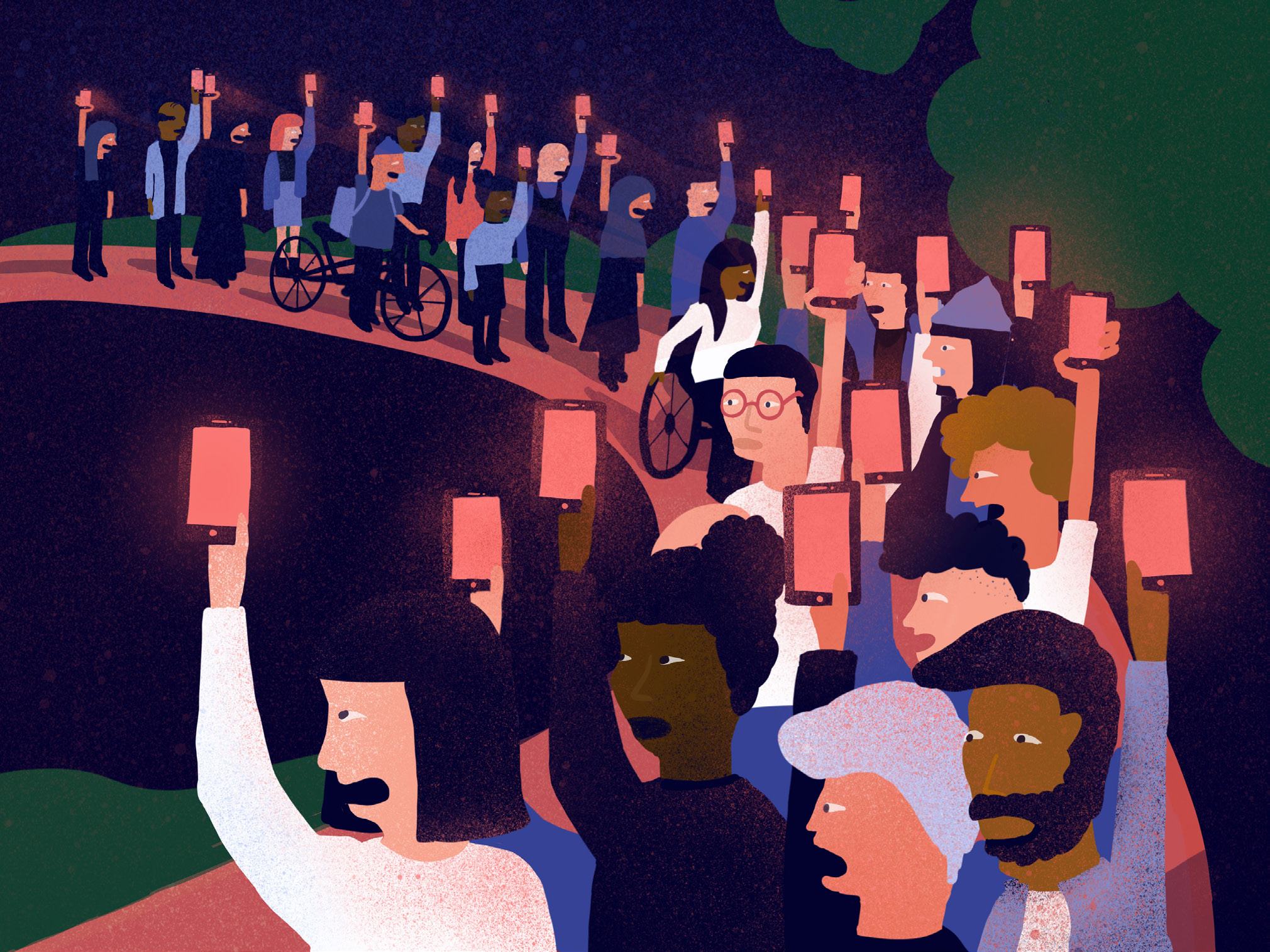
Amelie has been at the forefront of the battle for better working conditions throughout her career. After four years at art school learning graphic design, secure work was hard to find. Graduating in 2021, there was a glut of people with her skills and a shortage of entry level positions. It wasn't that her skills weren't in demand, though; rather that many companies took advantage of the low rates offered by people just like Amelie on gig working platforms.
Over a year of working short, uninspiring, low-paid jobs, Amelie chatted with other freelancers and some of her old university friends. Through these conversations, she mapped how several major ad agencies working for some of the world's largest corporates relied almost entirely on poorly paid freelancers, saving millions in the process. She contacted F-U, the Freelancers' Union, and got the story published in the People's Press, a national network of citizen-driven newspapers.
F-U had been set up in the early 2020s because established trade unions were still disconnected from the challenges raised by new working practices. The old unions' arsenal of campaign tools couldn't achieve much when freelancers had so little leverage over potential clients. There had been lots of activity beyond the trade unions, led by individuals working together and by grassroots campaigns. Worker-led petition sites had improved conditions for some employees. Gig workers had begun to work in teams, enabling them to bid for larger projects and demand better rates from clients while also drawing in the most skilled workers and creating junior positions for those early in their careers. Collective action was even delivering in areas where work could only be conducted by individuals, like taxi driving and personal care, through the growth of platform cooperatives using open-source software.
However, the platform behemoths' business models remained strong. Many benefitted from the vocal minority of freelancers who truly enjoyed gig work for its flexibility – and who willingly talked about its perks on social media. The 2020s had seen huge steps forward for gig workers, but there was more to be done. In 2024, many grassroots activists who had never been members of trade unions came together to found the F-U.
Amelie's story with the People's Press went viral, and the responses helped her understand the real challenge for freelancers in the gig economy: predictability of income. The feast and famine approach was playing havoc with family lives, the ability to rent or buy a home, and peoples' mental health. Managing multiple jobs made this worse and, particularly for those on lower pay, it was impossible to build up a sufficient buffer for even the smallest unexpected costs.
In 2027, Amelie joined F-U to advocate for a solution. She realised F-U's calls for a universal basic income were futile – there simply wasn't the political will, or the money, to bring it about. Once she was an F-U member, she could use their online platform UnDodd to lobby, and drum up support for, a minimum income. She proposed a guaranteed minimum monthly salary for gig workers, so in “famine” months gig work income would be topped up by the state to ensure earnings reached this threshold level.
With thousands of supporters, F-U committed to supporting Amelie's idea. Using the Qarar, the national citizens' jury platform, they shaped a proposal for the Irregular Working Fund (IWF). The IWF was a ringfenced budget supported by a levy payable by gig economy employers, used to cover gig workers' guaranteed income, sick leave and time away for anyone who wanted to retrain.
At the same time, F-U commissioned Citizens' Agency to develop a platform, called Isikathi, which allowed gig workers to record and verify hours worked and income earned across different gig platforms. With 30 million members across Europe, F-U also used its clout to get gig platforms to sign up to principles of transferability and interoperability, meaning gig workers could carry their reputations, earnings and other data between platforms.
In the hot, dry summer of 2028, the government finally committed to the IWF as part of its new digital strategy. F-U's platform, Isikathi, already had 25 million members in Europe and the top five gig platforms had all signed up to F-U's principles.
The IWF was approved the same year by a citizens' jury, and came into force in 2029, improving the lives of thousands of workers. In 2030, Amelie got her first full-time job in graphic design, earning more cash but losing some flexibility. The same month, despite having left the world of freelancers, Amelie was delighted to accept the honorary presidency of F-U in recognition of her work.
Lethabo
What if newcomers could use tech to take control of hostile discourse?
Though renewable energy is increasingly widespread and the consumer culture of earlier decades reined in, the centuries-old carbon-based economy has left its legacy. Relatively small average global temperature increases conceal the fact that in some places temperatures have risen considerably, affecting food and water supplies in the parts of the world least able to cope.
Lethabo, like many in Sub-Saharan Africa, found life increasingly untenable. Food prices were soaring as land became less productive, and towns and cities were crowded with people who'd left barren farms in search of work.
Like many young and educated people from the region, Lethabo saw little future there. He sought environmental asylum in Europe, hoping to work from a distance on technologies which would improve life for his friends and neighbours in the place he grew up.
Environmental asylum was a path taken by people from many countries across the world. In Europe, there was a good support network for environmental refugees which had been put in place proactively earlier in the decade, as climate models predicted large increases in new arrivals. Arriving on the continent, a citizen-led welcome committee found a home for Lethabo at the local housing community, advised him on paperwork for his asylum claim, and connected him to local services.
However, not everyone was so welcoming. Most people thought the vitriolic and xenophobic reaction to asylum seekers had been quelled in the early 2020s following concerted efforts by government and civil society, but a hostile narrative had returned in the past two years. Lethabo, other newcomers and local groups were all horrified to see inaccurate stories in the press, which continued to deny any climate crisis and alleged asylum seekers were merely motivated by greed, seeking high wages and social protections in Europe.
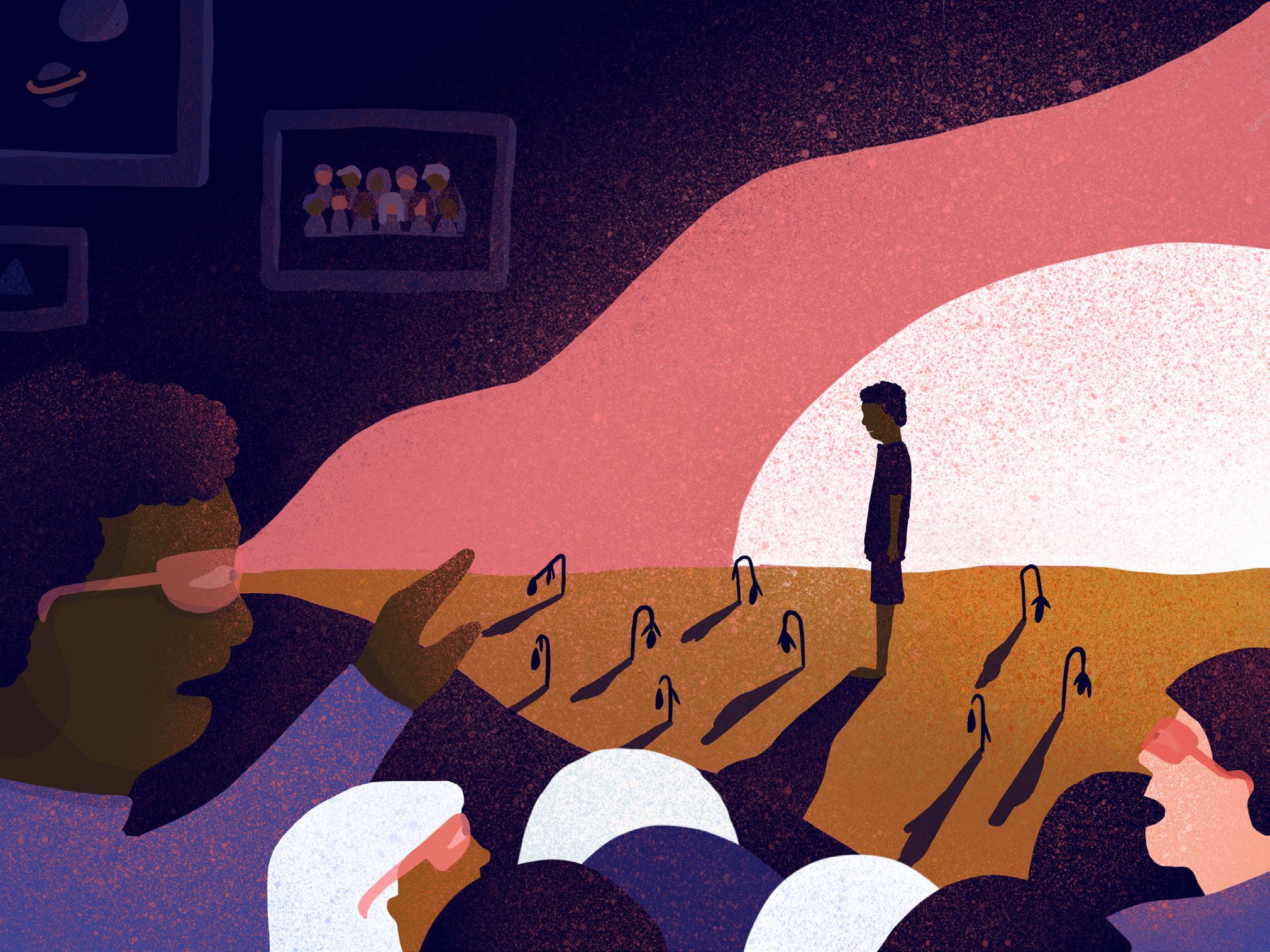
Lethabo was determined to change the discourse. He wanted people to see what it was that people were fleeing, why so many of them felt they had no choice, and also how they hoped to contribute to their new communities. He realised Virtual Reality (VR) could be used to tell better stories and help people from host communities understand why they had these new neighbours. Reading about a hackathon on the housing community's social network, which was funded by the national government's Community and Cross-Cultural Projects Fund, Lethabo and a few friends signed up to develop the idea.
Lethabo and his friends reached out to local volunteers, other newcomers and a group of students, and cobbled together the skills they needed to tell the refugees' stories through VR.
He reached out to his friends back home too, who worked with his team to produce a series of short VR experiences illustrating the challenges of their old lives, what they had left behind, and what their new lives were like. They made the experiences available online, but also offered them as three minute experiences in public places, making records of reactions and comments on Qarar, the national citizens' jury platform.
Some people were hostile, but the vast majority expressed a genuine desire to learn more. With indisputable evidence of public support, Lethabo's team accessed follow-on grant funding from the government, which allowed the team to pursue their second goal, to empower newcomers and support skills development. Ultimately, the aim was that newcomers would be able to build skills and access European job markets in areas like business development, software development, communications and production.
This enabled Lethabo and his team to develop a VR storytelling kit not just for them, but for everyone. The software, which he called Abhasi, was particularly successful in schools, where schoolchildren from different backgrounds used the software to tell their stories, understand the human consequences of climate change and build empathy.
Following another campaign on Qarar, the tool was eventually integrated into the welcome process for newcomers, who are now by default given the option to talk about their stories and experiences. It's also always open to people who have been in host countries for some time but still want to talk about their experiences, contributions and challenges.
Complete eradication of hostility, prejudice and misinformation is sadly impossible. However, Lethabo feels proud of his role developing accessible software which has done much to tackle these challenges and make the situation better for newcomers and communities.
Lucas
What if local communities produced their own energy, earning money for their district and reducing energy bills and carbon emissions?
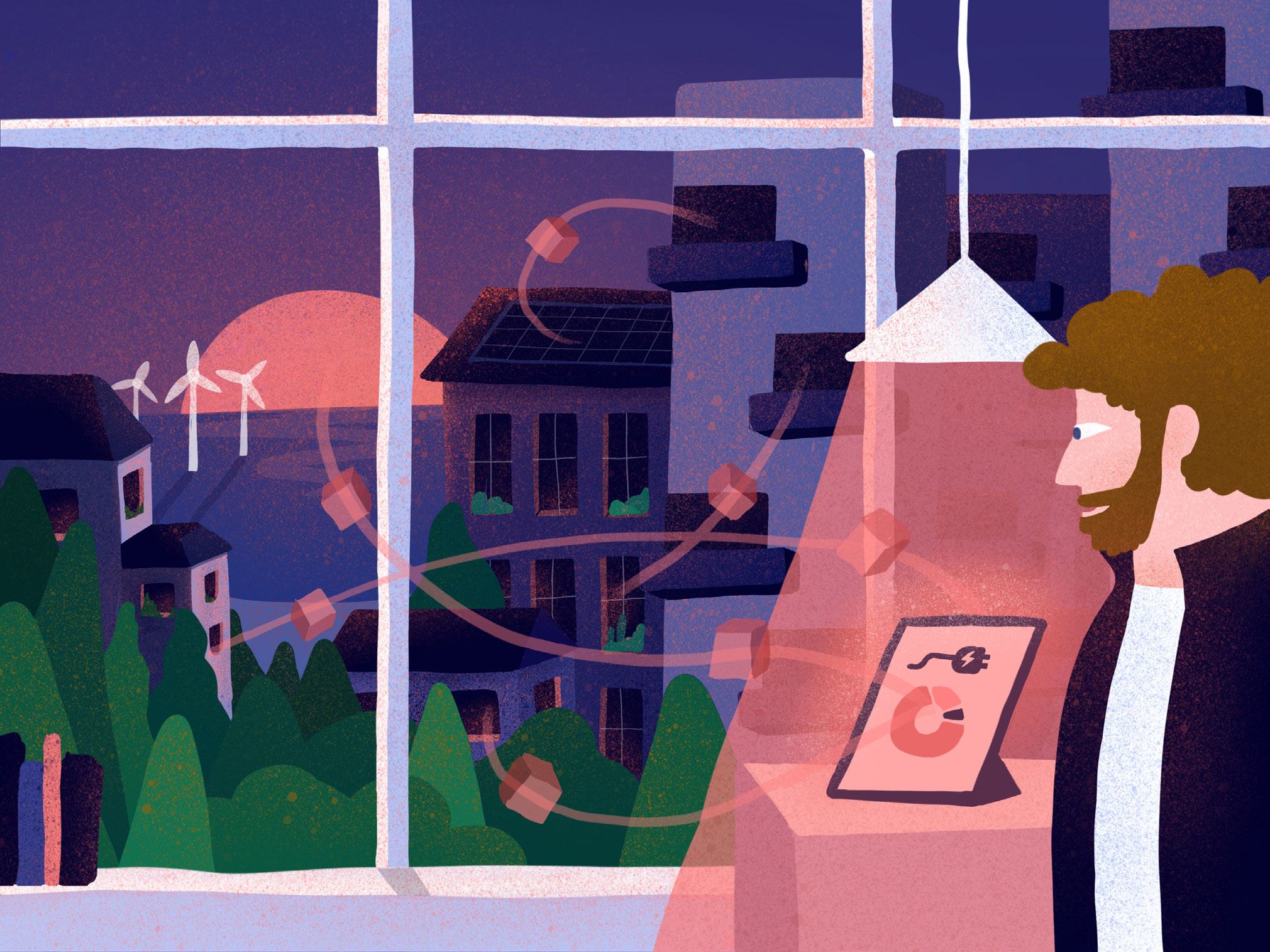
Stacking the last plate into the dishwasher, Lucas is not at all surprised to see the “on hold” light start blinking. Dishwashing is the energy grid's lowest priority right now. At 7pm, lights are on, dinners are cooking, TVs are blaring. The dishwasher will kick in when there's spare capacity in the grid.
Just a few years ago, people would have baulked at this inconvenience. But Lucas knows it's the better option, financially and environmentally. St Mark's, the district where he lives, now generates more power than it uses, putting renewable energy back into the national grid and bringing extra income to residents.
Five years ago, the district was notoriously run down, its residents under-employed and earning below the national average. With energy prices rising fast, some members of the community were being forced to choose between basics like heating or cooking. After speaking to some of his neighbours, Lucas developed a vision for a community-owned renewable energy system which would cut bills, provide income for the community, and also reduce carbon emissions.
He recruited people from across the district and formed a committee to examine the idea in practice. They developed a plan, began to promote it online, and managed to access funding through a new “double match crowdfunding” programme: one third donations from the crowd, one third funding from the city's matched crowdfunding pot, and one third low-interest ethical loan. They named their project Ciklo.
Rooftops were covered with solar panels and micro-turbines installed around the district. Residents could choose to install other technologies such as transparent solar panels on their windows, and buildings were insulated to reduce heating and cooling needs. Taking advantage of the district's coastal location, small scale tidal and wave energy generators were built. To give real ownership to the community, and further reduce environmental footprint, a lot of the parts for these installations were tailored and produced at Casa Luminata, the local fab lab. Apartment buildings were fitted with batteries to help bridge differences between supply and demand.
Within homes, smart appliances were programmed to operate according to the energy available. Time-sensitive activities like lighting and cooking would be given priority, while non-urgent tasks like dishwashing would operate when there was spare capacity in the grid. Householders could override these settings if they wanted, but they'd have to pay for it. To help them plan and to increase transparency, every household had a dashboard, called the Cikloboard, showing aggregate, anonymous energy usage across the district. People could ask a connected virtual assistant for insights, trends and tips.
Decentralised ownership and varying prices created a complex system of energy payments. Apartment buildings shared the rights to rooftop generation and battery storage equally. However, some apartments generated more energy, while others used more energy. Households had to pay for energy they drew from the district's tidal and wave energy, but the district paid residents for the right to store its excess energy in shared battery storage. The system as a whole earned money when selling its excess to the national grid.
To address this complexity, open-source blockchain technology was used to track each unit of energy and its price. Smart meters in homes, batteries and generators measured and verified what was given to and taken from the grid, providing the whole community with precise monthly bills and tailored information and insights.
Dishwasher on hold, Lucas heads to the community hall for the local energy management board meeting. Joining for the first half of the meeting is Citizens' Agency. They're interested in the scheme, and are kicking off a new project to understand user behaviour better and eventually extend the approach to other areas.
The second item on the agenda is the economic report. Households have the choice to pledge to spend the money they've saved on lower bills in the local currency to support the district's shops and services, and the board is thrilled to see that over half of households have now opted in, chiming closely with local businesses' reports of increased footfall and spend.
Finally, the board discusses the Community Pot. This fund receives half of the income generated from selling back to the grid (minus loan repayments), and is shared between local community projects. Lucas knows competition is tough, but is ready to push for funding to go to his niece's school, which is beginning to develop a new VR platform to share refugees' stories. Lucas takes a deep breath, and begins to state his case.
Nikolay
What if citizen participation in policymaking led to better policies and to increased engagement in politics?
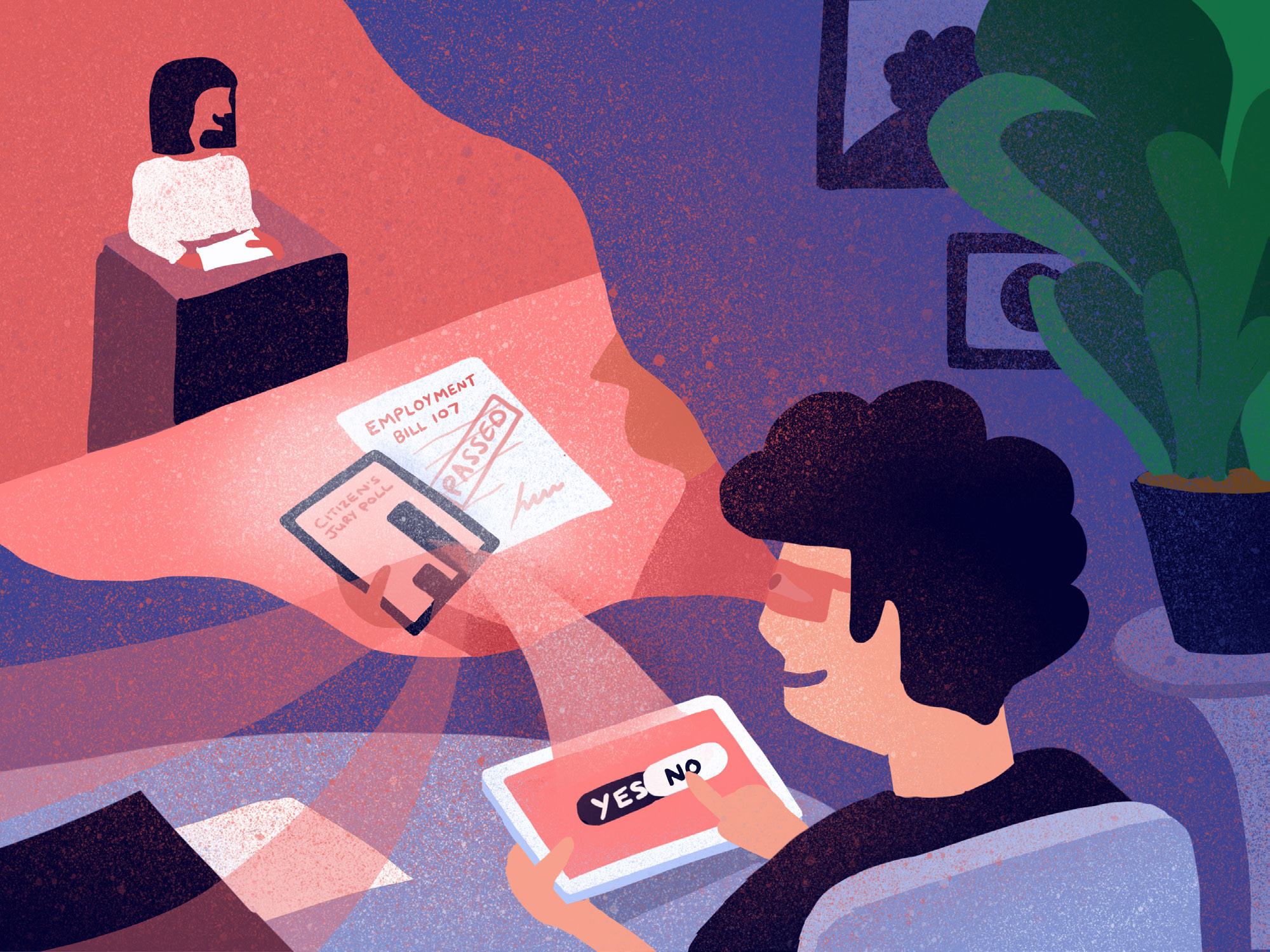
Nikolay had long been disengaged from politics. Qualified but underemployed, he was absorbed by the rise of right-wing populism in the early 2020s. Before long, however, he came to see that beyond the slogans the populists had little to offer, but he still didn't trust the established political system.
The reactionary politics of the late 2010s and early 2020s had been replaced by a more progressive politics, leading, among other things, to the introduction of the four day week, and in turn a more equitable distribution of work and more good jobs for all. Having personal experience of the hardships of bad working conditions, he was particularly interested to find himself called up to the citizens' jury process, or “Qarar”, on new regulations to improve security for freelancers and gig workers.
Reading through the invitation email, he finds that he will be required to participate in the Qarar one day a week for the next three months. Because the Qarar day falls on one of his usual work days, he'll be compensated for his lost earnings and his employer will receive financial support for a temporary replacement.
Over the past decade, citizen juries have moved from the fringes to the mainstream at local, national and European level, largely as a response to rising disengagement from politics and realisation that policies were better, and more legitimate, when citizens were involved in shaping them. The jury Nikolay has been called to is a national one. As it would be unfeasible for him and 49 other jurors to travel to the debating chamber once a week, they will join using a VR headset.
Logging into the Qarar on the first day, the format is explained. Experts from all sides of the debate will give evidence. They'll hear from economists, company bosses, employees, freelancers, academics and others with informed contributions to offer. Speeches will be automatically transcribed for later reference, and jurors will be able to publicly note questions they'd like to ask during and after the testimonies.
With 50 jurors, not every question can be answered individually. Rather, an AI facilitated system will synthesise the questions to bring them together into themes. Jurors will confirm that the synthesis is accurate before the questions are formally posed, though the natural language system has proven to be pretty effective so far.
Just like the evidence from the expert witnesses, the jurors' deliberations will be made public. Aiming for full transparency, the experts' contributions are live streamed, although the jurors' conversations are released as anonymised transcripts afterwards to encourage honest and frank deliberation. It also allows the public to ask questions of the jurors about the way they're coming to their decisions, both during sessions and in between weekly sessions.
To test the opinions the jurors are developing against those of the wider public, Qarar's AI tool will gather and collate their ideas. Key statements will be developed and members of the public can respond on online polls, using a slider to say whether they agree or disagree. Demographic data is also gathered, using differential privacy technology to ensure anonymity, and to make sure that particular groups aren't dominating the outcome. In most cases, the jury's decision will be final but this process ensures that the jury's approach reflects feeling in the wider public.
Over the three months, the jurors work on a system for employee security in the gig economy. Nikolay feels proud of the work they have done. He doesn't agree with every aspect of the new approach, but he recognises the efforts made to reach consensus and, like the other jurors, he thinks that overall the approach is a good one.
The final step is to watch as the system gets incorporated into national law. The government is not required to accept every decision made through the Qarar, but in cases where it disagrees it must set out its reasons for disagreement and the evidence that they're based on.
In most cases, though, the government implements the decisions of the jury. Each decision is broken down into a series of actions and deadlines. Jurors and the public can monitor progress on the Qarar's public platform, and call for explanations if deadlines are being missed or a new approach is needed.
Scrolling through six months after the jury ended, Nikolay is pleased to see a series of green traffic lights next to the key actions, indicating that the legislation should be in place by the end of the year. He's also surprised by how much more engaged he is in politics overall, joining debates, and responding to Qarar's platform's online polls.
Isabella
What if data about our own bodies helped us to live longer and healthier lives?
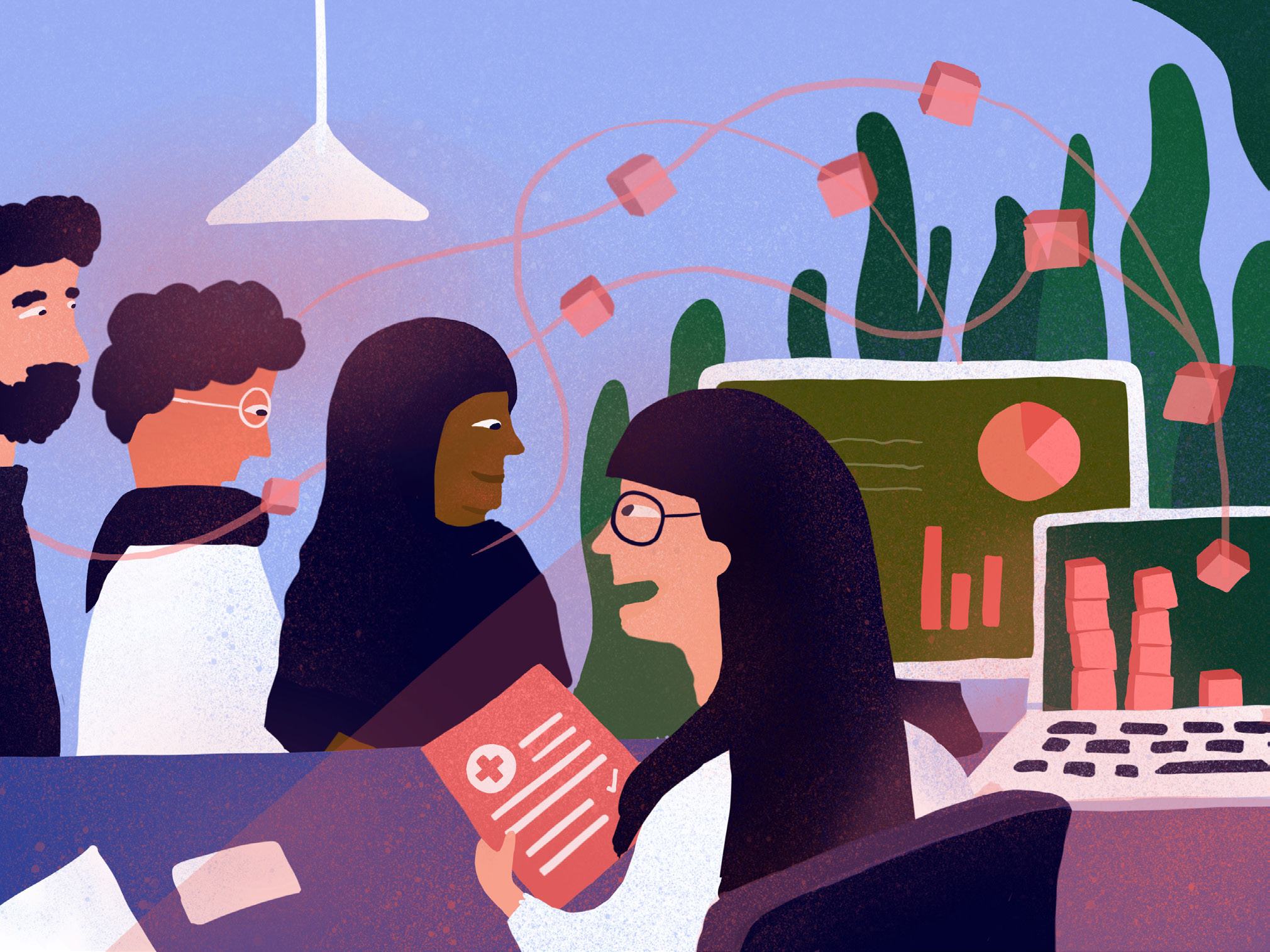
For years, health data existed in silos. At best, data for scientific research was published in tables in obscure academic journals or held in clunky online repositories. At worst, it wasn't published at all. Individuals were generating data all the time too, with gigabytes of data from wearables kept within the walls of big tech companies. There wasn't a shortage of data – what was missing was a way to pull it all together.
Today, there's more data than ever and, for the first time, it's freely available and linked. Where once the challenge was accessing the data, for Isabella, an epidemiologist and health data scientist with the Pan-European Health Network (PEHN), the challenge now is deciding what to do with it all.
The seismic shift in approaches to health data management had been arduous. Agreeing EU-wide standards for data management with universities, research institutions and drug companies was hugely complex, but was achieved in the timeframe set out by the European Commission. The real game changer had been successfully agreeing the approach to storing, distributing and governing that data.
Centralised data hubs just didn't work, and when the approaches were being designed Isabella spoke out strongly against them. As an expert advisor, she argued that the responsibility for data management was too great and too costly for just one organisation, that it didn't solve the siloing problem, and that the ramifications of any breach would be catastrophic.
Instead, she advocated for a model of distributed data storage, which was eventually adopted. Of course, all data originated somewhere, but there would be nothing to stop other organisations having a copy. To protect individuals, a blockchain-based ledger system was introduced, allowing individuals and data gatherers to set limits on how data can be used. People can choose what data they want to share and don't want to share, under which circumstances.
As a result, data scientists like Isabella have access to findings on a global scale, but without the ability to personally identify anyone. It's revealed correlations between a huge number of factors and health outcomes over the short and long term, which researchers have only just begun to examine.
Isabella's job is to manage the AI systems which run the queries. As everyone knows, correlation doesn't always equal causation, so she focuses on delving deeper into the links identified, investigating them from different angles and using her medical knowledge to decide which queries should go forward to cohort studies, what to recommend to policymakers, and how to best serve at-risk groups.
But for Isabella, health data is not just for epidemiologists. It can make a meaningful difference to the lives of individuals too. With almost everyone now wearing general health data gathering devices, and those with long term conditions wearing more elaborate sensors accruing condition-specific data, people have access to information to understand their own health better.
Isabella felt this potential was unfulfilled – after all, most people aren't data scientists. A year ago, Isabella proposed an experimental training programme for individual health data, for which PEHN gave her a small grant and two days a week to develop. Now Afya, a social enterprise founded by Isabella, two doctors and two nurses, runs training sessions for members of the public to help them interpret their health data from various sources.
Afya has two types of session. The first is for those interested in using data to maintain good health: mainly middle-aged and older people who are keen to keep up their current lifestyles. They're interested in simple tips and insights, like correlations between exercise and blood pressure, or nutrition and mental health. They're taught how to draw out insights and can choose to compare their own data with other people's.
The second type of session helps people with long-term health conditions manage, interpret and respond to their data. For example, they help people with diabetes to make sense of the data they're getting from their implanted sensors, which means they're more able to understand what they can eat and how their bodies will react.
Isabella lives by the old adage that prevention is better than cure. She's pleased that these new uses of data are helping more people live longer and healthier lives. And the rich insights that health data offer gives her hope for her own future too. She knows it's not a panacea, but she's confident that the data she's collecting about her own body will serve her well in the years to come.
Davide
What if industry came back to cities, providing new jobs and boosting local economies?
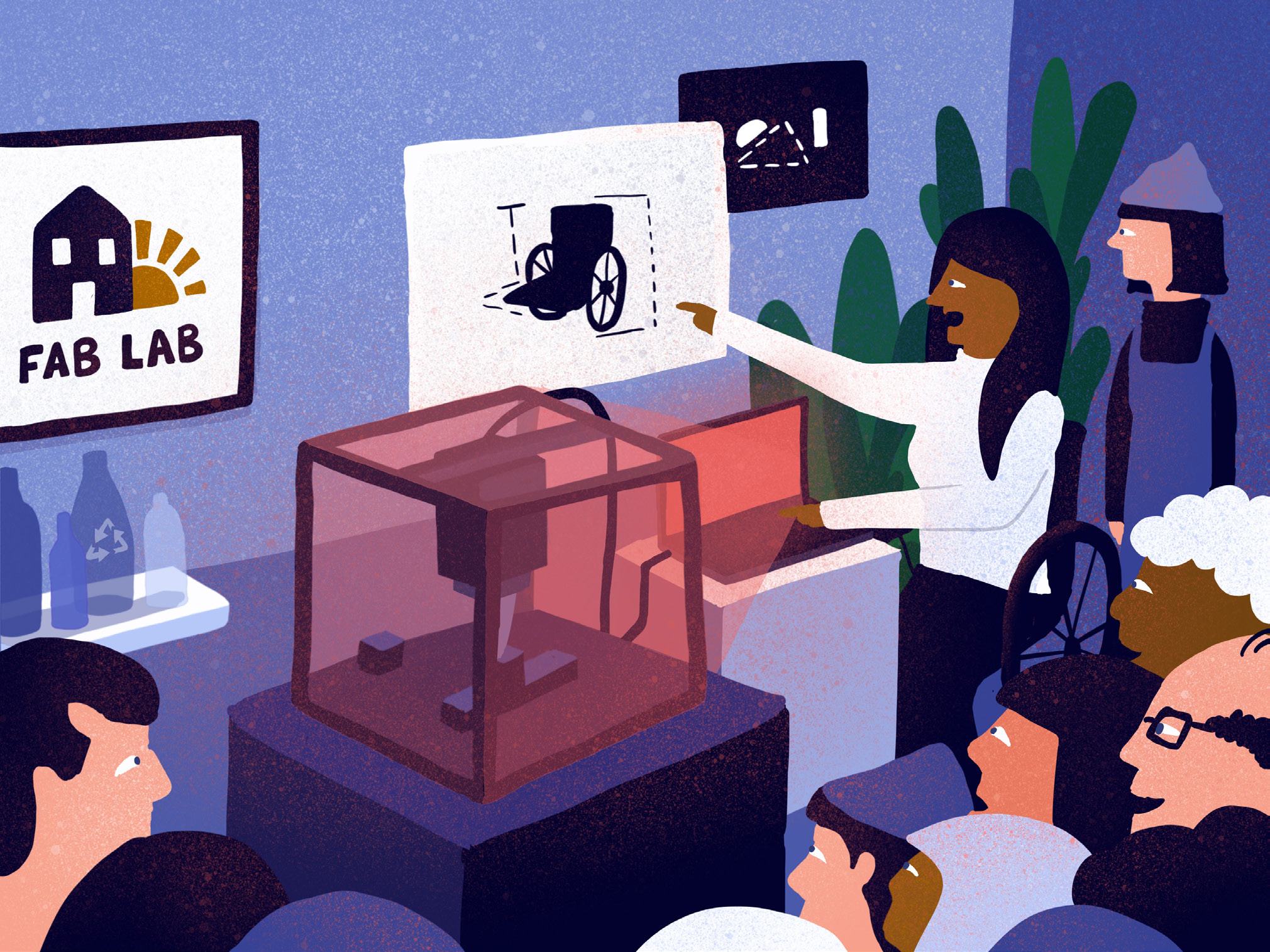
A year after new legislation came into force banning punitively high interest rates for rent-to-own appliance shops, local activist Davide saw an opportunity in the making. The large floor space formerly occupied by a rent-to-buy white goods retailer, which had long exploited the vulnerable, could now be used in their favour instead. Having spent a career in light manufacturing, Davide saw how perfect the space was for a fab lab, and he realised that a fab lab could become the new beating heart of a run-down and splintering community.
The city was already signed up to the Fab City movement, with the aim of being fully self-sustaining in manufactured goods by 2054. But Davide was inspired not only by environmental causes. From the outset, his plan was to create a fab lab which provided good work for local people. It would be a base for them to create from, as well as being a space for hobbyists. The sell to the city government was clear: reach your Fab City goal sooner, provide local jobs, keep money in the local economy, boost the tax base, and increase footfall on the high street. It would be a virtuous circle for the community.
Davide worked with experienced fab lab organisers from other districts to recruit an organising committee. The local council offered an interest free loan to purchase machinery, local people got involved in the set up, and Casa Luminata opened its doors to applicants in July 2027. Now in its third year, the space is full of activity. The shopfront looks busy and inviting, encouraging local people to the high street. Its users support other local businesses like cafes and restaurants, and can sell their products in the fab lab's retail space.
Proud of what he's achieved over the past three years, Davide silently tags onto a tour that's about to kick off. It's run by young adults from the nearby housing co-op, some of whom work in the fab lab or use it in their spare time. They are guiding a group of fab lab newbies from their co-op, many of whom are older people. The tour begins in the corner where Sarah, one of the founding members, is hard at work.
Sarah uses 3D printing to make lightweight customised wheelchairs. She shows the tour group her software for designing bespoke parts, and the 3D printer, which can create tiny and complex parts with incredible precision.
Though they're customised, Sarah doesn't design her wheelchairs from scratch. Instead, she modifies open-source designs uploaded from around the world. If she tries something new to solve a unique problem for one of her users, she always makes sure to give back by adding it to the platform. The plastic she uses in the wheelchairs is itself recycled, made just a few metres away out of recycled plastic bottles in another open-source machine.
The group moves around the corner to Alex's booth. Alex recycles textiles into new fabrics, and then into clothes using an open-source digital knitting machine. They specialise in gender-neutral designs, playing on motifs from clothing that would once have been considered masculine or feminine to create original pieces to suit bodies of all shapes, sizes and gender expressions. Some of the pieces are sold in the fab lab's retail outlet. However, the individualised manufacturing process and the effectiveness of the design software's AI means shoppers can submit their own measurements and have bespoke, perfectly-fitting clothes made for them. Alex is pleased to give their card to several people on the tour.
Next, the group passes schoolchildren who are learning about plastic recycling with a volunteer who repairs white goods with custom made parts. They move over to the woodworking workshop in what was formerly the rent-to-buy retailer's stock room, where planks of wood are being precision-cut with a CNC machine and loaded onto a trailer.
The project is being led by a local building firm which specialises in wooden structures. They recently won the contract for a high-density housing project at the nearby Pamilya community, and decided to produce locally rather than buying from abroad. The firm is using open-source building technology which dramatically brings down the cost of design and build. These savings are passed onto citizens through cheaper homes. The waste wood and sawdust is collected and processed into logs which are burned for heat.
Davide is proud of what he's achieved, but he's naturally modest. Having remained incognito for the whole of the tour, his cover is blown by one of the people loading the planks onto the truck. The visitors, most of whom had never seen most of the machines, are not just impressed but also excited to get involved and check out the retail space. As Davide heads to the kitchen, he sees an old lady in the corner signing for a bespoke new scarf from Alex. In another, a man is speaking to Sarah about how she can upgrade his wheelchair.
Katerina
What if new technology was used to make cities more cyclist friendly?
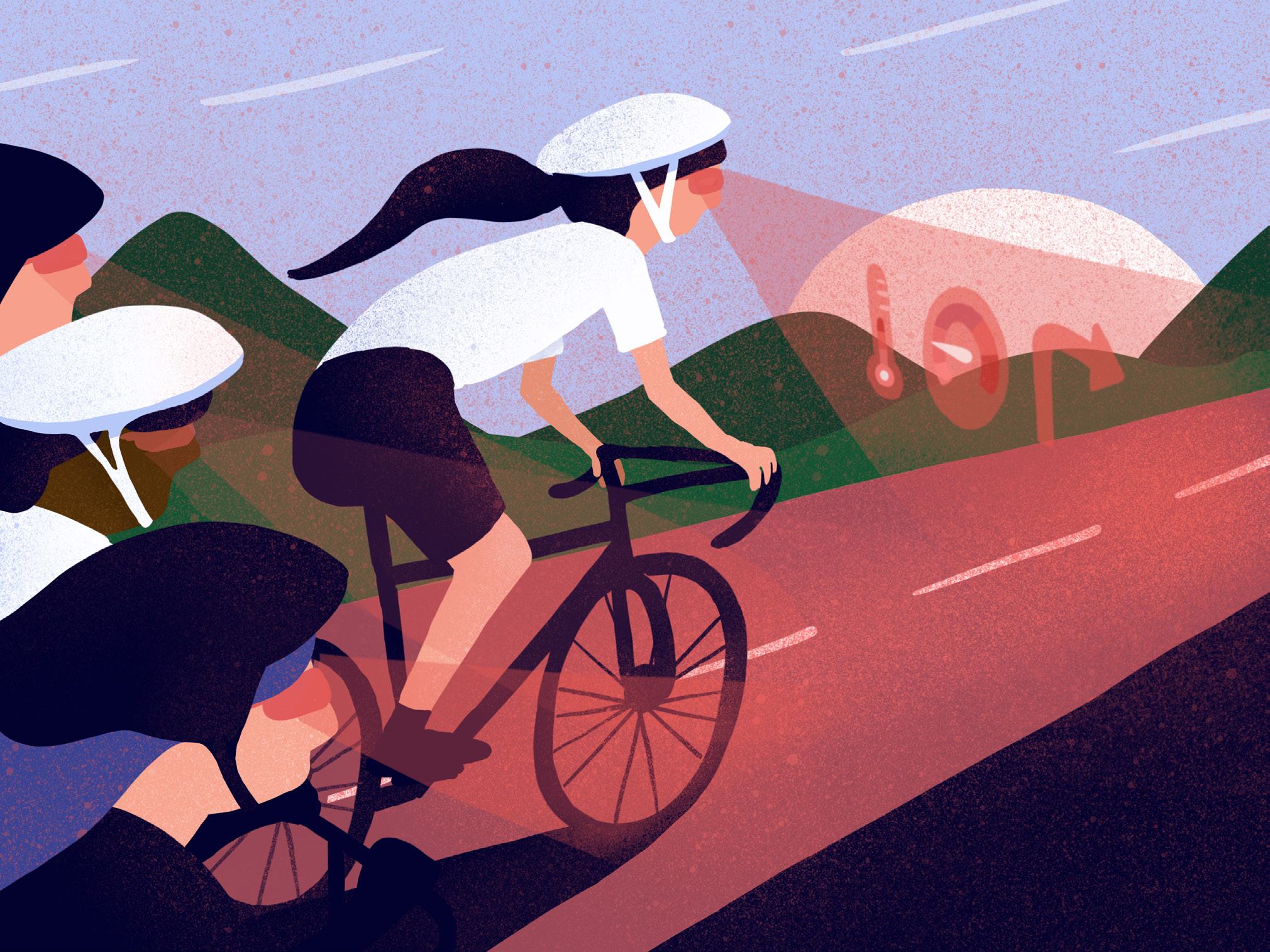
The hype about autonomous electric cars seems long ago now. Once touted as the future of urban mobility, with claims of zero emissions and reduced congestion, the reality didn't work out like that. Roads were as congested as ever as travellers were tempted into autonomous vehicles for even the shortest of trips. Tailpipe emissions ceased, but brake dust and tyre wear still generated particulate pollution.
While driverless cars did well at navigating city streets, they were less capable of getting around obstacles like people or cyclists. Much like the modernist visions of the 1960s, some argued that people and cars should be separated to prevent accidents and improve traffic flow. Katerina, however, saw this would just lead to yet more cars, and to all the progress made by cycling and pedestrian campaigns being reversed.
As a lifelong cyclist, Katerina had personal experience of the risks posed by autonomous vehicles. Three years ago she was hit by one. Luckily, neither was traveling fast and she wasn't severely injured, but the crash was a wake-up call.
Working at an augmented reality studio, Katerina decided to explore the potential of the technology to help cyclists. Wayfinding with a GPS map was irritating. It either required frequent stopping and starting, or taking her eyes off the road even if only for a few seconds. Moreover, Katerina wanted to go beyond wayfinding; she imagined a network of virtual cycle paths criss-crossing the city, with cyclists directed from place to place through simple visual information overlaid onto the world through projections onto riders' glasses.
She presented her ideas at the next local AI for Social Innovation meetup. It was the talk of the evening, so she set up a working group to develop the new vision. As cyclists themselves, and through speaking to cyclists online and in person, they realised that cyclists felt safe in numbers. Cycling as a mass provided security and they were more likely to be noticed by autonomous vehicles and human drivers. The existing cycle lane infrastructure was better than it used to be, but it didn't always go the way they needed to go. Besides, different cyclists had different needs: some rode fast, others slow; some were confident, others wary. They needed to be directed down different routes.
The team developed their wayfinding platform, FreeWheel, using open-source AI software, and tried it out with different cyclists. James, who was new to cycling, was directed down quiet backstreets where he could ride slowly and get used to riding his bike. Louise, by contrast, was happy to ride at high speeds with her recumbent through busy traffic. The users liked the platform, but for Hannah and her team there was more to be done.
By incorporating data gathering tools into the platform and putting sensors in bikes themselves, they could measure riders' speed, acceleration, deceleration, sudden stops and so on. FreeWheel could therefore assess the suitability of different roads for cycling. Sensitive accelerometers and pollution sensors collected data on road surface quality and particulate levels respectively. The virtual cycle routes became dynamic, changing depending on traffic, pollution or road quality.
FreeWheel also assessed desire lines, noticing that sometimes riders would disregard its instructions to take another route. These desire lines were incorporated into its wayfinding algorithms too, allowing on-the-ground experience of cycle routes to be incorporated into the wayfinding.
Finally, Katerina and her colleagues linked up with the local cycling group to see if they could benefit from the data. It turned to be a highly valuable resource for their campaigning aims: showing where pollution was worst, the places where cyclists faced the most risk, and the routes where permanent cycling infrastructure could be installed.
For Katerina, who came from a background where tech was often seen as the answer, she realised from the start that technology was just a means to enable an analogue solution. In place of autonomous vehicles and AI enhanced cyclists, her vision was for a city with as little traffic as possible. A cycle friendly city where riders could take whichever route they liked, looking at the architecture and the people around them rather than expending all their energy with one eye on the cars and one eye on the screen.
Stefan
How could digital tech reduce food waste and bring people together over fresh, good value communal meals?
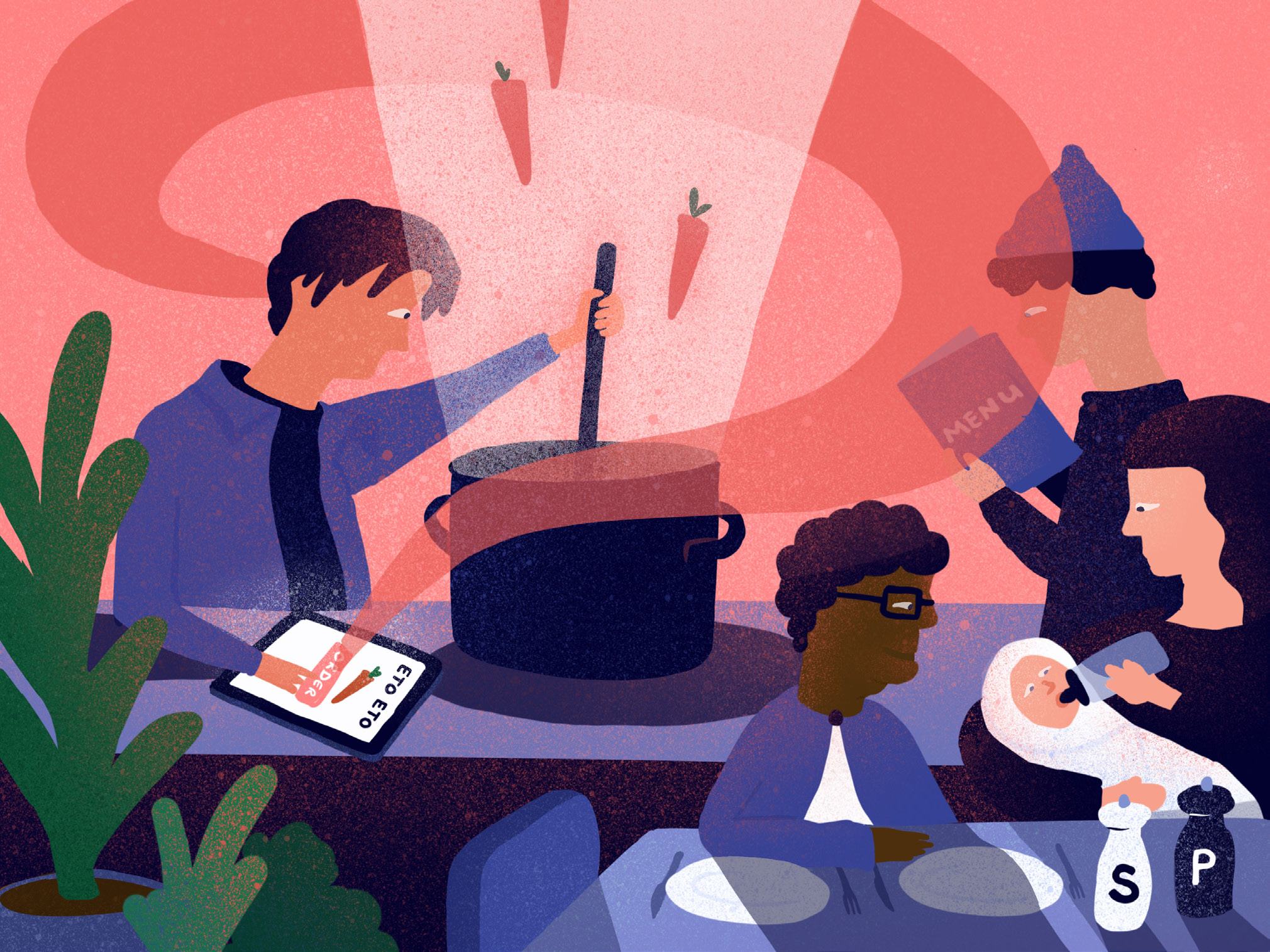
Two things drove Stefan to become a chef: a love of ingredients, and a passion for bringing people together over a meal. His priorities have changed a lot since his first full-time job in 2013. Then, working in high end restaurants, the freshest, most expensive, rarest ingredients from across the world were available every morning. Everything looked and tasted perfect.
But Stefan was horrified by the waste this generated, and saw that this approach was socially unjust as well as environmentally irresponsible.
Taking over the running of the Community Restaurant has allowed him to become a different type of chef. The restaurant opens four nights a week to provide nutritious meals for anyone in the community. It operates on a pay-as-you-like approach, attracting all sorts of people who usually might not interact. For single people living alone, the restaurant provides conviviality; for busy families it's a rest from shopping and cooking; for time poor office workers it's convenient and much tastier than a supermarket alternative; and for less well-off people, it's a chance for a decent cooked meal that they might not be able to make at home. Everyone sits at communal tables, reducing loneliness and creating community ties.
He has two main sources of produce. The first are local growers. Some are commercial, like the fresh salad grown in open-source hydroponic planters on the rooftops of blocks of flats. Because these spaces are difficult to access, the growing is almost autonomous. Linked sensors monitor and adjust moisture, temperature, light and nutrient levels in the machines automatically. The only labour required is the harvest. Other local produce comes from volunteers, like the annual apple picking days in community orchards and people's back gardens run by Lethabo and others who've migrated to the area due to climate crisis. Some produce also comes from individuals with allotments or indoor growing machines.
The second main source is waste food that farmers can't sell. Increasing food prices and environmental awareness have made consumers less wary of wonky fruit and vegetables, but the commercial food system continues to be based on excess. Even with the most advanced agricultural technology, farmers still end up with occasional gluts. This means many farmers find themselves with produce they're unable to sell to supermarkets or wholesalers.
To get his hands on this produce, he scans an open-source platform, Eto Eto, set up by environmental activists. The platform is best-known for providing infrastructure, knowledge and tips for urban growing, but has recently launched a new function for matching food surplus and need. Eto Eto lists food offers available in the region near the user, allows chefs to choose the ingredients they want, and calculates the most efficient mechanism for delivery. They have electric vans criss-crossing the area, making drop offs and collections in the most efficient route possible, or buyers can pick up the produce themselves.
For Stefan, it's a great system. His meals are made largely of local, seasonal ingredients, they're cheaper, and they're fresher. The creative challenge is good fun too, and he's devised original ways to deal with seasonal gluts of produce like the mountain of apples he knows he'll be getting every autumn.
When he's ordered his produce, Stefan estimates the number of meals he'll be able to provide and puts this figure onto the community restaurant platform. Some places are reserved, for instance for elderly or vulnerable people, and other places are open to book. Diners check in with their own app to say they'll be coming and to make their donation for the meal. They also check too who'll be hosting the restaurant that evening.
Rather than having a base of its own, the restaurant moves from space to space depending on what's available. The city government lists vacant spaces on its own platform so they can be used by the community - sometimes a local school, sometimes the community centre, one of the local parks in summer. Businesses list their spaces too, and they've dined everywhere from the top of skyscrapers to the vaults of an ancient castle.
When dinner is served, Stefan surveys the scene with delight. There's always a buzz in the room, as new friendships are formed and old ones strengthened. The food isn't as glamorous as the high class dining that started his career, but it's certainly more inclusive and environmentally friendly. And even though the space is full, Stefan is also excited today to be able to send every diner home with an extra portion of apple crumble.
Omar
What if digital platforms changed the way we live, building stronger community ties?
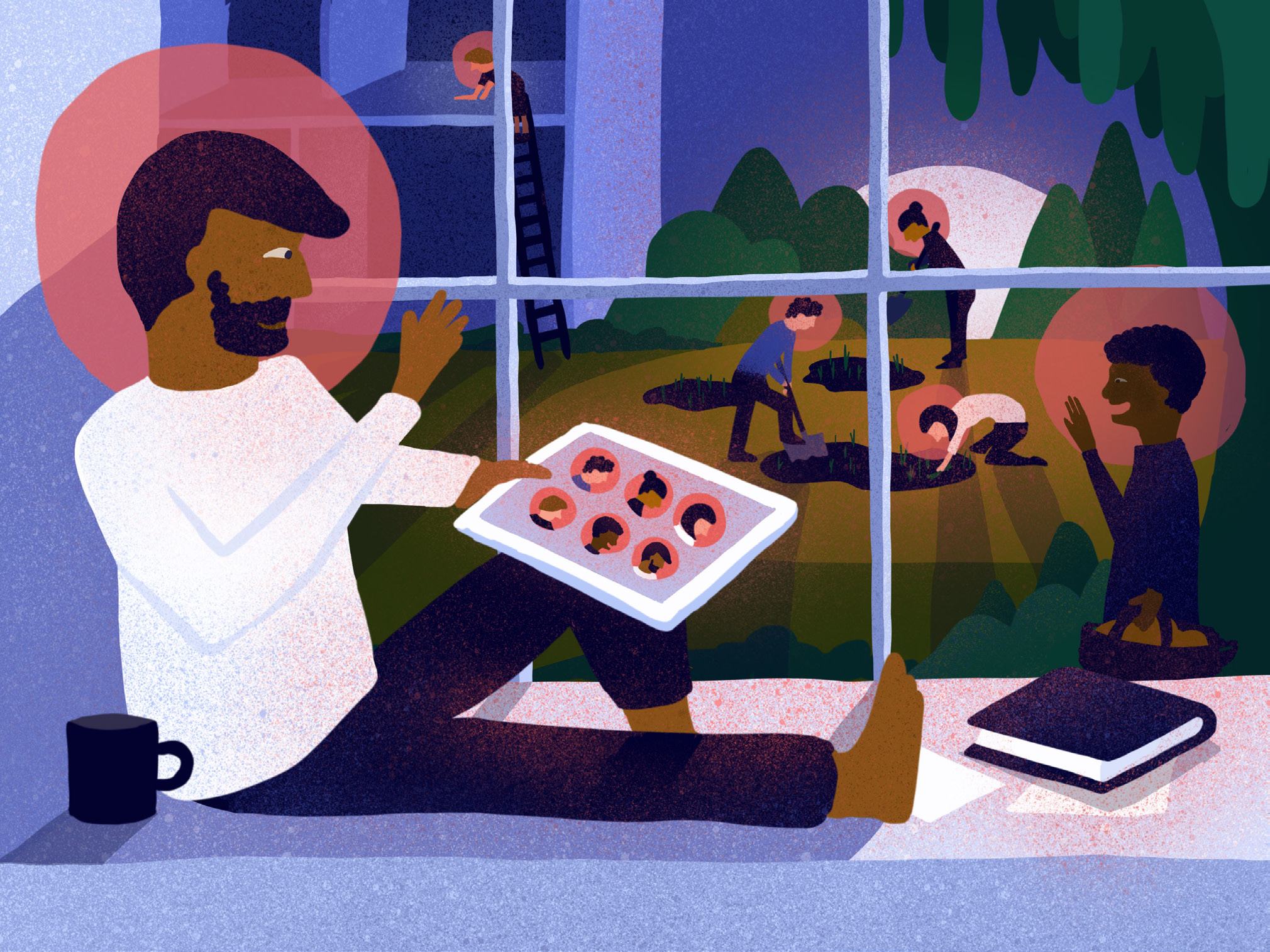
Since becoming an early adopter of Citizens' Agency's new platform for gig economy workers, Omar's work life has become a lot less fraught. Taking five minutes in the morning to look out the window as he drinks his coffee, he's pleased to see that the new homes across the way from him are nearing completion. Made with frames produced at the fab lab down the road, the new buildings will provide homes for sixty people in the same conditions as him: low cost, high quality places to live in a thriving community environment.
Omar has been living in the community, called Pamilya, for two years, but it was founded four years ago by a group of housing activists who wanted to counteract the failures of the commercial housing market. New rent control legislation made the private sector more tolerable for those who couldn't afford to buy their own home, but many people were still putting sizeable portions of their income into the pockets of private landlords. The housing co-op was developed on a derelict site, with the aim to provide low rents, to invest profits back into more low cost housing, and to create environmentally and socially sustainable communities.
Pamilya is founded on principles of equality and diversity, housing a mixture of students and young people, families, single mothers and older people. Most older people live independently, knowing that they can rely on the support and care of their neighbours day-to-day. Pamilya prioritises vulnerable groups on its waiting list, particularly LGBTQ+ young people, people with disabilities and unemployed people. Waving to his newest neighbours through the window, a young couple who have recently fled Iran, he proudly recalls Pamilya's commitment to taking in new refugee families every year.
The community functions thanks to the contributions of all its members. Because Omar is not working today, he will be doing five hours of community work. There are a mixture of tasks to do: from gardening and general maintenance of communal spaces to cooking in the communal kitchen. A collaborative platform allows all members to upload tasks which need doing, lets members vote on which to prioritise, and enables individuals to take on tasks individually or by forming small groups.
Today, Omar and Katerina will be maintaining the community's shared bikes and tidying up the bicycle repair workshop. Normally a couple of young people will join them too, so they can pass on their expertise as well as make use of some additional helping hands. When they don't have collective tasks to do, community members also put time into the online community time bank, which makes it easy to share tasks like cooking or childcare.
As it's a sunny day, they bring the bikes they're working on out into the central communal space. Here, six or seven people are digging over the communal garden to prepare for spring planting. They use open-source seeds and permaculture methods to get a good crop of vegetables with as little environmental impact as possible. The food is shared amongst the community, often in communal meals. If there's a glut, the community restaurant is always happy to take spare food off their hands.
There are a couple of new faces which Omar doesn't recognise, so he steps over to introduce himself. The two young people are visiting from the other side of the ocean, and despite being tired from their trip, are keen to pitch in and get to know the community. The two will be staying here for a week to work on their language skills.
They tell Omar how they booked their stay on an open-source homesharing platform used by communities across Europe. The platform allows people to list homes or individual bedrooms for a nominal fee if they go away, and encourages intercultural exchange over profit. Community members voted to allow the use of the platform in order to allow as many people as possible to experience community living. However, they strictly limit the prices individuals can charge to maintain the spirit of the community.
Having made his introductions, Omar returns to the bike repairs. Katerina invites them to borrow bikes in the afternoon so they can explore the city. She encourages them to wear their AR glasses as they ride, so they can be guided through the network of virtual bike lanes which cover the city.
Projects and Organisations Which Inspired Us
Jesse
- The Government Digital Service (UK), which is responsible for digital public services
- The Social Value Act (UK), which calls for all public sector commissioning to factor in economic, social and environmental well-being in connection with public services contracts
- CoTech (UK), a network of co-operatives that sell tech and digital services and which aims to create a better technology sector that focuses primarily on worker, customer and end-user needs rather than on generating private profit.
- The City of Barcelona’s digital transformation plan (ES), which involves rolling out open technologies and free software for most of its technological processes and services.
- A host of digital democracy tools, many of which are profiled in other Nesta work such as Digital Democracy: The tools transforming political engagement
Amelie
- Coworker.org (US) and Organise (UK), both of which allow users to start, run, and win campaigns to change their workplace
- The Independent Workers' Union of Great Britain (IWGB), an independent union which represents mainly low paid migrant workers, such as outsourced cleaners and security guards, workers in the so-called “gig economy”, such as bicycle couriers and Uber drivers, and foster care workers.
- Coliga (defunct, DE), which aimed to help freelancers team up for bids and jobs, and to make it easy for networks like coworking spaces to share in any revenue generated from jobs and connections they facilitated for their members.
- Intermittent du spectacle (FR), a formal status in France for people who work in sectors such as theatre or cinema, allowing them to access unemployment benefits when not in work
- The Resolution Trust and DotEveryone's work on reputation portability
- The Platform Coop movement, and individual platform coops such as Ride Austin (US) and Stocksy (US)
- FairCrowdWork (DE), which collects information about crowd work, app-based work, and other “platform-based work” from the perspective of workers and unions, and offers ratings of working conditions on different online labour platforms.
- The RSA's essay collection Field guide to the future of work
Lethabo
- Immersive journalism, such as that discussed by Nonny de la Peña
- Viarama (UK), which uses VR to improve the lives of senior citizens who are receiving end-of-life care
- rooom (DE), an online do-it-yourself platform for 3D, Virtual Reality (VR) and Augmented Reality (AR).
- Hack your future (NL, BE, DK, CA), a non-profit programming school teaching web development to refugees and Code your future (UK), a similar initiative.
Lucas
- Jouliette @ De Ceuvel (NL), a blockchain-based energy token which empowers individuals and communities to easily manage and share their locally-produced renewable energy
- Brooklyn Microgrid (US), a community-driven initiative which reimagines the traditional energy grid model, with the concept of a communal energy network.
- Matched crowdfunding programmes, such as Goteo’s (ES) or the Mayor of London’s (UK), and Nesta’s research on the topic
- Decode (NL/ES), which aims to provide tools that put individuals in control of whether they keep their personal data private or share it for the public good
Nikolay
- Citizens juries and councils from across the world, including Ireland, Belgium, Australia, the US and the UK
- Digital democracy platforms, including those profiled by Nesta
Isabella
- The National Institutes of Health’s Data Commons Pilot (US)
- Nesta’s work on health data commons
- Good Things Foundation’s work on digital skills for health (UK)
- A number of blockchain-based healthcare initiatives
Davide
- The international Fab Lab network and the Fab Foundation
- Fab City Global Initiative, which aims to make locally productive, globally connected cities and citizens by enabling the return of manufacture to cities supported by a Data-in Data-out urban model.
- Precious Plastic (NL), an open-source machine for recycling plastic.
- Wikihouse (UK), an open-source technology for low-cost, low-footprint houses.
- Kniterate (ES/UK), a digital knitting machine.
- Disrupt Disability (UK), modular customised wheelchairs, and Too Wheels (IT), an open-source sports wheelchair.
Katerina
- Glasgow's cycling app (UK), which allows cyclists to submit routes, distances travelled, times taken and average speeds, which is then shared with the ultimate aim to inform future investment decisions and improvements to the city's cycling network.
- Appmosfera (ES), a smartphone application, algorithms and air quality sensors that provide realtime information about the healthiest cycle routes and locations throughout cities.
- Heads-up Display, which uses an an augmented reality visor that flips down from a standard cycle helmet to create a transparent screen in front of the cyclist's eyes, and provide route-finding and other information.
Stefan
- Open Food Network (global), an open-source platform which aims to build local food systems by building markets, linking different stakeholders and sharing knowledge
- Aquapioneers (ES), which develops sustainable urban agriculture solutions using aquaponics, an innovative technology that reduces the environmental footprint of the food industry
- Open Source Ecology (US), a set of open-source industrial machines that can be made for a fraction of commercial costs.
- Comoodle (UK), a local collaborative platform through which citizens can access local council assets and space
- OLIO (UK), a collaborative platform for local food-sharing, and FareShare, which redistributes food from the food industry to charities and community groups.
Omar
- Housing coops, including as mapped out by Housing International
- Community shares, as promoted by Co-operatives UK and Locality (UK)
- Timebanking Europe, a network of local timebanks.
- Fairbnb (IT), a community-centred alternative to mainstream vacation rental platforms.
Nesta 58 Victoria Embankment London EC4Y ODS +44 (0)20 7438 2500 [email protected] @DSI4EU www.digitalsocial.eu
Nesta is a registered charity in England and Wales with company number 7706036 and charity number 1144091. Registered as a charity in Scotland number SCO42833. Registered office: 58 Victoria Embankment, London, EC4Y ODS.