Acknowledgements
Special thanks to Nesta colleagues: Christina Cornwell and Halima Khan for the vision and leadership that inspired this programme; to Jacqueline del Castillo for the knowledge and expertise that underpinned our reports and laid the groundwork; to Katy Rutherford, Wallis Grant, Nyangala Zolho and Jacqui Almond for their support in sense checking, communicating and working through the legal details.
From Dunhill Medical Trust: Susan Kay, Sarah Allport and Ethny Childs for their wisdom, challenge and constructive partnership.
From Icarus: Helen Bovey, Helen Carr and Nicola Stenberg for adopting our approach and adapting as the programme evolved, much of this report is a result of their observation.
To our Advisory Panel who gave their time and expertise generously: Ayeisha Thomas-Smith, Chris Underhill, Oliver Benson and Jo Smith.
To our network of movement building experts for their energy, creativity and common purpose.
Most of all, thanks goes to the movements and the people who make them. They continue to excite and inspire all of us who have met them – they are changing the world right now.
About Nesta
Nesta is an innovation foundation. For us, innovation means turning bold ideas into reality and changing lives for the better. We use our expertise, skills and funding in areas where there are big challenges facing society. Nesta is based in the UK and supported by a financial endowment. We work with partners around the globe to bring bold ideas to life to change the world for good.
About Dunhill Medical Trust
The Dunhill Medical Trust is an independently endowed UK-based charitable foundation funding the remarkable science and the radical social change needed for healthier older age. We support researchers and communities, systems and services, fundamental science and applied design. We care about inclusion, address inequality and make the interdisciplinary connections that bring ideas to life.
If you'd like this publication in an alternative format such as Braille or large print, please contact us at: [email protected]
All photos in this report by Beth Crockatt
Design: Green Doe Graphic Design Ltd
Forewords

For more than ten years, Nesta has been researching, funding and championing 'people powered health', a vision of health created by people, with people, for people. We have explored and backed many different ways that citizens and communities can support one another's health and care, through social connections, innovative uses of data and technology, and by reimagining the relationships between public services and the people who use them.
Looking back through our work – and way beyond - we have seen that many of the greatest innovations in health and care have been brought about by people rising up to demand greater choice, control, equity or justice. In fact, many of the approaches to people powered health that we have supported over the years, and much of the ethos that is now embedded in the NHS' vision for personalisation, has its roots in the disability, mental health survivor and service user movements of the 1970s.
This is why we were delighted to research the role of social movements and their impact on health and care systems as part of NHS England's Health as a Social Movement programme 2016-17. Our research showed enormous untapped potential to combine the energy and dynamism of social movements with the need for radical institutional change.
Our Social Movements for Health programme grew out of conversations with the Dunhill Medical Trust. Together, we wanted to learn more about the journeys that social movements go on and the ways that funding organisations can support them. We hoped that we could help emerging movements build momentum and find ways to support one another, as part of a growing movement of 'people powered health' movements.
In this short report, we share some of what we hoped to achieve and some of what we learned. We hope that it will resonate with funders and institutions already working with social movements, and that it will help others open up new conversations about power and what it means to collaborate successfully with social movements.
The scale and urgency of the Black Lives Matter protests leaves us in no doubt about the power of social movements to shift public narratives and accelerate change. Much has improved, and yet, COVID-19 has continued to exacerbate and illuminate the deep inequalities that still affect so many in our society. We hope that this report will help to inform and inspire many more organisations to think about the unprecedented potential of movements to bring about change in health and care, and to seize many more opportunities to march alongside them.
Christina Cornwell, Nesta
For over thirty years, the Dunhill Medical Trust has been enabling the very best of the UK's academic and clinical researchers to understand ageing and to find ways to treat age-related diseases and frailty. Alongside this we have supported community-based organisations working to enhance the lives of people as they get older. The breadth and diversity of our network has motivated us to find ways to help this community add up to more than the sum of its parts.
Nesta's research into social movements and 'people powered health' offered an insight into a new way of influencing community-led systemic change in health and social care provision. Through it we saw the potential to try out new ways of funding and collaborating with partners. Working with Nesta and the social movements, we hoped to learn more about funding mechanisms, approaches and models which could inform our work in ageing, while at the same time, producing an evidence base which would enable us to share our learning with others.
The programme has coincided with us developing a new strategic plan. Many of the things we have learned through this programme have encouraged us to take a new approach, which we hope will see us playing our part at the heart of a movement of people (researchers, activists and other passionate and entrepreneurial community leaders) who believe that addressing health inequalities is one of the most important challenges we face as a society and underpins the systemic changes that need to be made to secure a healthier later life for us all. The Social Movements for Health programme has helped us refine and consider our ways of working and our approach for the next ten years.
Susan Kay, The Dunhill Medical Trust
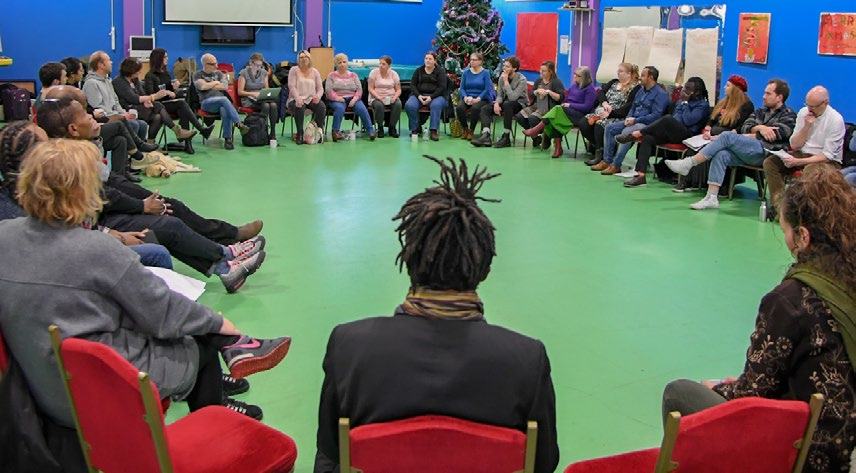
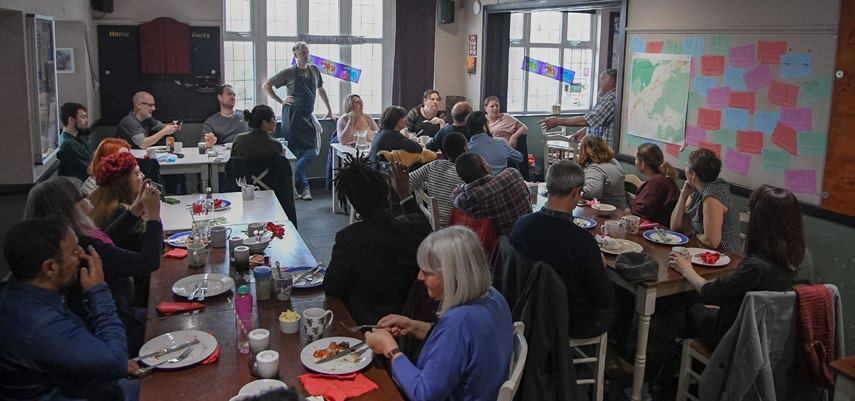 Members from different social movements at a cohort event, December 2019
1. Introduction
In November 2018, Nesta and the Dunhill Medical Trust launched an innovation programme to support social movements seeking to bring about change in health and social care.
Our goal was to:
- Explore the potential for social movements to challenge and change the systems of delivery, culture and practice of health and social care.
- Learn how funders can support the growth and impact of social movements.
- Understand whether support for social movements should be different from working with other community-led organisations, or whether they might be 'incubated' in a similar way to innovative start-ups which are often challenging the status quo.
What is a social movement?
We defined social movements for health as people coming together to promote or resist change in the experience of health, social care or the systems that shape them. They unite people around a common vision and they grow networks to amplify their message and challenge society, institutions and elites to think and act differently. Often, they bubble up outside formal institutions, but they can also come from within. For us, a social movement has to be challenging power or disrupting the status quo.
Our programme aimed to support emerging movements that are particularly focused on issues that are typically under-resourced, under-developed or marginalised.
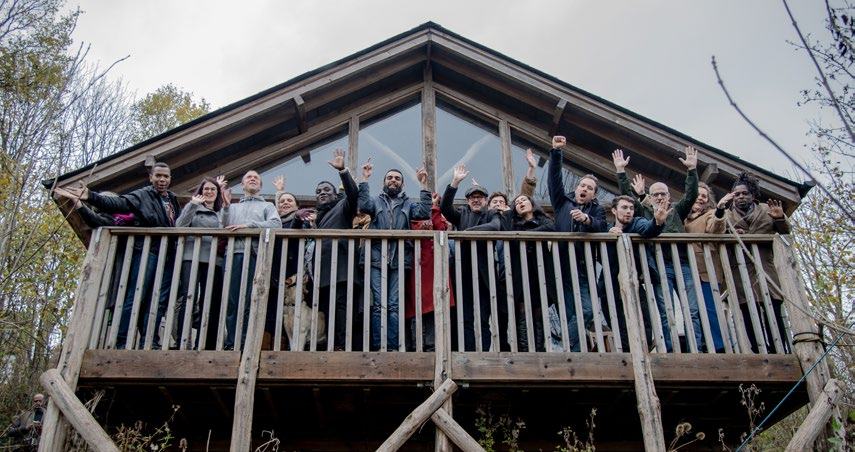
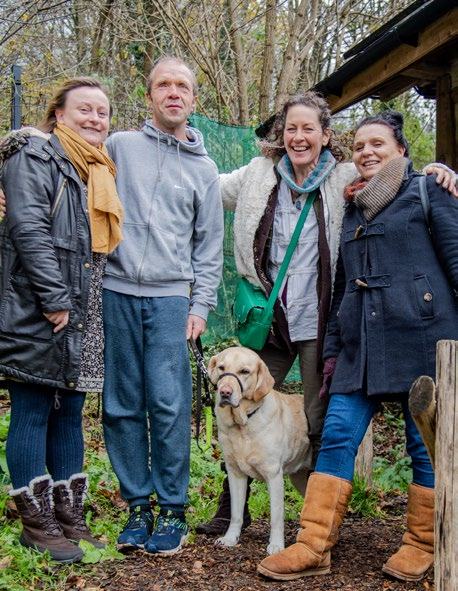 Members of East Brighton's Causewayed Movement
Our research partner, Icarus, worked alongside us throughout the programme, capturing insights and learning from each of the movements, as well as from Nesta and Dunhill Medical Trust. We intend to publish their report once they have completed follow-up interviews with participants over the autumn of 2020.
This short paper draws together our key reflections and learning as funders. We hope it will be useful to other funding organisations, both those with experience of and/or interest in supporting social movements in the future.
Questions we wanted to explore
- What role should funders take as supporters of emerging social movements, and what challenges would they encounter in their governance?
- What kinds of approach and support will facilitate the growth and influence of social movements?
- How can this happen in a way that is sensitive and respectful to the autonomy of social movements avoiding co-opting or unwittingly undermining them?
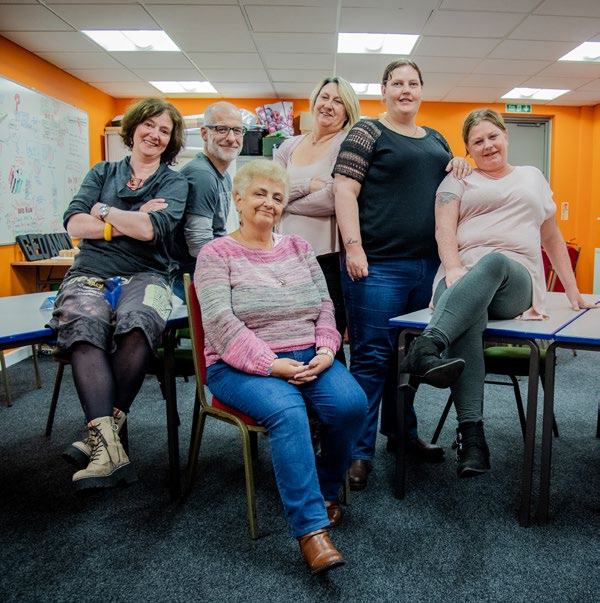 Members of Northern Ireland's Mental Health Rights Movement
2. About the Social Movements for Health programme
Following the launch of the programme, seven social movements were selected and we worked together with them from April 2019-March 2020.
The movements
BlackOut UK
'We mobilise bi/gay and or trans men of African descent in the UK to work together to address shared challenges, create platforms for our voices, build networks to support our aspirations, and enable us to play a more active role in the communities of which we are part.'
Causewayed, East Brighton
'We are a resident-led social movement fighting for fairness in our city by demanding better health and quality of lives for the people in our community and challenging the health inequality experienced by people in East Brighton.'
Mental Health Rights Movement in Northern Ireland
'We are led by people who have lived experience of mental distress, many of whom have been bereaved by suicide, campaigning on the lack of investment in counselling services and reducing waiting times for a therapeutic intervention.'
Movement for Social Approaches in Mental Health
'We are a broad coalition of service user groups and professional organisations of social workers and clinicians connecting together to challenge traditional approaches to mental health. Our demand is for mental health investment and services to focus more on addressing social inequalities, social justice, social support and rights.'
National Association of Care & Support Workers
'We are care workers demanding the professionalisation of care work including improved pay, training, regulation and support that reflects the skilled nature of our work and the mental and emotional demands it places on us.'
Self Advocacy Together
'We are campaigning to ensure that people with learning disabilities are at the heart of decision making in all areas of society and life.'
Students for Social Prescribing
'We aim to integrate social prescribing into early clinician training and bring about medical education reforms across the UK.'
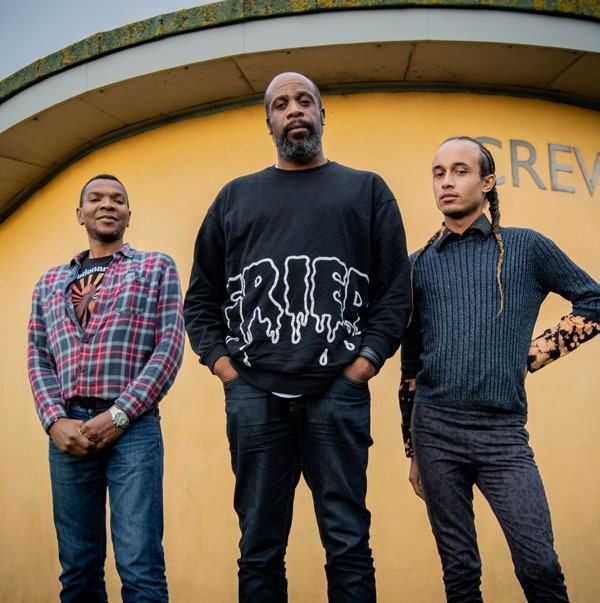 Members of BlackOut UK
We offered three core areas of support:
I. Tailored funding
Nesta and Icarus worked with each social movement during the early stages of the programme to understand their vision and aspirations for growth and impact and agree broad objectives and milestones. The movements each received funding of between £20,000 and £50,000, depending on the scale and nature of their plans and needs.
II. Movement building opportunities
The social movements could access specialist support from people with extensive experience of movement building in areas such as framing, tactical development, network formation, and engagement strategies. Support was available for movement leaders and other members, as well as the representatives coming together as part of programme events.
III. Connection to social movement peers
The programme created a community of peers across the social movements and provided opportunities (events we hosted and others we signposted them to or supported them to attend) for connecting with like-minded people facing similar opportunities and challenges.
We also reached out to all of the movements as the coronavirus pandemic began and have provided additional funding or support to three of the movements as part of Nesta's COVID-19 fund.
3. A different approach to funding
Social movements can be a powerful 'bottom-up' approach to social change, one that has received increasing attention in recent years due to the profile and impact of movements like #MeToo, Extinction Rebellion and Black Lives Matter. This has led a number of funders and policy-makers to consider opportunities for collaborating with and/or supporting social movements as a way to respond to public opinion and accelerate change. However, social movements are complex ecosystems of individuals, organisations and networks. As we observed in our first paper on social movements, engaging with them 'can be messy, turbulent and risky'.
Traditional forms of funding also tend to be transactional in nature, with payments made in return for the delivery and reporting of an agreed set of project outputs. This is unlikely to serve social movements well. Their membership, leadership and priorities can be fluid and adaptable, and so, it is hard to identify concrete goals and deliverables, and to identify clear lines of accountability.
Nesta takes a 'high challenge-high support' approach to all its grant funding. This means that on each programme we typically work in close partnership with our 'grantees', targeting our financial and non-financial support to help innovators strengthen and test their ideas, build their evidence base and accelerate and sustain their growth and impact. During the design of our programme, our research and engagement with many different movements suggested that a combination of funding, capability building, and peer support would also be helpful for movements, particularly in the early stages of their development. Nesta and Dunhill Medical Trust wanted to test this, and to explore how our approach could be developed and adapted to provide funding, challenge and support in ways that would align with and benefit social movements - whilst also fulfilling Nesta's charitable objects and other legal and financial responsibilities.
We looked for inspiration amongst other funders that have been experimenting with different ways of funding organisations, movements and community action. Internationally, we drew on the New World Foundation's tips for funding social movements, and looked at different examples of transformational approaches to funding. In the UK, we were pleased to become part of the Losing Control network which brings together funders and activists interested in developing more open and collaborative approaches to funding. Through this network we explored how to share power, such as through participatory grant-making, and how to be good movement allies.
We wanted to act in solidarity with the social movements, moving from being a financial backer ('I'm right behind you') to a fellow traveller ('I'm right beside you'). We tried to consistently use the language of partnership and collaboration and sought to be a champion and critical friend to each of the movements, avoiding a top-down dynamic as much as possible. We established a small team with two programme managers each working around three days per week on the programme. Both of them had direct experience of participating in movements and campaigning. They also established a framework of suppliers with expertise in movement building support. This enabled us to build relationships and maintain a high level of engagement with multiple people involved in the movements.
Our approach to working with the movements can be characterised by focusing on four behavioural drivers which informed our way of working.
Four behavioural drivers
1 Congruence – we aimed to embody the values of social movements
We tried to ensure consistency between our stated aims and the way in which we operated, taking care to be inclusive and aware of our individual and organisational power and privilege. This was especially important when it came to defining success for the movements and supporting and measuring what mattered most to them.
2 Adaptable – we aimed to be responsive to the needs of individual movements
We tried to continuously develop and adapt the scope of our offer and our activities through collaboration with the movements and in response to their changing priorities, contexts and circumstances.
3 Critical friend – we aimed to provide a high degree of challenge alongside a high level of support
We tried to act as a critical friend to each movement, providing stimulus, encouragement and honest feedback. We encouraged them to be brave and to be clear about what they wanted to achieve and offered financial and practical support to achieve it.
4 Relational – we were mindful of our relationships with the movements and tried to be an ally and build trust
We tried to be reliable, responsive and dependable. We wanted communications to be relational and avoid a transactional feel.
4. The approach in practice
We sought to put these four behaviours into practice at each stage of the programme. With the help of the movements, our research partner and the movement building experts, we were also continuously learning and adapting our approach. Our insights, lessons and reflections are summarised below.
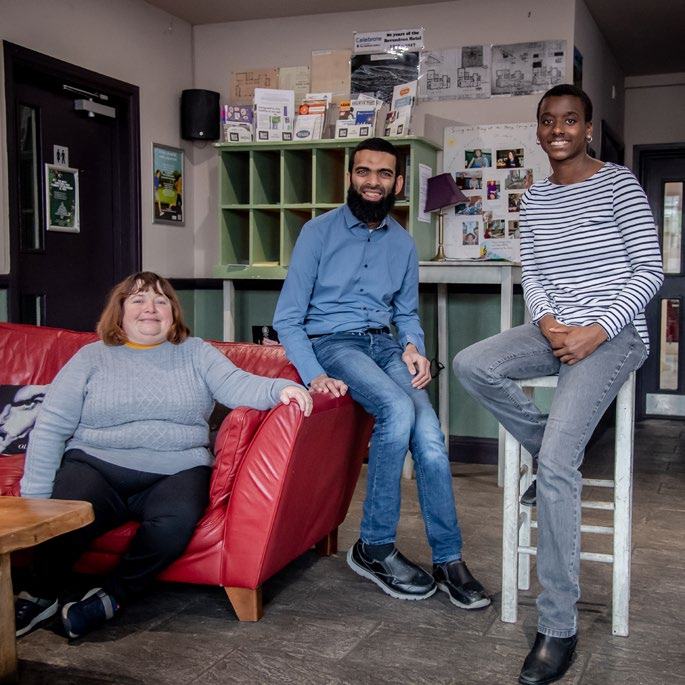 Members of Self Advocacy Together
Recruitment to the programme
'Promoting the programme and reaching the people who might engage meant going well beyond Nesta's usual audience.
The programme was set up and promoted in the same way as other Nesta grant programmes but a more bespoke approach was required to support applicants.
- The Nesta team drew on their own social media networks to approach people and share links to the fund. Over 50 per cent of applicants heard about the programme this way.
- We ran three 'in person' events (Manchester, Cardiff and Edinburgh) to promote the programme and encourage applications as well as two webinars to answer questions about the application form.
- An initial, short application form attracted c.200 applicants. Twenty were shortlisted and asked to write a longer application. All 20 were invited to a collective workshop and also had a one-to-one online chat with a Nesta programme manager before submitting this application. An external advisory group reviewed and made recommendations on these submissions before the final seven were selected.
Six criteria were detailed as important in the selection process and relayed repeatedly to applicants (Motivation, Marginalisation, Movement credentials, Momentum, Measuring impact, Membership).
- Many applicants (successful and not) found the conversations and the process of applying useful in thinking about their approach and in thinking about themselves through a movement-focused lens.
The challenges
- Rather than seeing the workshop and online chat as a learning opportunity, some applicants (successful and not) saw it as a hurdle to negotiate and overcome.
- The recruitment process meant that the programme managers developed a much more nuanced understanding of the movements than was conveyed in the written applications considered by the advisory group. More time at this stage of the process would have helped make this perspective more central to the final selection.
- Hosting the workshops for shortlisted applicants in London (despite covering travel costs, etc.) did make it harder for some movements to engage.
- Despite the several aspects to this part of the process, with some movements there was still only one individual who engaged with the application process.
Key lesson
Investing a lot of time in the recruitment and selection process and enabling as much human interaction as part of it was vital to establishing the tone for the programme as a whole.
Grant agreements and milestones
'Our leadership has recognised that movements may change their minds and that we can respond accordingly.'
From the start, it was acknowledged that as the social movements evolved, their needs would change and that we should be able to respond.
- Legal grant agreements were made with an organisation of the movement's choice, and there was flexibility to change the organisation which held the grant agreement over the course of the year as relationships between members shifted and developed over time. In many cases this organisation was not directly involved in the movement or programme but simply processed the money on their behalf. This was particularly welcomed by the movements that had little experience of managing budgets.
- Grant agreements, including objectives and milestones, were kept as open and as flexible as possible, allowing for multiple changes without formal approval or grant variation.
- The movements were given time to identify their support needs and the expertise they wanted to access. They were able to change their minds and seek additional support right through the programme.
- With the onset of COVID-19, we reached out to each of the movements to offer support. For those that were still using our funding or working with our suppliers, we reassured them that they could adapt their plans as required.
'The flexibility of the programme has allowed social movements the space to adapt and change course from their original plan and has been vital for the success of some social movements.'
The challenges
- Flexibility can be overwhelming. Some social movements would have initially preferred more structure and a more clearly defined menu of choices, rather than the option to spend time considering their needs.
- Our own funding processes and capacity meant that we were sometimes slow to process requests for additional support.
- Some of the movements were still developing effective approaches to communication – sometimes it was hard to ensure we were speaking to everyone we needed to in the movement.
Key lesson
Nesta's legal team spent considerable time creating grant agreements that allowed flexibility for grant recipients while fulfilling Nesta's charitable objects.
Relationship management
Our aim was to build trust and understanding throughout the process, from the start of the application process to the end of our grant funding programme, and ongoing.
- The application process offered multiple opportunities to get to know each other, through telephone conversations, webinars and workshops as well as the application forms.
- Small milestones every six to eight weeks created regular opportunities for contact. Many of the movements were keen to have more frequent check-ins and this tended to help them make the most of the movement building support on offer and sustain momentum.
- We made a conscious effort to try to step away from conventional grant making language – such as 'grantees', 'funding agreements', 'milestones', 'beneficiary numbers' etc. – that can feel transactional and can reinforce an unhelpful power dynamic.
- When possible, we joined the movements at their meet-ups and events, meeting them 'on their turf'. We also protected time for social activities, such as meals out or trips to local community activities, during all our programme events around the UK. This enabled a more human relationship in which we got to know each other beyond our formal roles.
'Planning and preparing together a media strategy to mitigate the potential reputational risk of one movement's planned action, worked really well. They felt supported, our senior leaders were happy with the risk and, in the end, it grew trust between us and the movement.'
The challenges
- In practice the frequency of milestones meant that many conversations needed to include a transactional element. This sometimes felt like an obstacle to open communication and reinforced the funder's 'power' as the party 'releasing' funding on the achievement of milestones.
- Some of the social movements in the programme did not engage with us to the same extent as others. This meant that it was harder to establish trust and the potential value of the relationship was not realised in the same way.
- Non place-based movements occupied a 'virtual territory' and so going to them (rather than them being asked to come to us) was not possible or useful to them.
Key lesson
Fewer financial milestones – but a similar number of touchpoints - would have helped to minimise the transactional element that money brought to the relationships between funder and movements.
A whole-cohort approach
Our intention was always that the social movements would feel part of a cohort rather than seven individual grant recipients. They had much in common and they were all in the early stages of development (even if some had more established structures and processes in place). We hoped this approach would foster peer support as well as surfacing shared needs and themes.
- We took care to select movements committed to the overall 'people powered health' agenda but approaching it from a wide range of issues and perspectives. Many of the movements were led by and involved citizens with lived experience, others by or with practitioners wanting to change systems from the inside. Both benefited from the opportunity to understand each other's perspectives.
- While the support made available to the social movements was not standardised, a framework of suppliers was established before the programme began to offer expertise to the cohort right from the start.
- Three cohort meet-ups were held during the programme, bringing us together with the social movements for a couple of days each time. This enabled the movements to build relationships within their movement, with other movements, and with us. This meant that we could all learn from and be inspired by one another, as well as the movement building experts.
- We made sure that all our events were as accessible and inclusive as possible so that everyone could participate equally. We avoided unnecessary paperwork and presentations and learned to keep agendas flexible, changing the balance between creative workshops and more open spaces in response to participant feedback.
- The later events especially had really positive feedback about the opportunities people had to share common challenges and hear ways others were overcoming them.
'I have bonded even more with colleagues from my own movement.'
The challenges
- We varied the days and times, but weekday, daytime sessions limited the scope for everyone to attend, particularly people in full-time jobs or in training programmes (e.g. the medical students' movement).
- Some social movements did not engage as enthusiastically with the cohort events as others, limiting the potential for them to benefit from them and build relationships with their peers. In most cases this was because participants had multiple demands on their time including paid and unpaid work or caring responsibilities. In some cases, it seemed that people weren't as enthusiastic about engaging with and learning from the others, which meant that they didn't always gain the full benefit of the programme.
- The movements were dispersed geographically around the UK. This meant some of the approaches around incubation we might have tested were not possible.
- Organising the cohort events to make it as easy as possible for movement members to attend, e.g. paying travel expenses directly to each attender, was very time consuming.
- There were times that the diversity (of experience and movement building knowledge) within the cohort made it challenging to deliver what every social movement needed through cohort learning.
Key lesson
Connecting the movements brought to the fore the intersectional challenges many faced and was inspiring for those able to attend. Focusing on peer support and cohort led content was key to the success of these events.
Movement building support
Like all of Nesta's grant programmes, we wanted Social Movements for Health to be a high support, high challenge programme. We were excited about helping the movements achieve their goals and celebrate their achievements. We also wanted to offer inspiration and encouragement to tackle difficult issues and to think broadly and creatively about their purpose and membership and their onward journey. In addition, Dunhill Medical Trust were keen to learn about how working in this way might influence their future approach to delivering larger programmes which had systemic impact.
- We ran an open call to establish a framework of 'suppliers' with movement building expertise. This made it possible to pair a social movement to a supplier quickly, ensuring that the support was appropriate for their stage of development and helped build momentum and sustainability. Social movements could access suppliers from this framework on request or with encouragement from the team. They could also request that other types of support were added to our framework.
Examples of the type of support provided included: mentoring, group facilitation, developing tactics and actions, social media training, framing and strategic communications, and research.
- Icarus provided each movement with support to develop their aims and support needs and to help them think about how they might like to monitor and measure their experiences, achievements and learning.
- We also emphasised that participants in the programme were experts too - the focus was not solely on securing support and advice from external suppliers - but fostering a culture of mutual allyship and support.
- Members of the Dunhill Medical Trust team acted as mentors or, less formally, as a sounding board to the membership of two of the cohort organisations, helping them to think through the challenges they were encountering either as part of the cohort or beyond it. For example, in matters of management, leadership and developing additional sources of funding.
The challenges
- It took some social movements longer to identify what (if any) additional support they might need. Supporting this process takes time and this resulted in a loading of provision towards the end of the programme.
- In some cases, we really encouraged the movements to accept an offer of support. The risk can then be that participants don't feel committed to it and see it as a funder requirement. This was particularly challenging where movements were heavily reliant on one or more individual leaders who found it difficult to let go of control and develop in more 'movement-like' ways. It has been challenging to know how best to deal with this. How far do you push? Is it appropriate to withhold funding?
- Being mindful of our own power and privilege requires constant attention. When you're in a position to be able to offer support, it can be easy to overlook the movements' own expertise. They are the experts in their own causes and what they want to achieve and have lots of experience to share with one another.
- Engagement in a programme with its own requirements and time constraints, however flexible, can be challenging, especially for people who have other demands on their time. There is a high risk of burnout amongst key individuals, and, as the programme progressed, we became increasingly aware of the need to be mindful of the 'self and collective care' needs of all of the movements.
Key lesson
Our network of movement building experts and our knowledge of their strengths and capacity grew over the course of the programme. This enabled us to match them better with the movements they supported.
Evaluating impact
With our research partner, Icarus, in place from the beginning, we aimed to maintain a focus on reflection and learning throughout the programme, for both the social movements and us as funders. Icarus shared insights at regular intervals, informing and shaping our ongoing work. (A detailed report bringing together all the learning from the Social Movements for Health programme - not just about funding - is being compiled by Icarus and will be published in the autumn of 2020.)
We chose Icarus as a research partner because they had extensive experience of working with social movements and community organisations. Icarus helped us develop a broad framework for evaluation and met with members of each of the movements and attended all the cohort events. They worked hard to be visible, transparent and to ensure that people didn't feel that they were being personally evaluated.
The challenges
- It is not straightforward to define what success looks like for a social movement. There is still much to be learnt about how to do this effectively.
- Engagement with Icarus was not uniform across the seven movements and some were reluctant to commit time to the research process, even though it was one of their few grant conditions. Learning about the programme could have been richer if all movements engaged equally, and of course, if the programme was longer overall.
Key lesson
It was useful to have a broad framework for evaluation but by holding this lightly, we were able to be more responsive and follow the impacts that were most significant for the movements themselves.
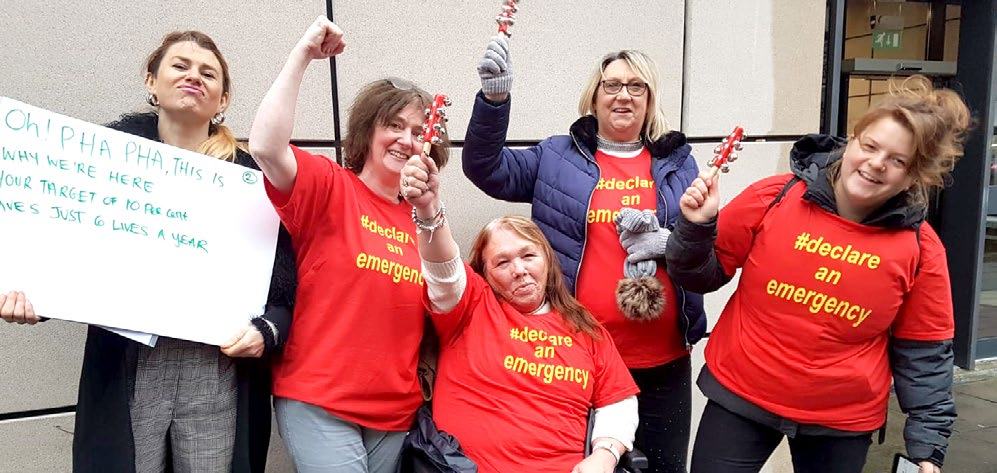 Members of Northern Ireland's Mental Health Rights Movement
5. Conclusion
As we designed this programme, we hoped that we would be able to help each of the movements, and the people within them, build the skills, ambition, scope and reach they need to achieve their goals. Only time will really tell if we achieved this, but despite different starting points and experiences, they have all left the programme more united, clearer about their aims, and more confident about their ability to make progress. The combination of funding, movement building support and peer collaboration worked well. Some movements found it difficult to spend all their money and benefited more from the capability building support. Some were less interested in the cohort events but really benefited from the funding. An even more flexible approach may have worked better and been more responsive to each movement's changing needs.
We tried our best to walk the walk - not saying one thing and doing another. But we haven't always got that right. Sometimes our processes were not as flexible as they could have been and sometimes, we slipped into the language and practices of traditional funding (milestones, project plans, etc.). We didn't focus on measuring outputs (numbers of events staged or people reached) but tried to help people in each of the movements develop their confidence and capability and ask what progress feels like to them. With hindsight, the programme would have been even more impactful if it was longer (at least 18-24 months long). This would have given more time to build relationships, understand priorities, and try out different ideas.
We believe that there is real value in funders acting as a 'critical friend' to social movements but it is hard to do this in ways that are both sensitive and productive. The issues that the movements were fighting to overcome are already challenging enough, they won't always welcome additional 'challenge' from our own privileged vantage point, however well-meaning it is meant to be. It is crucial to acknowledge that most of the people in the social movements have other jobs, responsibilities, and needs - and that overcoming systemic barriers is a marathon not a sprint. The need for self and collective care in this work has become more and more apparent to us and is something we wished we had paid more attention to at the beginning.
Perhaps the greatest challenge for all the movements (and for funders trying to support them) was presented by the pandemic: the new ways of working it imposed; the unprecedented strain it placed on existing health systems; and the pace of change it precipitated. It also laid bare the deep inequalities at the heart of health and care that each of the movements is seeking to expose, challenge and overturn, albeit in different ways.
The pandemic and the exposure of systemic inequalities has helped some of the movements in making their case for change and attracting members to support their campaigning. It also placed a huge strain on the movements and many of the individuals involved. We were pleased to be able to offer some of them additional unconditional funding as part of our COVID-19 Fund but we know that our financial support is small in comparison to the scale of some of the challenges they face.
Over the course of this year we haven't got everything right but we have listened, learned and adapted, and in the spirit of openness and transparency it is good to acknowledge that as funders we are just humans too! That was very much the spirit of the programme and perhaps offers a glimpse (alongside the experience of other funders in the Losing Control network) of a future of funders and communities building new types of partnerships and alliances. If funders can be more humble and human, they are more likely to become a successful and integrated part of an ecosystem of change. They might even become a part of the social movements they support.
58 Victoria Embankment
London EC4Y ODS
+44 (0)20 7438 2500
[email protected]
@nesta_uk
www.facebook.com/nesta.uk
www.nesta.org.uk
Nesta is a registered charity in England and Wales with company number 7706036 and charity number 1144091.
Registered as a charity in Scotland number SC042833. Registered office: 58 Victoria Embankment, London, EC4Y ODS.
CC BY NC SA