About Nesta
Nesta is an innovation foundation. For us, innovation means turning bold ideas into reality and changing lives for the better.
We use our expertise, skills and funding in areas where there are big challenges facing society.
Nesta is based in the UK and supported by a financial endowment. We work with partners around the globe to bring bold ideas to life to change the world for good.
www.nesta.org.uk
Acknowledgements
We are very grateful to the three grantee organisations who have developed and tested new models of online tuition through the fund, their staff, partner schools and organisations, volunteer tutors and student tutees. We wish them all the very best for the future.
If you'd like this publication in an alternative format such as Braille or large print, please contact us at: [email protected]
Design: Green Doe Graphic Design Ltd
Department for Digital, Culture, Media & Sport
1. Executive summary
Why support online tuition through the Click, Connect, Learn Fund?
The numbers of young people receiving one-to-one tuition has increased significantly in recent years. Sutton Trust research shows a 12 per cent increase between 2005 and 2017. This growth is likely to have hindered efforts to close the academic gap between students from wealthier backgrounds and their poorer peers – we know that tuition is most likely to be accessed by those young people whose families can afford to pay for it.
Over the last five years, Nesta and the Office for Civil Society (OCS) have championed and supported a growing field of organisations that match high quality volunteer tutors with disadvantaged students, who would otherwise be unable to pay for additional one-to-one support.
This report brings together learning and insights from the Click, Connect, Learn Fund, a partnership between Nesta and OCS at The Department for Digital, Culture, Media & Sport (DCMS) that tested models to scale online tuition for young people from disadvantaged backgrounds, supported by volunteer tutors.
Over the last five years, Nesta and DCMS have partnered to provide over £25 million in funding alongside substantial non-financial support, supporting approaches that draw from the ideas, skills, talents and energy of people to test and scale solutions to some of our biggest social challenges. Click, Connect, Learn, built upon the brilliant examples from organisations such as Action Tutoring and The Access Project, that had demonstrated the potential and impact of volunteer tutoring in person, but aimed to overcome the challenge of scale.
The Click, Connect, Learn Fund awarded £386,100 in grants to three organisations, each testing an online model of tuition – that if successful could be scaled to match many more young people to work with volunteer tutors. Here, we outline their successes, challenges and lessons learnt, which we hope will inform future work to test and scale online tuition programmes that increase the reach to disadvantaged young people who need academic support. Some of the wider lessons also have implications for any use of even the most simple technology to enhance school provision.
The Click, Connect, Learn Fund aimed to support organisations already delivering face-to-face tuition successfully, to test models of online tuition and assess their viability as a route to scale. This included beginning to assess whether online tuition can replicate the impact of in-person tutoring. The Fund was designed with two primary motivations:
- Reducing inequalities: Volunteer tuition programmes can help to alleviate the consequences of unfair access to private tutors. However, the delivery models for volunteer programmes mean that it would be challenging to reach young people in large numbers outside of cities, where there are bigger pools of volunteers with the relevant skills.
- Improving reach: Online tuition is a potential solution offering a route to more easily match volunteers and students, as well as making participation and delivery easier and cheaper in the long term (for example eliminating the need for travel). Volunteers can deliver tuition from anywhere, at a time more suitable to them: meaning the potential pool of volunteers could be grown significantly by such models.
Following an open call, three projects were selected to experiment with how to reach many more people, or people that would not otherwise be able to get support by using online delivery. The three grantees were: The Access Project, Tutorfair Foundation and a partnership between Whole Education and The Association for Language Learning (ALL). Grants were awarded in March 2017, ranging between £113,000 and £149,700, finishing between the end of 2018 and the summer of 2019.
With the support of the funding, each grantee has tested a model of online tuition: an online messaging app enabling tuition 'on demand', the use of a virtual classroom platform to take face-to-face interactions online and the testing of Skype as a tool for small group tuition in the classroom.
The models have demonstrated that there is huge capacity for online tuition to help volunteer tutor programmes to grow, broaden the volunteer talent pool and reach more young people who need academic support. Not everything worked, and each of the grantees generated useful insights to inform both their future work and how funders and policy makers may help further grow the success and impact of this field. From this perspective, Click, Connect, Learn has been a success.
It is important to carefully identify and prepare the right schools and volunteers to participate in the testing of online approaches. There were numerous challenges in preparing schools to engage with online platforms, and volunteers needed bespoke support to be ready, and motivated, to tutor online. Grantees also found that safeguarding policies can be safely adjusted to support the expansion of online tuition - for instance through monitoring and recording remote sessions – and that participating schools could include this in their policies. Equally, more could be done to help schools have the capacity to engage with such programmes, and to have access to online platforms purpose-built for online tuition.
The growth of private tuition will likely continue to exacerbate inequality. Online models offer an opportunity to greatly increase access to quality volunteer tuition, and enable provision to reach those young people who would benefit most. We hope this report helps those efforts to grow this work so that more young people can be supported by a skilled tutor.
What did we learn? Key insights
The experimentation uncovered six key insights:
Insight 1: Start with the intended experience and outcomes for young people – not the technology
Insight 2: Schools, volunteer tutors and students need targeted support to use tuition technology – and often more than you might expect
Insight 3: With the right volunteer experience and offer, it is possible to attract a strong supply of skilled and committed volunteer online tutors
Insight 4: Tuition outcomes must be aimed at schools' core priorities
Insight 5: No model will be 'purely online': some smaller elements will continue to be most effectively delivered in person
Insight 6: An engaging experience that works for young people
2. Click, Connect, Learn: context
Growing inequalities and the power of one-to-one tuition
Evidence shows that one-to-one tuition can have a dramatic impact on young people's academic performance – boosting their progress by five additional months on average.
This provision is also expensive, and therefore access to tuition is not evenly distributed. This is likely to contribute to the significant attainment gap between poorer and wealthier pupils. For instance, privately-educated pupils are twice as likely to receive tuition than state-educated students, while those on free school meals are far less likely to have received such support than their non-free school meal peers.
A growing field
There is a small but fast-growing number of organisations providing volunteer-led tuition to support students from lower income families. Evidence shows that the approach works. Nesta and OCS have previously supported a number of organisations in this field, including organisations like The Access Project, Action Tutoring and TeamUp through the Centre for Social Action Innovation Fund, and also worked with the sector to produce a practice guide on implementing such models more broadly.
Through Nesta and OCS's work supporting this field, it became clear that the current delivery approaches of the established and emerging volunteer-led tutoring field would be able to grow very effectively in cities, especially as urban areas offer a larger supply of suitable volunteers and opportunities for fundraising. However, it was identified that outside of the large cities, these approaches would probably struggle to scale effectively, particularly in rural and semi-rural areas, and coastal towns.
At the same time, there is a growing field of commercial companies using technology to match paid-for tutors with students online, remotely. It's a solution that can be cheaper than face-to-face tutoring and can connect highly skilled tutors to students in geographical areas where there is a limited pool of appropriately qualified tutors. But it is less likely to be used by students from a disadvantaged background due to the cost barrier.
Technology for tutoring and adoption to date
Technology offers the potential to help solve some of the key issues teachers, schools and students face – particularly when technology solutions are used to solve specific problems, with clear outcomes. As the Educational Endowment Fund (EEF) and Nesta have previously written, technology itself is not a solution – school leaders and technology providers must consider what technology is right for each context, and consider the implementation as carefully as the design of the technology itself. It is clear that ensuring schools and teachers have the right training and support for successful implementation is crucial.
In regard to online tuition, numerous for-profit organisations have sought to utilise remote tutoring – and access to specialist tutors from anywhere – as a key element of their offer. Companies such as Third Space Learning and MyTutor have entered the schools market, with the former working in over 750 schools in the UK and the latter delivering 45 per cent of its tuition through schools. A brief analysis of the landscape shows that there are few online tuition services that are free at point of use for students, although more thorough research is needed.
The use of technology itself is not the innovation that the Click, Connect, Learn Fund was designed to support. The Fund instead focused on how simple, existing or easily built technology could be used to better enable access to good quality volunteer tuition for students who otherwise would not be able to afford it. The Fund was seeking to support innovation by moving delivery online to find ways to increase scale, and maintain quality and impact for young people.
Click, Connect, Learn: programme approach
Our support for growing people-powered one-to-one tuition
We want many more pupils from a disadvantaged background to benefit from volunteer-led tutoring, particularly if they are living in geographical areas volunteer tutoring programmes struggle to reach. Through the Click, Connect, Learn Fund, we sought to support organisations with a track record of of working with volunteer tutors, to develop or expand scalable models through online approaches.
Each of our three grantees had a record of delivering tuition to students who would not otherwise access support, and were looking to use online methods to scale their work and reach students in areas where they may not otherwise be able to deliver. The three organisations were looking to develop and test their online models for the first time, and our funding was used to support the development, implementation and testing of the online approach.
The process
Click, Connect, Learn Fund open to call
This built on Nesta’s work supporting volunteer providers, and the OCS’s support for social action programmes across sectors.
Previous work identified the key challenge around providing volunteer tuition for young people in harder-to-reach communities.
We launched an open call for ideas: asking how can digital technology help mobilise more volunteers and reach more students – especially those who need tuition most?
Three grantees selected, awarded a total of £386,100 across two years.
Click, Connect, Learn (Fund) grantees
High potential models of face-to-face tuition with previous evidence of impact on young people.
Each were facing challenges around scale and reaching students across large geographical areas. Online tuition presented a promising long-term, sustainable solution for each programme.
|
The Access Project |
Tutorfair Foundation |
Language Futures |
| The problem |
How can a successful face-to-face tuition model be scaled? How can The Access Project reach students in areas with a lower supply of tutors, particularly outside of large cities? |
How can the supply of talented, committed volunteer tutors better reach students who need maths tuition? How can the process be made quicker, easier and more accessible than in-school tutoring? |
How can more volunteer language tutors be mobilised by online models? How can student-led language learning improve motivation and attainment? |
| Online tuition potential solution |
Using an online classroom tool for remote tutors to work with students, replicating face-to-face tuition as closely as possible. |
Developing an 'On-Demand' tuition messaging app – students can seek support outside the classroom when they need it. |
Using a video messaging platform to deliver group and individual tutorials – mobilising the under-utilised volunteer pool of undergraduates. |
| Piloting in schools through CCL |
Working with 5 schools across the Midlands to initially test how this model can be implemented, and then explore comparative impact against face-to-face delivery. |
Testing engagement with the app with 645 students, including to understand rates of repeat use, effectiveness of the interactions and tutor availability. |
Piloting the online model with a focus on understanding if and how schools can work in this way – including testing video messaging software and IT equipment suitability. |
Headline statistics
The three grantees reached a total of 1,024 students through the testing of their online models.
47 schools were involved as partners across the fund.
226 volunteer tutors delivered online tuition.
The Access Project increased their online provision from 0 to over 500 hours of online tuition through their approach.
Students rated their tutorials at 3.9 out of 5 on average through the Tutorfair On-Demand app.
Of those assessed, 80% of tutorials were rated as 'satisfactory' or higher and 50% as 'good' or better against Tutorfair's tuition framework.
Map of delivery through Click, Connect, Learn
Legend: Language Futures, The Access Project, Tutorfair (represented by differently coloured dots on the map of England)
Language Futures delivered over 140 tutorials to more than 322 students a record year for the programme, facilitated by the testing of their online model.
3. Deep dive: three experiments to test the implementation and effectiveness of online tuition models
Tutorfair Foundation
Summary of organisation and project
The Tutorfair Foundation is the charitable arm of Tutorfair, London's leading tutoring marketplace. The Foundation aims to make quality tuition available to as many students as possible. The Foundation's main service has been providing in-person tutoring for students who might otherwise be unable to access great tutors, but it was not always possible to identify suitable tutors in areas where there was high demand.
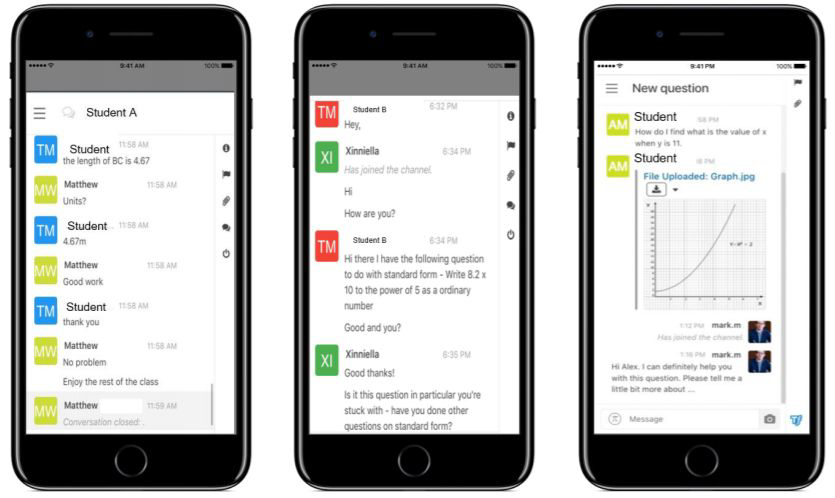
Through the Click, Connect, Learn Fund, Tutorfair aimed to develop a mobile app to enable young people who need GCSE maths tuition to receive it wherever they are. They built Tutorfair On-Demand – a tuition service based on an instant messaging platform accessible from both mobile and desktop devices. Eligible students are able to access the service free of charge through participating schools.
Developing an online tuition model
The Foundation hoped that their On-Demand app would support access to high-quality tutors for students who would otherwise not be able to afford or access one-to-one tuition. The aim was to support improved attainment as well as improved enjoyment and confidence in GCSE maths. In addition to these benefits for students, the Foundation also hoped that supporting students would be a valuable developmental opportunity for volunteers.
The pilot was launched at the beginning of the 2017 academic year across four London schools, at which over 50 per cent of students were Pupil Premium Eligible. These schools already had an existing relationship with Tutorfair and were willing and able to provide data for initial development. The project has built from this initial pilot and has now reached a total of 34 schools across the country.
Students were introduced to the app in a lesson or assembly, and teachers then emailed target classes a link to the app. When a student is stuck with maths homework or revision, they can open the app, type a question, add a picture of the task (if desired) and send. This question will then appear to all tutors currently logged in to the system. The tutors can review the request and decide if they are able to help. The first tutor to accept the request will join a message thread with the pupil and can begin tutoring them through the specified topic.
Reach and initial learning
|
|
| Total students reached |
645 |
| Total volunteers mobilised |
148 |
| Total schools reached |
34 |
The Foundation partnered with The Social Innovation Partnership (TSIP) to undertake an evaluation of the project, including an analysis of student usage and outcomes. This evaluation focused on the four pilot schools where the app was first launched and where participation continued for the whole academic year.
TSIP found that:
- Across the four pilot schools, 54 of the 440 students given access to the app completed one or more tutoring sessions. 153 tutoring sessions were completed between them.
- Over 70 per cent of app users were female.
- App users were mainly students with medium-high maths ability already (>90 per cent of users were graded 4 or higher in their GCSEs, compared to 60 per cent of those who did not register).
- Without the app, 65 per cent of users reported that they would not have had access to a tutor.
- Using the shortened Attitudes Towards Maths Inventory measure, there was no significant change in attitudes between users and non-users of the app.
- Overall, students at schools where the app was not used achieved an average of 0.62 grade points (SD = 1.49) below their teacher predictions, while regular users of the app were only 0.27 (SD = 1.34 grade points) below the teacher predictions, on the GCSE 9-1 grading system. However, with the small number of regular users, TSIP recommends caution about drawing any strong conclusions until further research is completed.
Student, teacher and tutor perspectives
- Average post-session student satisfaction rating was 3.9 out of 5 stars.
- In 77 per cent of sessions, tutees reported that they felt the tutoring had helped them solve their question.
- Of the 49 tutorials that had their transcripts assessed for quality assurance, 80 per cent of tutors were rated as 'satisfactory' or better, and 50 per cent were rated as 'excellent' or 'good' against a dedicated framework.
- Tutors reported that they enjoyed the opportunity to work flexible voluntary hours around other commitments.
"The On-Demand platform has been very helpful for me when I've had homework and when I wasn't exactly sure what to do. Edward, the online tutor, has been very helpful and explains things very well and goes the extra mile to ensure that the student knows what to do. I feel that I am more confident and that I am definitely progressing in maths as a whole since I've used the service!"
Student
"Student X is getting awarded for the progress made, which I would credit to the online tutoring and his tutor!"
Teacher
"Tutorfair offers students a really unique opportunity to provide help as and when they need it. Whether that be with their evening homework, or a bit of last-minute exam prep... The experience of tutoring on demand has taught me how to effectively explain mathematical solutions using only text and images. It has also helped me to develop my ability to include students in every step of my explanation."
Tutor
The Access Project
Summary of organisation and project
The Access Project (TAP) works with bright students from disadvantaged backgrounds, providing in-school support and personalised tuition, to help them win places at top universities. As part of the programme, TAP recruits volunteers to tutor disadvantaged school students one-to-one on a weekly basis. The programme has been shown to double a disadvantaged young person's chances of getting to a top third university.
TAP has found that young people who could most benefit from their support tend to live in areas of low social mobility and often outside major urban centres. Such issues make it harder to reach students with volunteers for face-to-face tutorials. Therefore, the ambition for the grant period was to trial the delivery of online tutorials: offering a potential long-term solution to reach more young people in dispersed areas.
Developing an online tuition model
The Click, Connect, Learn Fund supported TAP to test an online tuition platform, including to:
- Establish if 'the tech works' and whether they could successfully run tutorials online.
- Investigate whether online tutorials could be an effective tutorial delivery model.
- Explore how an online model might support increased tutor recruitment.
- Adopt or dismiss online tutorials as a potential route to scale.
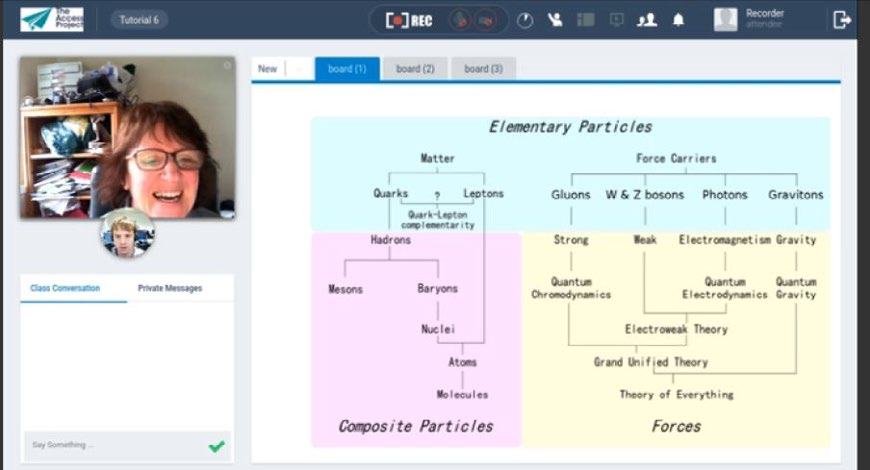
The Midlands was selected as the focus area for this pilot, with schools in Nottinghamshire and Greater Birmingham. Students and schools received the same provision as the in-person programme – including a University Access Officer who works at least two days a week in each school to run the programme and mentor students one-to-one – and a range of group activities such as after-school societies, workshops and trips to top universities. However, instead of also receiving weekly face-to-face tuition, students were provided with an online volunteer tutor.
Online tutorials were facilitated by the software provider WizIQ. The service includes the ability to record tutorials for safeguarding and quality assurance, a login feature to simplify monitoring and tracking, and an easy-to-use 'whiteboard' to support good quality tuition. All users log on to the platform, which is customised to TAP and includes 'how to' videos for both students and volunteer tutors.
Reach and initial learning
|
|
| Total students reached |
57 |
| Total volunteers mobilised |
57 |
| Total schools reached |
5 |
TAP matched a total of 57 students with online tutors during the 2017/18 academic year. Although this was below their initial target, it was a sufficient number to indicate that online tutorials can be an effective tutorial mechanism (i.e. students can learn through them and thus improve their grades to reach top universities).
They attributed securing fewer pairings to an unanticipated high level of 'churn' of potential online volunteers becoming actual online tutors (see learnings). TAP nonetheless averaged 9 hours per online pairing during the year; this came to over 500 hours of online tutorials across all pairings.
After this initial success, in the academic year after the end of the grant TAP has quickly scaled the number of students reached through online tuition: see the final section, 'Where next?' on page 24.
Although TAP does not yet have sufficient online tutorial pairings to robustly investigate the relative impact of online and face-to-face tutorials, initial evidence generated through their internal evaluation process has indicated:
- Positive tutor and student feedback: Tutor and student feedback results via surveys, focus groups and an external process and implementation evaluation suggest that, when the technology works appropriately, online tutorials are a positive experience for both tutors and students.
- Good quality online tutorials: Positive observations of recorded tutorials – crucially, it appears that students are being challenged in an effective way and are deepening their understanding of the tutorial subject.
- Tuition dynamics can be replicated online: Early, anecdotal evidence suggests that online tutorials can indeed succeed in achieving a similar dynamic to face-to-face tutorials. For example, tutor and tutee satisfaction survey results were very similar for face-to-face and online pairings. This is a priority focus for future evaluation.
Student, teacher and tutor perspectives
"I am really pleased with the online tuition sessions and how they are running. The online platform is fantastic, and a great new way for students to learn."
Partner school curriculum lead
"I was matched with an online physics tutor who specialises in astrophysics, which is what I really want to do at university! The conversations were really interesting, and I believe this will be so valuable for me getting to university."
Student
"Student X was a pleasure to tutor and I wish her all the best. I know she'll succeed."
Tutor
Language Futures
Summary of organisation and project
Language Futures is delivered through a partnership between Whole Education and ALL. The project was first developed in 2009 by Linton Village College in Cambridgeshire as part of the Learning Futures initiative led by the Paul Hamlyn Foundation, in partnership with the Innovation Unit.
The programme works with language-proficient volunteers to provide personalised foreign language tuition to small groups of students. The aim is to improve engagement in language learning, as well as develop spoken language skills and confidence. The Key Stage 3 model includes the opportunity for students to select the language they study and lead their learning through project-based activities. At KS4 and 5 the focus is on the language being studied for GCSE or A Level.
However, schools found it difficult to recruit and manage the right volunteers (especially for specific in-demand languages) and volunteers often found that travelling to the school was a barrier to participation, particularly in rural areas.
This project aimed to test an online tuition model as a potential solution to some of these issues. This included piloting the use of Skype for mentoring sessions, centralising the recruitment and matching of volunteers with schools, and trialling the use of language undergraduates as volunteer mentors.
Developing an online tuition model
The project worked with eight schools across Derby, Cambridgeshire and Peterborough. Some of these schools had previously delivered the face-to-face programme and were switching to online, while others were engaging with Language Futures for the first time. This included delivering across schools in a multi-academy trust, as well as to individual schools. Volunteer tutors were recruited from the universities of Cambridge, Leicester and Anglia Ruskin.
Two main models of delivery were used:
- At KS3, schools tended to follow the core features of the Language Futures approach – including students having relatively free choice of which language to study, the teacher acting as a facilitator and learning following the principles of a project-based approach.
- At KS4 and 5, the model supported students in GCSE or A Level language, with the teacher providing more direction, and did not include projects. There was a particular focus on the development of spoken spontaneity, in accordance with the new GCSE specification for Modern Foreign Languages.
In both models, face-to-face mentors were replaced with online tutors, who connected to students using Skype for Business. Sessions lasted between 20 and 45 minutes, working with small groups at KS3 and with individuals at KS4 and 5.
The recruitment, management and training of mentors was centralised, with 21 mentors recruited from the three participating universities – with the majority being language undergraduates. Following training and safeguarding checks, mentors were matched with schools.
Reach and initial learning
|
|
| Total students reached* |
322 |
| Total volunteers mobilised* |
21 |
| Total schools reached* |
8 |
The intended model was for mentors to work with students over the course of an academic year, with eight sessions per term. However, due to some of the challenges in implementation (see below), tutors delivered an average of seven sessions. Sessions took place within lesson time in the presence of the class teacher.
Surveys and interviews with teachers, pupils and mentors were positive and indicated the potential of the model to support speaking, communication and use of the target language. Pupils commented on the benefit of practising speaking naturally and being stretched. They also found the experience of having an unplanned or unstaged conversation both positive and fun.
*Data has been collected up until March 2019, with delivery continuing in some schools beyond this, so the final numbers will be slightly higher.
Both teachers and pupils also mentioned the importance of retaining the core feature of choice, which is linked to motivation. Seventy-five per cent of teachers started that it was important or very important to offer students a choice of language. Ninety per cent of students also stated that being able to choose their language was very important or important.
The project also noted the commitment and enthusiasm of the undergraduate volunteers. There was an over-supply of mentors in relation to demand: 68 mentors expressed interest or attended training, but due to challenges in setting up the programme in schools, fewer than a third of these were matched to student mentees. Project leads noted the commitment of volunteers taking part in a specifically languages-focused programme promoting and supporting language learning.
However, there were significant challenges around the consistency of delivery across different schools, the retention of mentors during the course of the programme and school capacity to engage with and buy into the project. Securing the final data from schools was also challenging, and this will therefore be collated and published later in autumn 2019, later than expected.
Student, teacher and tutor perspectives
"I really enjoyed the whole experience! Mentoring as a whole has been positive and I still enjoy the weekly sessions. There are certain students who really do listen, try and genuinely just need some confidence building, and I really do find that rewarding."
Language Futures online mentor, second year languages undergraduate, University of Cambridge
"I have had some really stimulating conversations over the weeks with some pupils who have seemed to be having fun and I feel like by the end we have really got somewhere! In short, I am really enjoying the mentoring and I sometimes feel very effective."
Language Futures online mentor, first year languages undergraduate, University of Cambridge
"Normally if [pupil] has to do speaking work she ends up crying and shaking with nerves! She was really nervous but her mentor was so patient with her and so kind and after about a 40 minute conversation, some in English and some in Spanish, [pupil] left the class so proud of herself and bursting with confidence! It really is an absolutely amazing scheme and I'm launching my other two students this morning with their mentors, so fingers crossed they go equally as well. Thank you so much for involving us in the scheme."
Head of MFL at partner school
4. What did we learn, and where next?
Click, Connect, Learn demonstrated the potential of online volunteer tuition to reach many more students who need support.
The work also uncovered a range of insights that are valuable both for organisations looking to deliver online tuition for disadvantaged students, and for policymakers and practitioners looking to improve access to tuition.
Insight 1: Start with the intended experience and outcomes for young people – not the technology
It is essential to first consider the end-to-end experience that young people should benefit from, and the outcomes this should achieve. The technology should be selected or designed to meet these needs, and be based on the best available evidence. The users' experience should not be designed or compromised to fit certain technology.
Selecting the right online platform is therefore very important. Grantees found that there was a lack of online classrooms that were reasonably priced, offered effective teaching functionality and a safe learner-management system. Therefore two of the three had software custom-designed for their project: Tutorfair through a messaging app, and The Access Project on an online platform.
If attempting to 'transfer' an in-person tuition model directly online (as TAP and Language Futures did), the stage of development of the existing face-to-face model is important. It is more straightforward to move a 'developed' model with sound evidence of impact online – so that the focus can be purely on operational aspects of delivery, consistency and quality of tuition, and on measuring the impact on young people.
Our grantees took two different approaches
The Access Project and Language Futures took an existing programme online, seeking to replicate the impact of face-to-face tuition. They were seeking to address issues around how to replicate the impact of an in-person programme at scale - in particular how to match volunteers from major cities to students in rural and coastal areas.
Tutorfair tested a completely new approach to online tuition (using their existing expertise and network) – seeking to find a scalable, low-cost way to enable their paid tutors to volunteer to help students who otherwise would not receive tuition.
"We have proved that the concept of online tutoring works; this project has given us confidence in online tutorials' potential impact. In the medium-term to long-term, online tutorials open the possibility of recruiting volunteers from a range of university cities, such as Manchester and Durham, without necessitating a local office, volunteer training facilities or other costly infrastructure."
The Access Project
Insight 2: Schools, volunteer tutors and students need targeted support to use tuition technology – and often more than you might expect
We found that tutors often needed just as much support as schools to use the technology. For example, The Access Project found that they needed more help than they had expected, and now offer volunteers a range of support, including 'how to' videos and step-by-step guidance.
For schools, using new technology can be challenging. Taking the time to build a minimum viable product and test it thoroughly, building time for additional support and trouble-shooting prior to delivery, is a key part of the successful development of these kinds of approaches.
Software must have several essential elements, including: ease of access for students (e.g. accessible on different devices, easy login process), being useable on different hardware (as schools will have a mixture of laptops, PCs and tablets) and use by students must be easy to monitor for teachers.
The Access Project found that schools' firewalls often blocked their tuition platform, and that control over such tools was often outsourced by schools. Adjusting firewalls therefore took additional time: this is something TAP now actively plans for and discusses with schools in advance.
Insight 3: With the right volunteer experience and offer, it is possible to attract a strong supply of skilled and committed volunteer online tutors
Projects found a good supply of volunteers, and doing this online did not put people off. This was helped by strong existing marketing and communications. They were able to reach through existing channels and appeal to people who may not have been able to give their time face to face.
Ensuring that the technology is easy to use for volunteers is important. Grantees had to think about ensuring the technology was simple, but that the end-to-end experience was also flexible and best met their needs – including the times available to deliver tutorials. The Access Project found that inflexible tutorial times (immediately after school) made recruiting and retaining tutors more challenging than through the face-to-face model. TAP have made changes so that tutees and tutors can arrange tutorials more flexibly.
It is important that volunteers feel valued. This is even more important with online volunteering, where they may feel they don't have the same direct impact as face to face. Efforts must be made to emphasise that their contribution is valued and effective.
"It is very inspiring to see the quality of the young people who want to support Language Futures and the difference they could make, not just to language learning but to wider social equity and aspiration raising in schools."
Language Futures
A key element of in-person tuition is the relationship that is developed between tutee and tutor, which facilitates a sense of commitment to participation and more effective tuition. With online, grantees reported that this was more difficult. Ensuring online interactions are regular and effectively meet the needs of tutees is one way of securing commitment from both parties. However, The Access Project is considering integrating at least one face-to-face interaction into their online offer to facilitate improved relationships.
The projects all found that it was important that the programme model did not require schools to recruit or manage volunteers themselves – as they often do not have the time, resource or expertise to do so. For example, Language Futures centralised the recruitment of volunteers but still required schools to make direct contact with tutors to arrange sessions, which often led to delays in tutorials commencing – and in some instances led to volunteers losing interest in taking part.
Tutorfair and Language Futures had an over-supply of volunteers for the demand they had from schools. For Tutorfair, the ease of use of the app was very attractive to volunteers – being able to respond to tutees from any location. For all grantees, the motivation to help students who would not otherwise receive tuition was a major attraction. However, it is important to remember that all the organisations involved had spent a number of years developing good channels to reach potential volunteers before taking the model online.
Insight 4: Tuition outcomes must be aimed at schools' core priorities
Identifying schools and leaders who buy into the programme is very important: especially those who can link the benefits to their own priorities and understand the need for testing and piloting. Testing new ways of working requires patience and commitment from schools, when benefits are not always immediate.
The design of the delivery model is important. Delivery needs to fit seamlessly with the structure of the school day and curriculum. For instance, an in-curriculum approach must be easily deliverable during lesson times (e.g. where technology needs to allow tutees to be simultaneously receiving tuition) and be structured to meet the key elements of the curriculum. It cannot be an 'add-on' or 'nice to have'. Tuition that is delivered out of curriculum time still needs to address key learning priorities for the young people participating.
One-to-one support has wider benefits for young people beyond academic attainment and these are important – for example, teachers involved in Language Futures reported improved confidence and independence in young people/tutees. However, in the current funding and accountability environment, online tuition will most frequently need to focus on schools' priorities for academic attainment.
Language Futures found that targeting KS4 and KS5 students' attainment was much more likely to gain traction with schools as performance in qualifications is a key priority for schools, as opposed to inspiring interest in languages at KS3. Tutorfair found that securing the engagement of maths teachers made it much more likely that students would repeat use their platform.
Insight 5: No model will be 'purely online': some smaller elements will continue to be most effectively delivered in person
The digital mode of delivery does not circumvent the need for building relationships with schools, which often needs to be done in person. It is not a case of 'build it and they will come': the benefits and value of participation needs to be communicated and marketed to schools – and demand stimulated – in a carefully designed way.
Grantees also found that support for participants is often best delivered in person. Each grantee had some form of in-person interaction – so a digital tuition model does not necessarily eliminate this barrier to scaling.
The Access Project has a dedicated member of staff in partner schools, who coordinates the delivery of the programme and can support tutees participating in online tuition – including with basic logistics.
Tutorfair found an effective way to increase take-up of the app was to deliver a face-to-face demonstration with students, in school, so they can better understand how it works. They also found this a useful way to engage maths teachers, so that they in turn encouraged students to use the app.
"We've found that when a learner engages with the app once, repeat usage rates are very encouraging – over half of first-time users will use the app multiple times and more than 10 per cent will return more than five times. The challenge has been onboarding schools and students in a way that promotes first use after registration. To this end, we are rolling out on-site workshops for registered schools as well as reducing barriers-to-use in the app by abbreviating the sign-up process."
Joss Serraillier, Tutorfair Foundation Director
Language Futures found that in-person training for teachers on how to use the tuition software was beneficial, as was face-to-face training for tutors at each university.
Insight 6: An engaging experience that works for young people
All tuition models – online or not – must prioritise a quality experience for young people that makes a difference to their learning outcomes. It is particularly important when delivering an intervention remotely, as with online tuition. On the whole, young people did feel that these new models worked well.
Tutees across the projects felt that the one-to-one support – that they otherwise would not have received – benefited their learning. For example, Language Futures tutees felt that the programme provided the opportunity to improve speaking skills that otherwise would not be possible in class. Pupils spoke about the ability to practise speaking naturally, about being stretched, how having an unplanned or unstaged conversation was both positive and fun. Teachers involved in Tutorfair's On-Demand app believed it has a lot of potential to offer the personal attention and instant feedback that can't always be offered in class.
"The early, anecdotal evidence we have suggests that online tutorials can indeed succeed in achieving a similar dynamic to face to face tutorials. For example, tutor and tutee satisfaction survey results are very similar for our face-to-face and online pairings."
The Access Project
However, although initial qualitative evidence is very promising, this is not yet supported by rigorous attainment data. Each grantee has not yet achieved a large enough sample size to come to definitive conclusions on the impact of online vs. face-to-face. We believe the key to reaching such scale lies in using the insights regarding implementation outlined above.
5. Where next?
Where next for Click, Connect, Learn grantees?
The three projects supported through Click, Connect, Learn are continuing to explore how online tuition can offer an effective route to scale. Their experiences delivering these pilot programmes have shown that online models could help organisations reach more students who currently can't access tuition, particularly in rural and coastal areas. It offers the opportunity to dramatically grow the pool of potential volunteer tutors, removing many of the geographical limitations of face-to-face provision. Each is exploring how the learning generated can be applied to better deliver their work:
- The Access Project has used the success described in this report as a springboard for further growth beyond the grant. In 2018/19 they matched 127 students with tutors to receive online tuition. In 2019/20 they anticipate reaching up to 150 students through online, and see the model as a likely key route to scale in the future. A long-term priority is to secure enough online tutorial student-tutor pairings to run a robust comparison of the impact of online against face-to-face tutorials – an estimated 250 online pairings.
- Language Futures is exploring options for further delivery in schools through different models. This is likely include a pivot to focusing on speaking skills for examinations at KS4 and 5, rather than on motivation at KS3 - to ensure that the work meets a core priority for schools, and leaders prioritise engagement with the project and mentors.
- Tutorfair is seeking follow-on funding to continue scaling the project, aiming to have 4,000 users by July 2020. At this scale, analysis of outcomes in the summer of 2020 will provide concrete evidence of impact that can be used to expand the service into new subject areas and ultimately offer participation to eligible schools nationwide. As usership increases, Tutorfair also hopes to continue to improve engagement amongst underachieving and low-confidence students.
Where next for the volunteer online tuition sector?
It is likely that the one-to-one tuition market will continue to grow. In 2017 it was estimated to be worth £2 billion in the UK, and with this growth there is also increasing inequality of access for students from lower income families. It is therefore crucial that new ways of supporting students who cannot access private tuition, particularly through high quality one-to-one volunteer tuition, are nurtured and grown.
The Click, Connect, Learn Fund has demonstrated the potential for online models to be part of that solution. More must now be done to understand the impact on young people's attainment and wider skills through online tuition, compared to traditional face-to-face provision. This includes actions for policymakers, and recommendations for schools and volunteer tuition providers to make the most of the opportunities the technology offers.
Recommendations for policymakers
1Online volunteer tutors are an underutilised resource for young people who would otherwise not have access to tuition – but schools need help to access them.
Further investment should be made in programmes and systems that help schools make the most of a diverse and talented pool of volunteers, across different locations, who can offer valuable tuition support to students. This should focus on sustainable, low-cost solutions that do not require schools to manage volunteers directly – online tuition offers great potential for cost-effective provision.
2Schools need more support to make the most of the opportunities that technology offers for expanded access to tuition.
The projects found that schools often found it difficult to engage with online models. This is because of safeguarding concerns, the outsourcing of IT support and busy school staff.
Schools should be supported to consider their approach to online tutoring and other mentoring programmes in their safeguarding policies, and update those policies to include a section on online programmes. This would enable schools to more effectively engage with online tuition programmes.
3There are a lack of suitable, cost-effective options for the delivery of online tuition.
The development of online classroom and learner management platforms built with schools in mind should be supported and incentivised. Those platforms that can be adopted without extensive IT expertise and resources (which most charities do not have), would open online as a new route to scale for more high quality face-to-face providers.
Recommendations for volunteer tuition providers
1Digital tuition models have great potential to support scaling: but it is not a silver bullet.
Online models offer potential for growth to different areas, regardless of the location of tutors. But such scaling will not be solely online, and must be undertaken carefully: the technology must be fit for purpose, strong school partnerships still need to be built and structured user support and training provided, which requires an in-person element.
2Volunteers will be willing to tutor online, if the experience is positive.
It is particularly important that online volunteers understand that their online contribution is just as valued as face to face. Volunteers (and students) need clear guidance and easily accessible support when using new platforms for the first time, otherwise motivation and energy can be quickly lost. Finally, online tuition must be just as (or more) flexible than in-person tuition for volunteers in terms of the time slots offered.
3Any online model must prioritise delivering a quality tuition experience – and impact.
This means carefully considering how an online model should be structured to maximise impact on tutees, including selecting (or in some cases building) technology that is fit for purpose. Although the initial focus will be on implementation, our grantees found it important to build in plans from the beginning to measure and compare the student experience of tuition and its impact.
Recommendations for schools
1Allocate staff time to help make it work.
The initial implementation of an online tuition programme, and supporting it to completion, requires school staff time. It's crucial that staff are available for technology troubleshooting, supporting student tutees and ensuring key elements like appropriate rooms are available. This shouldn't just be added to a teacher's to-do list, but given specific, dedicated time.
2Ensure that teachers and tutees have access to appropriate technology for online tuition.
Hardware is costly – but slow laptops that don't hold charge, or firewalls that stop access to the tuition platform will hamper even the most talented tutor and motivated student. Putting in place the foundations for successful tuition will include making sure the technology is fit for purpose, and that IT support is readily available at tuition times (especially if that support is outsourced).
3Make the most of opportunities for students to receive support from talented online volunteers.
There is an underutilised pool of committed, talented volunteer tutors who could deliver remote tuition, but they must be successfully engaged. Making sure that tutors feel valued by the student and school is important. Equally, volunteer tuition can be targeted to reach those students that the school feels need support, in the subjects they most need it in. However, students will need encouragement and help to make the most of the opportunity.
We hope that the work of grantees will help others working to grow their reach through online provision, and help inform future policymaking and funding in this area.
Endnotes
58 Victoria Embankment
London EC4Y 0DS
+44 (0)20 7438 2500
[email protected]
@nesta_uk
www.facebook.com/nesta.uk
www.nesta.org.uk
Nesta is a registered charity in England and Wales with company number 7706036 and charity number 1144091.
Registered as a charity in Scotland number SCO42833. Registered office: 58 Victoria Embankment, London, EC4Y 0DS.
(CC BY NC SA logo - not converted, but text from image will be considered descriptive text)
CC BY NC SA