If you'd like this publication in an alternative format such as Braille or large print please contact us at [email protected]
Trustees

Sir John Gieve
Nesta's Chair
Independent Chair of VocaLink and Chair of Homerton NHS trust

Professor Anthony Lilley
Trustee
Director of Scenario Two Ltd

Christina McComb
Trustee
Chair of OneFamily, Chair of Standard Life Private Equity Trust plc, Senior Independent Director, Big Society Capital

Heider Ridha
Trustee
Operating Partner of TDR Capital

Imran Khan
Trustee
Head of Public Engagement at the Wellcome Trust

Jimmy Wales
Trustee
Founder of Wikipedia and WT Social

Joanna Killian
Trustee
Chief Executive of Surrey County Council

Judy Gibbons
Trustee
Chairman of Which? Ltd and Beyond, Non-executive Director for Capri Holdings, Trustee of Somerset House and the House of Illustration

Moira Wallace
Trustee
Visiting Professor of LSE Centre for the Analysis of Social Exclusion, Trustee of Kennedy Memorial Trust

Natalie Tydeman
Trustee
Non-executive Director on boards of MTG Modern Times Group and Nordic Entertainment Group

Sarah Hunter
Trustee
Director of Global Public Policy at X and the Moonshot Factory, part of Alphabet
Chair and Chief Executive's introductory statement
This annual report covers the 12-month period up to the end of March 2020, but our reflections on the year are dominated by what happened in the final weeks and which continues to dominate the world as we prepare this report.
COVID-19 has brought not just a tragic loss of life, but unprecedented restrictions on social and economic life across the globe, with huge changes in the way we work, socialise, travel and communicate. Nesta has been affected like others, with the closing of our office for five months and staff working from home. But adversity has also forced the pace of innovation in many parts of our society. The impact of a lockdown, which would have paralysed the economy and kept many in solitary confinement in the past, has been alleviated by the use of new technology, both at a national level and in countless informal groups of neighbours and volunteers.
Many of the innovators that Nesta has supported over the past decade are playing a significant role in the national response. GoodSAM is a mobile app and web platform that alerts trained responders to life-threatening emergencies close by. It was used to sign up 750,000 NHS volunteer responders to assist vulnerable people most at risk from the virus. The Cares Family has been delivering food and prescriptions for older people, and arranging virtual meetups, using its network of 9,000 young people. And GoodGym, which mobilises runners who want to get fit while doing good, has become a key part of the British Red Cross' emergency response to COVID-19. Volunteers are helping people in need of food, prescriptions or other practical support. These innovators are part of our Accelerating Ideas programme, a £5.5 million partnership with the National Lottery Community Fund which supports eight innovations that offer new ways to give older people more confidence and control over their health.
For Nesta, our immediate priority was to offer as much practical help as possible. Conversations with grantees revealed that non-financial support such as coaching, expert legal and financial advice, and technical assistance, were as important as flexibility with funds, so we responded to this with a combined support package to help them weather the storm.
In order to help alleviate the long-term consequences of the crisis, we also launched the £2.8 million Rapid Recovery Challenge Prize in September 2020, in partnership with JPMorgan Chase Foundation and the Money and Pensions Service. The Challenge will support tools and services that improve access to jobs and money for more than one million people across the UK, focusing on those hardest hit by the economic shock resulting from COVID-19.
2019-20 was also the last in our three-year strategy which focused on promoting innovation in the fields of education, health, economic policy, government, and the creative economy and the arts. As you will see from the report, we initiated and supported a huge range of innovations and programmes in these sectors, and explored new frontiers in innovation.
We launched the Arts & Culture Impact Fund, the world's biggest investment fund for the creative arts at £20 million, offering loans of between £150,000 and £1 million to help social enterprises in the arts, cultural and heritage sectors to innovate and grow. In partnership with the Department for Education we set up the EdTech Innovation Fund, to support more effective use of technology in education. Fifteen ed tech organisations were given up to £100,000 to improve, evaluate and grow the reach of digital tools across parental engagement, essay marking, formative assessment and timetabling. The projects will reach over 7,700 schools in England.
Our newly-established team in Scotland launched AI for Good, a prize fund for projects that use artificial intelligence for social good. In Wales, we distributed £2 million of loans through Innovate to Save, which provides interest-free loans and support for ideas that improve public services and generate savings. The programme awarded £30,000 of grant funding and a loan of £1.5 million to Flintshire County Council, to test whether the Mockingbird Family Model – which replicates an extended family through 'constellations' of fostering households – could be introduced into its fostering service to meet increasing demand. Following research and development, five constellations are now due to be introduced by 2022 and it's anticipated that this will save the service more than £500,000 each year.
A defining feature of the year was the amount of work we conducted in partnership. As an organisation that never works alone, our collaborations stretched across the globe. We worked with the Department for Business, Energy and Industrial Strategy (BEIS), the Canadian Government and key regulators to develop an anticipatory approach to regulation, allowing regulators to shape markets as they emerge. Our framework helped form BEIS policy and we helped set up its Regulatory Horizons Council.
The United Nations Development Programme's network of 60 global accelerator labs used our guide, the Collective Intelligence Design Playbook, to help drive faster progress towards the Sustainable Development Goals. And we campaigned for research and development policy to recognise the needs of creative industries, which resulted in a re-evaluation of current definitions as part of the 2019 Conservative manifesto.
This year also saw a change in Nesta's leadership as Geoff Mulgan finished his tenure as Chief Executive Officer. We thank Geoff for his energy, inspiration and dedication over the last eight years. It was under his leadership that Nesta became an independent charitable foundation focused on social good. He greatly expanded our work, creating new units, centres and funds in fields ranging from evidence and impact investment to challenge prizes and skills.
We also thank Simon Linnett, Piers Linney and Ed Wray, who retired as trustees, and welcome Sarah Hunter and Jimmy Wales to the Board.
As an innovation foundation, we need more than most organisations to challenge ourselves about how we can be most effective. With Ravi's appointment as CEO in December, we launched a major review of our strategy for the coming years with the aim of bringing together, with greater focus, all of our capabilities, resources and networks, so we can better address the defining challenges facing the UK.
Our new strategy, launching this autumn, will build on the significant role Nesta has played to date, establishing and growing the field of social innovation, and by designing, testing and scaling new solutions to society's biggest challenges. Now, more than ever, we must harness the power of innovation to change the world for good.

Sir John Gieve, Chair

Ravi Gurumurthy, CEO
Strategic report
2019-2020 marks the third and final year of Nesta's three-year strategy. The strategy sets out plans for how we bring bold ideas to life to change the world for good in five priority fields: health, education, government innovation, innovation policy, and the creative economy, arts and culture.
Divided into our five priority fields, plus our work in Explorations, this review shows what we have achieved in the last year.
The creative economy, arts and culture
Our vision is for creative businesses and cultural institutions to play a central role in growing the UK's wellbeing.
Developing a world-renowned research hub
To amplify the benefits of the creative industries, we need to understand the bigger picture. We're developing a hub for quantitative research on the creative economy, using innovative techniques like interactive data visualisation to help us uncover untold stories about the creative economy.
Arts Council England commissioned us to work with several arts and cultural organisations, following our research on the use of economic valuation techniques to measure the value of historic cities, cathedrals and museums. The organisations used these techniques to demonstrate their own value.
We published a deep analysis in July 2019 of not just the number of people in the creative industries, but also how visible they are and how they are portrayed. We found that the media's reporting of women in the creative industries has changed markedly in recent years. Not only has there been a substantial rise in references to women, albeit from a low base, but greater space has been afforded to women's thoughts and opinions.
Given the wide-ranging nature of the creative industries and consequently of our research agenda, we always knew we'd need robust research planning processes. However, the first 18 months of the Creative Industries Policy and Evidence Centre have shown us that ensuring that researchers can adjust their plans in light of industry's changing priorities is not easy.
To solve this, we've come to appreciate the importance of a focused central communications and policy function, both to stay on top of our expansive research programme but also to help researchers to identify impact opportunities and take their work to a wider audience. A sign of our success is that, despite having no formal events staff or function, we've been able to grow the number of events where researchers can showcase their work.
Case study: She Said More
Despite the rise in media's reporting of women in the creative industries as shown above, the Nesta-led Creative Industries Policy and Evidence Centre found that there is a still a stark gender imbalance in this area. Its examination of half a million articles in the media showed that this was particularly prevalent in fields like technology and games. Our visualisation and analysis of the resulting data won a silver award in the People, Language & Identity category of the 2019 Kantar Information is Beautiful Awards.
Putting the creative economy at the heart of local and national policy
To benefit our national wellbeing, it's essential to have policies that nurture the creative industries. Our research aims to demonstrate why the creative economy is such a crucial point of competitive advantage, and how policymakers and governments can best place the creative industries at the heart of policy.
We supported policies that nurture the creative industries through research. Through the Creative Industries Policy and Evidence Centre, we bring together the best researchers to answer the most pressing questions about the creative industries. Those findings are then shared with MPs, ministers, civil servants and advisors in government.
For example, we published evidence on the value of creative higher and further education, research about the UK's international trade in creative goods and services, recommendations on how policymakers can support local growth in the creative industries, a survey of the migrant and skills needs of creative businesses in the UK, an analysis of 35 million job adverts to discover the importance of creative digital skills, and a review of immersive experiences in museums and heritage sites.
We campaigned for research and development policy to recognise the needs of creative industries. This involved building on work published by Nesta, the Arts and Humanities Research Council and University College London in 2017, by recommending that the government change the definition of research and development (R&D) used in tax incentives. This paper was published and shared with manifesto writers, and a re-evaluation of current definitions was subsequently made a part of the 2019 Conservative manifesto.
Other policy ideas have been cited in debates in both the House of Commons and House of Lords. For example, issues facing freelance workers in the creative sector were officially acknowledged in the Government's policy statement issued on the future of the UK's immigration system, although they have not been fully addressed.
Case study: How policymakers can support local growth in the creative industries
As part of our research agenda around local growth, we consulted trusted practitioners from across the UK on their experience of local policy interventions aimed at growing the creative industries. Among the findings were that more work needs to be done on making creative businesses aware of support available to them, and that policymakers should consider opening up available empty space, subsiding rent for new creative businesses, and reducing creative business rates.
Helping arts and cultural organisations to thrive
With the right support, arts and culture have the power to transform lives and tackle major social problems. Nesta supports hundreds of organisations, from community art spaces to nationwide festivals, by developing new funding options and using digital technologies to create new art forms and reach new audiences.
We concluded investments through our Arts Impact Fund. After five years, we have found that social impact investments can help build resilient, innovative and sustainable creative organisations, and help organisations to grow and innovate faster.
We launched the Arts & Culture Impact Fund, the world's biggest investment fund for the creative arts, delivering repayable finance to arts, culture and heritage organisations generating positive social impact. This form of funding is particularly useful to arts organisations because conventional repayable finance may be too expensive or simply not available for them.
Through our Amplified programme, we ran a six-month bootcamp for creative and cultural organisations developing digital ideas that generate positive social outcomes. The organisations received funding to develop and test their ideas, as well as mentoring and peer support workshops.
We launched Alternarratives, a short story prize aiming to bring the art form into the 21st century and help young people rediscover the joy of reading. Nine creatives were awarded R&D funding and mentor support.
We developed a pilot programme with StoryFutures to explore how immersive experiences and technologies might support new approaches to mental health and wellbeing. We partnered four leading creative companies with psychologists from Royal Holloway University to develop prototypes.
Case study: Change Your Game
As a part of our Amplified programme, PEEL Interactive, Doncaster Children's Services Trust and South Yorkshire Police partnered to create a gritty virtual reality experience that immerses young people into the hard-hitting realities and consequences of organised crime. The resulting educational package is designed to help challenge attitudes, change behaviour and raise awareness of the dangers of knife crime and child criminal exploitation by organised crime gangs.

Still from the Change Your Game virtual reality experience
Peel Interactive and Doncaster Children's Services Trust
Education
Our work in education uses bold ideas to help all learners make the most of the opportunities presented by our fast-changing future.
Broader skills, knowledge and attitudes
Our goal to make education broader means developing wider skills, knowledge and attitudes so that learners thrive in the future.
We backed ten early-stage, high-potential organisations that aim to build social and emotional skills in young people through our Future Ready Fund. While the temporary closure of schools has been a setback, many grantees have been able to rapidly pivot and deliver their programmes online. We are working with the University of Sussex to support our grantees in evaluating the impact of the changes.
Through our Maths Mission programme, delivered in partnership with Tata, we supported a collection of innovative ideas for improving maths and problem-solving skills. Pilots supported by this scheme included a national competition called Cracking the Code, which reached over 16,000 students. With our Solving Together Fund, we also supported digital platforms Eedi and NRich.
We published a collection of resources aimed at deepening our understanding of skills that will be important in the future and what this means for young people. This included a report on employers' understanding of transferable skills, created in partnership with the City of London, and a lesson toolkit on future skills.
We launched the FutureFit programme in Finland alongside Google CEO Sundar Pichai, and Finland's prime minister Antti Rinne (until December 2019). FutureFit is a major training and research project led by Nesta and supported by Google.org, focused on creating an effective adult learning system to help tackle inequality and social exclusion. The programme is taking place across nine sectors in five countries, with 43 partners, and to date has reskilled around 500 workers.
Case study: Foundation for Positive Mental Health
Through the Future Ready Fund, we supported the Foundation for Positive Mental Health to transition its audio programme from the health sector into schools across England and Scotland, reaching more than 1,200 students in six schools.
The programme involves an NHS-endorsed app with audio tracks on resilience and self-perception, tailored teacher training, peer-to-peer initiatives and workshops co-designed with students. It will be expanded to 13 new schools in autumn 2020.
Fairer and more diverse opportunities
Our goal to make education fairer has led us to focus on increasing diversity in tech careers and increasing learners' exposure to the workplace – and build up evidence for how to make technology and innovation more accessible to more young people.
Our Classroom Changemakers programme awarded £5,000 each to 15 teachers and teaching assistants making maths and computer science lessons more accessible to young people. The prizewinners, selected from more than 100 applicants, developed and tried out an idea in their classroom which connects maths or computer science to real-world problems and inspires a diverse range of students to engage with and enjoy these subjects.
Smarter use of technology and data
Our goal to make education smarter has led us to use technology and data to transform education for learners at all ages and stages.
In conjunction with the Department for Business, Energy and Industrial Strategy, we launched the third iteration of the Longitude Explorer Prize, which helps 11-16 year-olds develop ideas for technology to help improve the world around them. More than 220 teams, comprising more than 800 students from schools across the UK, entered the competition, with 40 teams selected as finalists. Ideas included apps to support an ageing population, robots that help clean up our seas and beaches and educational technology to support learners. Each received mentoring, hardware and workshops on how to develop and prototype their idea.
Case study: Artful Maths
The Artful Maths website, one of the outcomes of the Classroom Changemakers programme, delivers lessons which teach students how to create mathematical art and geometric patterns through a problem-solving approach. Students are encouraged to sketch and test their ideas, construct the patterns themselves, and ultimately gain a better understanding of the geometric concepts which underlie them. The website reached thousands of children during the closure of schools due to the COVID-19 crisis.

Designs produced as part of the Artful Maths initiative
Clarissa Grande
We launched the EdTech Innovation Fund in partnership with the Department for Education to support more effective use of technology in education. Fifteen ed tech organisations were given up to £100,000 to improve, evaluate and grow the reach of digital tools across parental engagement, essay marking, formative assessment and timetabling. The projects will reach over 7,700 schools in England.
We published the research report EdTech Testbeds: Models for improving evidence, which identifies and classifies different ed tech testbed models around the world. It suggests four models for how to deliver an ed tech testbed in the UK driven by reliable, relevant evidence. It was launched at London EdTech Week at a roundtable event with international governments and organisations, and gained international attention.
Together with Nesta Italia, we published the research report Making The Most of Technology in Education. The report draws together lessons from nine international organisations where technology is impacting on large numbers of teachers and students. The report recommends that governments invest in training and support, boost ed tech solutions and programmes which provide more equitable access, and invest in open data-gathering infrastructure. Nesta Italia operates independently from Nesta, but uses the Nesta name under a license granted by Nesta.
As a result of technological progress and demographic changes, more than six million people in the UK are currently employed in occupations that are likely to change radically or disappear entirely by 2030. We published a short manifesto titled Precarious to Prepared that sets out what we think needs to change in adult work and skills. The manifesto found wide support from the various actors in this space, ranging from government departments to business and NGOs.
As part of this programme of work, we supported the government-backed Institute of Coding and FutureLearn, and a world-class consortium of industry partners, educators and technologists, to develop the Digital Skills for the Workplace online courses. These courses are designed to help individuals learn new career-focused digital skills as they navigate the changing world of work. By the end of the year, 88,000 learners had signed up to the courses we helped to develop.
Supporting this agenda, we launched the Career Tech Challenge in partnership with the Department for Education. This combined grant fund and challenge prize asks applicants to develop digital solutions aimed at those whose roles are at risk of automation, helping them to retrain and find new work.
Case study: Strengthening the ed tech evidence base
After we published our EdTech Testbeds report, we used the learnings to design and launch a testbed for England (which has unfortunately been paused due to COVID-19). Nesta has since convened a roundtable of international organisations and governments delivering ed tech testbeds to continue sharing good practice, including representatives from Italy, Sweden, Qatar, Denmark and Israel.
Government innovation
We use bold ideas to help governments and communities reimagine public services and recraft the role of public servants to be fit for the future.
Harnessing the skills and time of citizens
Our goal is to enhance and reshape public services, and give local people greater control over their lives.
We completed three years of work with the Department for Digital, Culture, Media and Sport on social action to tackle inequality in early years and support those on a low wage. In total, we've now supported more than 30,000 volunteers, helping almost 500,000 people.
We established a learning network, the Upstream Collaborative, with 20 different local authorities to explore new operating models for public services based on community assets and giving power and autonomy to frontline public sector workers. The network brings together senior strategic leaders from councils across the country to share knowledge and experiences, and learn from each other.
We launched the Future News Pilot Fund, distributing £1.5 million to help local media organisations respond to changes in the way we consume news, increase reach and test out new business models. Among the beneficiaries are legal technology company Courtsdesk, which helps local media access criminal case data, and Media Trust, which is tackling the underrepresentation of people with disabilities in the news.
We launched the 2019 Democracy Pioneers Award, recognising 19 projects working in new ways to revitalise democracy and civic participation. The winners span from musical theatre, to youth-led education networks, to participatory budgeting to news literacy for young people.
We also learnt that setting up infrastructure in new places remains challenging and costly. Our attempts to support organisations that are scaling up interventions to help lower earners to save have proven very difficult, despite proven consumer demand. This is an often-underestimated barrier to the scaling of good ideas.
Case study: Democracy Pioneers - Full Fact
Full Fact, one of the 19 Democracy Pioneers, is a team of independent fact checkers and campaigners who find, expose and counter the harm that bad information does to lives and to our democracy. Full Fact holds politicians and the media accountable for false and misleading claims, and has partnered with Camden Council to spread accurate health information on COVID-19 among the most vulnerable people.
Smarter use of data and technology
Our goal is to use smarter data and technology to reform public services, improve citizen engagement and deliver social impact at scale.
We developed tools to inform the creation of new data-informed operating models. In partnership with Smart Dubai, we reviewed existing literature and more than 50 case studies to develop a practical toolkit to create privacy-sharing rights agreements between citizens and states. This research has become particularly pertinent in light of the global discussions around COVID-19 'track and trace' applications.
We started new research work on what governments can learn from China's use of artificial intelligence (AI). Introducing the AI-Powered State, authored by seven experts in AI innovation in China, offers a detailed analysis of China's development and use of AI technologies, examining the impact on public services and society, and considering what UK policymakers can learn.
We created tools for the management of personal data as part of the European Commission-funded DECODE project. This initiative allows individuals to control whether their data is kept private or shared for the public good. It includes world-first research on successfully adapting Ostrom's principles of the commons to the digital realm, and is part of a wider programme that includes technology development, community-level pilots, public engagement and a series of major events. Nesta also led the policy, communication and engagement aspects of the project, which were noted for their high quality in the review panel's assessment.
Case study: DECODE
Our work on creating tools for the management of personal data in the DECODE project led to concrete policy influence – informing strategy documents, the formation of a Digital Identity team in Barcelona, and the adoption of tools for privacy-aware identity management by the Dutch government. It also received widespread media coverage, and set the agenda in senior policy discussions across Europe. The technology is now available to the 200+ cities using the Consul platform.
Our goal is to provide new tools for public servants so they can adopt an innovative mindset and new ways to use money for innovation.
We published 20 Tools for Innovating in Government, a collection of evidence-based resources proven to help innovation flourish inside government, based on more than a decade of work. It includes tools that uncover new insights and generate ideas, tools for developing and testing, tools that support system change, and more. The toolkit has been downloaded more than 5,000 times and was a hot topic of conversation at the Government Innovation Summit in September 2019 which brought together almost 500 people to discuss new approaches to public services.
We span out States of Change into an independent non-profit. This organisation brings together experts and practitioners with experience of innovating in government from across the world and uses them to coach groups of civil servants through their own innovation projects. It has delivered innovation learning programmes in the UK, Canada, Australia, New Zealand and Sri Lanka, and advised the Asian Development Bank and the Portuguese and Serbian governments on establishing innovation and policy labs. Additionally, we published an innovation guide titled Skills, Attitudes and Behaviours to Fuel Public Innovation.
The Alliance for Useful Evidence helped incubate the What Works Centre for Children's Social Care which successfully spun out of Nesta early in 2020. The centre has worked with more than half of all English local authorities to improve the lives of children and families in care. The Department for Education has awarded the centre a grant of more than £10 million.
Case study: Innovate to Save
In partnership with Welsh Government and Cardiff University, we approved £2 million of loans to four projects through our Innovate to Save programme. This scheme allows community innovators to access interest-free loans and support for great ideas that improve public services and generate savings.
The four approved loans are financing new ways to improve services and create savings for social care, emergency services, looked after children and fostering services across Wales. They are projected to generate £32 million in savings over five years, generating a return of investment of £25.32 for every £1 of loan finance invested. Using the learnings from the programme, Y Lab published a guide on Repayable Finance for Innovation in Public Services.

Wales' first Mockingbird hub carer chats with a fellow foster carer in Buckley, Flintshire
Melissa Cross
Health
We're working to create a health and care system that empowers people to lead healthier and happier lives.
People power
Our goal is to make sure people's social health needs, as well as their clinical needs, are met. This means positive relationships and being part of a community where people share experiences and support one another.
We used our Accelerating Ideas programme, a £5.5 million partnership with the National Lottery Community Fund, to support eight innovations which offer new ways to give older people more confidence and control over their health. They are four well-established charities (British Red Cross, British Lung Foundation, Stroke Association, and Carers UK) as well as four newer organisations (GoodGym, The Cares Family, GoodSAM, and Shared Lives Plus).
We developed the Reimagining Help Framework, which draws on insights from behaviour change research. It enables community facilities, local charities and businesses, employment and housing support, and health services, to support people to reach their goals in a way that feels right for them. This work was done in partnership with Macmillan Cancer Support, the British Heart Foundation and the UCL Centre for Behaviour Change.
We worked with the Dunhill Medical Trust on the Social Movements for Health programme, which is supporting seven emerging movements led by people experiencing health inequalities. We helped these groups to fight for their rights, solve problems and shift how health services think by exploring successful innovation in funding movements as they mobilise, campaign and take action. This programme also helped us learn how to engage with more diverse groups, improve how we communicate and facilitate, and make our work more inclusive.
Case study: Accelerating Ideas during the COVID-19 pandemic
A number of the innovations supported by the Accelerating Ideas programme played a significant role in the national response to the COVID-19 pandemic.
GoodSAM, a mobile app and web platform that alerts trained responders to life-threatening emergencies close by, signed up 750,000 NHS volunteer responders to assist vulnerable people who are most at risk from the virus. It has also launched a new online consultation platform, free to all clinicians, to enable safe and secure online consultations. Almost 700 clinicians registered within the first few days. GoodSAM now has 100,000 users worldwide and estimates that a life is saved globally every other day through the use of the app.

GoodSAM app
Safecast
Smarter use of technology and data
Our goal is to create new insights for health and care professionals, researchers and policymakers through the use of technology, enabling more proactive and personalised care and support.
The Cares Family delivers food and prescriptions to older people and hosts online dance parties, exercise sessions and other virtual meetups that enable older people to remain connected with younger people in their communities. They now have a network of 9,000 young people who phone their older neighbours and Nesta is supporting them to scale this nationally. Have a listen to the Nesta Ideas podcast to learn more about The Cares Family's response to COVID-19.
GoodGym, which mobilises runners who want to get fit while doing good, has become a key part of the British Red Cross' emergency response to COVID-19. Volunteers are now helping people in need of food, prescriptions or other practical support. GoodGym has grown rapidly, doubling in size year-on-year and now involves more than 3,000 runners. In 2014 it supported 349 older people and now that figure is upwards of 29,000.
We supported six innovative digital technologies in Scotland through our Healthier Lives Data Fund. This partnership with the Scottish Government, which ran for 12 months, helped make data more available and useful to citizens, allowing them to live healthier and more independent lives. Two projects, Pharmatics and PxHealthcare, won an additional £60,000 from the Scottish Government to continue their work.
We proposed a new Nightingale centre of innovation and research excellence to equip us with the knowledge we need to improve the social, behavioural and environmental determinants of health. It would draw expertise from across public health and behavioural and social sciences, with best practices from human-centred design, citizen science and asset-based community development.
Nesta Impact Investments led a growth funding round in Q Doctor, a video consultation platform which enables greater access to remote care in NHS GP practices, hospitals and the community. The funding allowed Q Doctor to support the NHS in ramping up its response to the COVID-19 pandemic.
Case study: Q Doctor
Q Doctor's consultations have grown four-fold since we invested in late 2019. The remote consultation platform has signed contracts with four of the largest urgent care providers and is preparing to roll out to national care homes through a key partnership. Its plans for growth include laying the groundwork for AI-driven development of its clinician support tools.
Inclusive innovation
Our goal is to test new innovative methods that are more collaborative and inclusive of citizens and frontline staff.
We launched a 100 Day Challenge (an intensive, structured period of experimentation and collaboration with coaching support) in partnership with Liverpool City Council to test ideas to improve life chances for children and young people. Three cross-disciplinary teams took part, from Anfield and Everton, Princes Park and Speke-Garston, enabling frontline staff to collaborate and rapidly experiment with new ways of working.
We helped to scale up NHS England's Personalised Care Plan, which gives people more choice and control over the way their care is planned and delivered. We also helped them to deliver knowledgeable, skilful and confident peer leaders through a Peer Leadership Programme, influencing the way personalised care is developed and delivered. The programme will reach 2.5 million people by 2023/24.
Through the Longitude Prize, our £10 million prize fund to help solve the global problem of antibiotic resistance, we co-sponsored a workshop with the Royal College of Nursing. The workshop brought together patients with lived experience, clinicians, clinical researchers and diagnostic test innovators to examine urinary tract infection test needs in GP surgeries, hospitals and in social care settings. The event allowed test developers to better understand how to ensure that tests respond to real clinical needs.
We held an event at the Delhi launch of the Superbugs: The End of Antibiotics? exhibition, where we invited leading clinicians and government public health experts to help Longitude Prize teams understand the clinical needs related to antibiotic resistance and challenges faced by test makers. This event was run in partnership with the Science Museum (London), the National Science Centre, Delhi, and the Biotechnology. Industry Research Assistance Council.
Case study: Liverpool's 100 Day Challenge
Our 100 Day Challenge in Liverpool focused on improving life chances for children and young people. Diverse teams worked together to understand the needs of their local communities and what resources could be found in their neighbourhoods to change young people's lives.
One team co-produced a course with the local fire service to encourage children who were persistently absent from school - attendance improved by 92 per cent among those who took part.
Innovation policy
Our work in innovation policy helps governments and other decision-makers support innovation for growth and for good.
Smarter policy
Our goal to make innovation policy 'smarter' means developing better evidence, improving the understanding and use of such evidence, encouraging more rigorous policy experimentation and pioneering new ways of measuring and visualising innovation in the economy.
Through our Innovation Growth Lab, we supported 44 different trials and pilots with grants, experimentation funds, government partners and our advocacy and dissemination work. This work included high-level engagement with the European Commission, ministers of the euro area member states, NASA and delegations of international ministers.
We've worked in partnership with BEIS and Innovate UK in the delivery of the Business Basics Fund, which finances experiments testing how to encourage small and medium-sized companies to adopt proven technology and management practices.
We launched arXlive, a search engine for digital and AI research, allowing people to make smarter decisions about technical research by monitoring innovation activity in real time. The site has received more than one million visits since it was launched in October 2019.
Case study: Impact of accelerators and incubators
Building on our previous work mapping the landscape of startup incubators and accelerators in the UK, we undertook the deepest analysis of their impact to date. It demonstrated not only that accelerators can be an effective means of support for startups, but that they also have substantial benefits to the rest of their business communities, making a powerful case for their use as public policy instruments.
More inclusive
Our goal to make innovation policy 'more inclusive' means expanding the range of people who benefit, participate and make decisions, in order to achieve better social outcomes.
We shaped Nesta's public messaging on the 2019 UK general election and the 2020 budget, based on the work in our Imagination Unleashed report. The report examines how we can open up the knowledge economy to people and places that are currently cut off from it. It resulted in a series of promotional opportunities including opinion editorials, podcast appearances and speaking engagements.
We put together a collection of case studies of approaches to inclusive innovation in Southeast Asia, exploring how countries are developing policies to spread the benefits of innovation more widely. The United Nations Development Programme and United Nations Economic and Social Commission for Asia and the Pacific are now using our framework to structure their support to governments in the Asia-Pacific region.
Fit for the future
Our goal to make innovation policy 'fit for the future' means examining emerging technologies and methods, as well as other global trends, in order to ensure that policy is forward-looking and anticipates future challenges.
The European Commissioner for Innovation, Research, Culture, Education and Youth, Mariya Gabriel, praised 'the work done by Nesta to turn open innovation into practice at a European level', in reference to our promotion of corporate-startup collaboration in the Startup Europe Partnership, an initiative which aims to help startups scale.
Case study: Is the UK getting innovation right?
This survey found that the UK public is positive about innovation, but is prepared to make trade-offs so that it benefits more people and places. For example, people agreed that government investment should focus on helping all parts of the UK become more prosperous, with 67 per cent willing to see some areas grow more slowly than they otherwise would as a result.
Our launch event in Parliament was hosted by Lord David Willetts and Chi Onwurah MP and our recommendations, including how to direct more research and development funding to tackle the challenges that really matter to people, like climate change, inequality and poor health, were reflected in the Government's subsequent roadmap for the UK's increased £22 billion on R&D budget.
We published Innovation Squared, a collection of research on emerging innovation methods. This work, building on last year's A Compendium of Innovation Methods, exports new ways of encouraging innovation across the globe.
Ahead of the 2020 budget, we examined what an industrial strategy for the foundational economy would look like. The foundational economy consists of the critical national infrastructure that keeps society running, such as care and health services, food, housing, energy construction and high street retail. Our work focused on adult social care.
We concluded the Brazilian cohort of the Global Innovation Policy Accelerator, and began new cohorts from Africa and the Middle East. This programme has connected 22 teams from 16 countries, drawn from almost 100 innovation policy ministries and agencies, with UK innovation policy institutions and organisations.
Case study: Testing Innovation in the Real World
This report looks at how innovation testbeds are used to safely test out innovation and new technologies in the real world, making sure they are safe and effective before they reach a wide audience. This work has been used by policymakers in the UK, Denmark and Sweden.
 Self-driving vehicles in Milton Keynes as part of the UK Autodrive consortium-based project
UK Autodrive/Virtual
Self-driving vehicles in Milton Keynes as part of the UK Autodrive consortium-based project
UK Autodrive/Virtual
Explorations
We explore trends, technologies and early signals of change to identify the drivers shaping tomorrow.
Exploring new fields
Our goal is to explore new fields and incubate novel ideas.
We published Foundation Horizon Scan: Taking the Long View, bringing together foundations and grant-giving organisations across the world to discuss the future of the sector. From a broad literature review and interviews with 25 international leaders in the field, we isolated signals of change and highlighted strategic issues that will be faced in the coming years.
We published the Collective Intelligence Design Playbook, a guide to designing and delivering collective intelligence projects. This toolkit had been downloaded more than 4,000 times by the end of the year, and was used by the United Nations Development Programme's network of 60 global accelerator labs to drive faster progress towards the Sustainable Development Goals.
We followed up the first round of our Collective Intelligence Grants programme with a £500,000 second round, co-funded by Omidyar Network, Wellcome Trust and Cloudera Foundation. The new round is supporting 16 innovative experiments which could generate actionable insight on how to advance collective intelligence to solve social problems. Grantees include the International Organisation for Migration, Humanitarian OpenStreetMap, Bristol University and Umbrellium in partnership with Tower Hamlets Council. We also successfully influenced the European Commission to establish a €6 million fund for collective intelligence experiments.
One major challenge we faced in early March 2020 was the spread of the COVID-19 pandemic across Europe, which prevented us from hosting a planned event to showcase the work of our collective intelligence grantees. With two weeks' notice we turned an in-person event for hundreds of people from all over the world into an opportunity to experiment with delivering an interactive online event through a new collective intelligence platform called Remesh.ai. Unlike Zoom, Remesh doesn't use live video or audio, but instead uses AI to analyse and organise audience responses in real-time. Participants told us that they enjoyed the novelty, dynamic nature and fast pacing of the new format.
Emerging technologies
Our goal is to analyse emerging technologies to support decision-makers to better anticipate change.
Case study: Documenting mass human rights violations through collective intelligence
In the first round of the Collective Intelligence Grants programme, we funded an experiment from the Hillary Rodham Clinton School of Law at Swansea University to find out whether machine learning can turn crowdsourced footage of airstrikes into legal evidence of banned cluster munitions being used in Yemen. As a result of this work, the Global Legal Action Network (a partner on the project) has submitted a dossier to the UK Government showing how arms sold from the UK were used to carry out unlawful attacks in Yemen. This will be followed by a legal challenge, which will be coming through the UK courts next year.
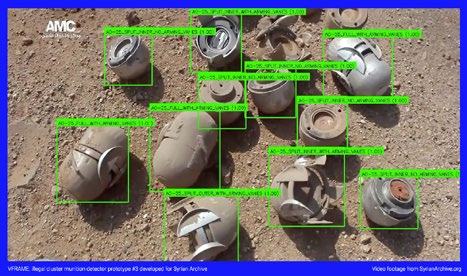 Illegal cluster munition detector prototype
AMC, VFRAME legalduster, Video footage from Syrian Archive.org, Adam Harvey
Illegal cluster munition detector prototype
AMC, VFRAME legalduster, Video footage from Syrian Archive.org, Adam Harvey
We launched Finding ctrl, an interactive digital publication reflecting on the future of the internet, as part of the Next Generation Internet initiative. The content was authored both by technology luminaries such as Jimmy Wales and Shoshana Zuboff, and emerging voices like Sara Melotti and Isabelle Zaugg. It has been viewed more than 150,000 times to date, and was featured in the FT, BBC Today Programme and other high-profile outlets.
We published The Future of Minds and Machines, a report reframing the discussions around artificial intelligence and exploring how these technologies can enhance collective intelligence. This publication, aimed at innovators working in public sector and civil society organisations, was shared at CogX and New Scientist Live, and covered by the BBC.
We worked with the Department for Business, Energy and Industrial Strategy (BEIS), the Canadian Government, and key regulators on proactive, iterative methods for anticipatory regulation. As traditional approaches struggle to keep pace with technological change, we're helping to develop and test new ways that regulators can support market-led innovation while keeping the public safe.
We worked with the Solicitors Regulation Authority (SRA), the Department for BEIS, and Canadian regulators on anticipatory regulation, specifically on considering the role of artificial intelligence in law. Regulatory systems are struggling to cope with the nature and speed of technological change, but all parties are now taking a more anticipatory approach, allowing them to better manage risks and take advantage of emerging opportunities.
Public engagement with futures
Our goal is to use foresight methods to give the public a greater sense of agency about the future.
Through our policy engagement and thought leadership, our anticipatory regulation framework became the basis of policy in the Department for BEIS. We helped the department to create the new, independent Regulatory Horizons Council, and won a £50,000 research contract which allowed us to publish an influential research report on best practice in innovation-enabling regulation. Our work also became the basis for Finland's approach to innovation-enabling regulation.
Case study: The Centre for Regulatory Innovation
We secured £450,000 of funding from the Canadian Government to develop the Centre for Regulatory Innovation in Canada. We helped regulators in the country to set up the Centre, build their capacity, create a toolkit, and worked directly with their regulators to develop innovative projects.
We published a report into the nascent field of participatory futures titled Our Futures: By the People, For the People. Participatory futures move beyond citizen assemblies and traditional public engagement to help people develop a collective image of a future they want, allowing for better, more informed decisions. The report defines and categorises the methods found in the field, and offers practical suggestions to policymakers understanding where and how to use them.
We partnered with BBC Future to run a year-long crowd predictions challenge. Over the course of 2019, more than 7,500 people from 119 countries around the world made more than 33,000 forecasts about expected events. We found that crowd forecasting can play a useful role in decision-making for the complex times we face.
Case study: Crowd Predictions Challenge
The Centre for Collective Intelligence Design's Crowd Predictions Challenge ran throughout 2019 and involved over 7,500 people from 119 countries. Participants were asked to answer 19 questions about Brexit, technology, health and more. The results showed that the crowd accurately predicted three quarters of Brexit-related events, and two thirds of the others - suggesting that crowd forecasting could be a valuable tool for policymakers, government agencies and companies worldwide. As well as the results, we also published lessons learnt from our year-long experiment and a set of best-practice guidelines for others who wish to harness the power of the crowd.
Financial review
The Group is comprised of Nesta (the main operating charity through which all charitable activity is undertaken), the Nesta Trust (a charitable trust which holds all the investment assets invested to fund the charitable activities of Nesta in advancing the objects of the Trust), six companies, four limited liability partnerships and one entity registered in the United States.
A number of subsidiaries have been set up to manage Nesta's investing and fund management related activities. It enables Nesta to manage and invest funds on behalf of its investment partners in compliance with the Financial Conduct Authority's (FCA) requirements. This structure is made up of Nesta GP Limited, Nesta GP2 Limited, Nesta PRI Limited, Cultural Impact Development Loans Limited, Nesta Partners Limited, Nesta Investment Management LLP, NII2 Special Partner LLP, Nesta Arts Impact LLP, Nesta Arts & Culture Impact LLP and Nesta US Inc. The Group also includes Nesta Enterprises Limited, incorporated as a trading subsidiary for non-primary purpose trading. The results of the Group consolidate all subsidiary undertakings as well as the Trust and the joint venture in Behavioural Insights Limited.
Nesta Trust provided funding to Nesta of £21.8 million (2019: £16.5 million) during the year of which £18 million (2019: £16 million) was applied to charitable operating activities and £3.8 million (2019: £0.5 million) committed in relation to the Impact Investment Fund and other programme-related investments.
Funding made available by the Nesta Fund does not constitute a commitment until a drawdown is made. The assets of the Trust are held as an expendable endowment and the Trust is therefore able to fund charitable activity beyond the returns it generates during the year.
Income of £25.3 million (2019: £13.2 million) was recognised in addition to the £10.1 million (2019: £6.7 million) of investment income. This income is predominantly in the form of partnership funding where Nesta's expertise in programme design and project management is combined with the funding capacity of other typically larger organisations.
Income and expenditure for Nesta's strategic themes
Total Group expenditure was £47.2 million (2019: £42.4 million) of which £42.1 million (2019: £36.5 million) was spent on charitable activities, £3.9 million (2019: £4.5 million) on trading activities and £1.2 million (2019: £1.3 million) on managing endowment assets held by the Trust and impact investment funds held by Nesta. Grant expenditure commitments totalled £7.7 million (2019: £7.9 million) with recipients over £50,000 detailed in Note 7b.
Support costs of £10.4 million (2019: £11 million) relate to Communications and Corporate Services activities and are allocated to programme areas as shown in Note 7a.
External charitable income 2019-2020
A donut chart showing external charitable income totaling £25.3 million. The breakdown is:
* Education: £11.5m
* Government Innovation: £5.1m
* Other: £5.3m
* Creative Economy: £0.9m
* Innovation Policy: £1.7m
* Health: £0.8m
Programme charitable expenditure 2019-2020
A donut chart showing programme charitable expenditure totaling £27.4 million. The breakdown is:
* Education: £4.5m
* Government Innovation: £8.1m
* Other: £6m
* Creative Economy: £1.7m
* Innovation Policy: £3.9m
* Health: £3.2m
Total group funds decreased by £30.9 million (2019: increase of £1.1 million) during the year. This resulted in group funds of £423.7 million carried forward as at 31 March 2020 (31 March 2019: £454.7 million), of which £9.4 million was unrestricted (2019: £6.8 million) and £391.6 million was in relation to the expendable endowment (2019: £431.4 million).
As Nesta is able to draw down cash from the Nesta Trust as required within the approved funding envelope, the trustees have concluded that there is a reasonable expectation that the Group has adequate resources to continue activities for the foreseeable future and have therefore adopted the going concern basis in preparing the financial statements.
Programme income and expenditure for Nesta's strategic themes 2019-2020
A bar chart showing income, grant expenditure, and other expenditure for various strategic themes.
The vertical axis ranges from 0 to 14,000.
* Government innovation: Income 5,000, Grant expenditure 2,000, Other expenditure 6,000
* Education: Income 11,000, Grant expenditure 2,000, Other expenditure 2,500
* Health: Income 800, Grant expenditure 200, Other expenditure 3,000
* Innovation policy: Income 1,700, Grant expenditure 100, Other expenditure 4,000
* Creative economy: Income 800, Grant expenditure 100, Other expenditure 1,600
* Other: Income 5,000, Grant expenditure 3,000, Other expenditure 3,000
| Charitable activities Strategic theme |
Income £000's |
Grant expenditure £000's |
Other expenditure £000's |
| Government innovation |
5,129 |
2,299 |
5,787 |
| Education |
11,498 |
1,938 |
2,528 |
| Health |
810 |
223 |
2,944 |
| Innovation policy |
1,701 |
73 |
3,863 |
| Creative economy |
845 |
87 |
1,643 |
| Other |
5,284 |
3,102 |
2,944 |
| Investments |
- |
- |
4,316 |
| Allocated support costs |
- |
- |
10,401 |
| Total |
25,267 |
7,722 |
34,426 |
Programme charitable expenditure of £27.4 million excludes investment and allocated support costs.
Investment review
The assets of the Trust provide income and capital to be applied by Nesta as sole Trustee to further the objects of the Nesta Trust. The investment strategy balances the desire to maintain the real value of the endowment and its ability to generate the income required by the Nesta Trust to advance its charitable objectives. The strategy aims to balance risk, return and capital preservation.
At 31 March 2020 the value of Trust investments and cash decreased by £36.6 million to £397.6 million (2019: £434.2 million), after annual transfers to Nesta to carry out the objectives of the Trust in line with the Trust Deed. This reduction was driven largely by emerging impacts of the COVID-19 pandemic with movements by asset class as shown below. Trust investments are benchmarked against Charity Fund Universe data taken from the Teknometry Performance Report. The net of fees performance is reviewed over a three-year period. The Trust investments' performance over the last three years was 2.3 per cent which outperformed Charity Fund Universe performance of 1.3 per cent.
| Asset class |
Market value of investment assets 31 March 2020 £'000 |
Proportion of total endowment assets 31 March 2020 % |
Market value of investment assets 31 March 2019 £'000 |
Proportion of total endowment assets 31 March 2019 % |
| Current assets: |
|
|
|
|
| Cash |
4,143 |
1 |
7,676 |
2 |
| Fixed asset investments: |
|
|
|
|
| Private equity funds |
7,693 |
2 |
8,510 |
2 |
| Global equities |
214,344 |
54 |
237,893 |
55 |
| Bonds (fixed income) |
74,234 |
19 |
83,989 |
19 |
| Early-stage venture portfolio* |
20,536 |
5 |
19,130 |
4 |
| Investment properties |
76,640 |
19 |
68,000 |
16 |
| Cash awaiting investment |
- |
- |
9,000 |
2 |
| Total |
397,590 |
100 |
434,198 |
100 |
*Mixed motive investments – see Note 10 of the accounts for further breakdown
Strategic review
A review of the level of long-term sustainable funding that the endowment is able to provide in furtherance of Nesta's charitable objectives was undertaken during the year. Trustees reviewed the performance of the investment portfolio in all asset classes on an ongoing basis in line with the strategic asset allocation policy and the ranges agreed in March 2019 which marginally increased the allocation to equities and reduced allocation to bonds. A risk register is used to manage key risks proactively.
Adverse market conditions in March 2020 resulted in the strategic allocation to global equities reducing to 54 per cent (from 55 per cent) with the year end valuation decreasing to £214 million (£238 million as at 31 March 2019). Trustees continue to monitor investments in all asset classes in line with the Investment Policy agreed in July 2019.
Private equity funds
Capital receipts amounted to £2.1 million (2019: £2.9 million) from the Trust's two private equity secondary funds with £0.3 million drawdown against commitments (2019: no additions). A £6.4 million financial commitment outstanding for this asset class is disclosed in Note 19 to these Financial Statements. Net realised and unrealised gains totalled £1 million (2019: £1.7 million).
Early stage venture portfolio
This includes equity and loan investments in 18 (2019: 19) companies and commitments to four (2019: five) investment funds. The Trust's investment strategy is to maximise the returns from the current portfolio but not to invest in any new early-stage companies or funds in the near future. There was no net realised gain/loss (2019: £0.5 million gain) recognised in the year. A net unrealised gain of £0.8 million (2019: £0.6 million loss) was recognised, applying the valuation methodology which remains unchanged from previous years and is detailed in Note 1h to the Accounts.
Costs of managing the assets
External management, custodian and advisory fees for the Trust's investment assets totalled £1.1 million (2019: £1.3 million). This includes grossed-up fund manager fees that are set against the relevant fund's value.
Investment policy
The Nesta Trust was established by a Trust Deed dated 22 September 2011. As the sole Trustee of the Nesta Trust ('the Trust'), Nesta is responsible for the Trust's Investment Policy. Investment strategy advice is delegated to the Trust Investment Committee of the Board which is also responsible for strategic and tactical asset allocation, rebalancing and weighting within asset classes, as well as monitoring manager, consultancy and custodial arrangements. The Board approved an updated Investment Policy in July 2019.
Investment assets are invested on a total return basis in furtherance of the Trust's objects, balancing cash distributions where possible to fund Nesta's drawdown requirements. These investment assets are held as an expendable endowment.
Trust assets are invested in accordance with the wide investment powers set out in the Trust Deed, which requires that Nesta must set the investment and spending policy for the Trust with a view to preventing the value of the Trust assets and any returns generated by the Trust assets falling below £260 million.
Nesta's investment objective for the Trust is to balance the current and future needs of the Group by producing a consistent and sustainable level of return, within acceptable levels of risk, to support the work of Nesta in advancing the charitable objects of the Trust. To meet these objectives Nesta invests globally and diversifies across a range of asset classes, maintaining the majority in higher returning instruments whilst ensuring enough liquidity to avoid sales at distressed prices.
Responsible investing
Nesta believes that responsible investment can enhance long-term portfolio performance and is committed to capturing investment opportunities driven by environmental, social and governance (ESG) integration and active ownership within its asset portfolio. The Trust's Investment Committee aims to encourage companies to innovate for the delivery of long-term returns. To date, the process of incorporating a more responsible approach to investment has involved:
- Divestment: Where practical we have sold our holdings in companies whose activities we consider not to be aligned with our charitable objectives
- An explicit programme to monitor fund managers' incorporation of environmental, social and governance (ESG) factors and their practice of active ownership and stewardship
- For our index investments, we engage Federated Hermes Equity Ownership Service, the pioneering stewardship company, to oversee our portfolio
- Continuing support for impact investing
- Advocacy: We have been a leading advocate for transparency in costs and charges, and for ensuring that the remuneration policies approved by investors support innovation
These policies have informed Nesta's actions, oversight and asset allocation decisions. However, it should be noted that such initiatives take time to fully implement and Nesta may have some holdings that do not fully accord with its responsible investment policies. These will be run down over time. Equally, Nesta will continue to develop its policies to further embed responsible investing across the portfolio.
Nesta achieves its charitable objects, and the objects of the Nesta Trust, in several ways, which include providing investment, grant making, providing non-financial support and carrying out research. It also provides support in a range of different ways, depending on the nature and objectives of each programme.
In line with Charity Commission guidelines, programme-related investments are made primarily to further the objects of the charity for public benefit but are also expected to make a financial return and are managed in line with programme objectives. Consequently, they are, as permitted by Accounting and Reporting by Charities: Statement of Recommended Practice (FRS 102) applicable in the UK and Republic of Ireland (effective 1 January 2015), issued by the Charity Commission and included in the balance sheet at cost less any provision for impairment where there is no evidence for fair value.
There is no set allocation of the annual budget for overall grant expenditure. Rather, Nesta sets programme deliverables and determines the appropriate method of delivery within that programme's budget. Where grants are appropriate as a funding mechanism, Nesta sets out specific entitlement criteria for each programme at its launch. These criteria vary from programme to programme and are made available on Nesta's website. Applications are assessed against these criteria and awards are made taking into account the availability of funds, Nesta's ability to deliver the objectives of the programme and the quality of applications. The period for which grants are awarded depends upon the programme but typically lasts between one and three years. Grants are monitored regularly and appropriate progress reports are required from recipients. A list of grants over £50,000 are detailed in Note 7b and a comprehensive list of all grants made during the year can be found on the Nesta website.
Free reserves policy
In accordance with the Trust Deed of the Nesta Trust, Nesta's Reserves Policy is to provide sustainable funding to advance the charitable aims of the Nesta Trust whilst holding reserves at sufficient levels with a view to maintaining the underlying assets above a market value of £260 million.
On 31 March 2020 the reserves of the Group stood at £423.7 million (2019: £454.7 million). Nesta Trust provided funding to fulfil its charitable objectives, through activities carried out by Nesta, totalling £18 million (2019: £16.5 million).
Nesta, as the parent charity, has no requirement to maintain its own reserves, provided that expenditure remains within the approved amount of drawdown from the Trust. The policy for drawdown was established in line with the Trust Deed and subject to the powers of the Protector of the Trust, and allows drawdowns at any time during the year as long as the approved drawdown total is not exceeded.
Cash received that is restricted in use of specific programme expenditure is held on Nesta's own balance sheet.
This Reserves Policy will only be reviewed when there is a change in the funding relationship between the Trust and Nesta; such a change is currently not foreseeable.
Principal risks and uncertainties
The trustees are responsible for the management of risks within the Nesta Group. These are considered both organisationally and by activity.
i. Organisational risk:
The monitoring and implementation of the risk management framework and consideration of organisational risk is delegated to the Finance and Audit Committee. A high-level risk register is presented at each Finance and Audit Committee meeting and is reviewed by the Board bi-annually. The Executive team considers both strategic and detailed operational risks on a regular basis.
The key controls in place include:
- An established organisational and governance structure and lines of reporting
- Detailed terms of reference for the Board and all Board committees
- Comprehensive financial planning, budgeting, management reporting and monitoring
- Formal written policies and hierarchical authorisation and approval levels
- Internal audit services engagement with programmes selected for review which are informed by the risk register
One of the Group's main financial risks is the investment activity of the Nesta Trust. Investment risk is managed with the support of our investment advisors, through regular review of the Nesta Trust Investment Policy, management of the strategic asset allocation, regular performance reporting, diversification across a broad range of asset classes, investment managers and investment strategies, and ongoing manager reviews.
The majority of Nesta's Trust investments are externally managed by investment managers in pooled fund vehicles.
ii. Activity risk:
Nesta's mission is to bring bold ideas to life to change the world for good which requires experimentation and an element of risk-taking in its activities if it is to succeed. Accordingly the risk appetite is for 'managed risk-taking' rather than simple 'risk aversion'. Recognising that some activities or projects may fail to a greater or lesser extent and that such failure can be an important source of learning.
Trustees are satisfied that the major risks identified through risk management processes are being adequately managed, whilst recognising that any framework can provide reasonable but not absolute assurance. There were no material control weaknesses identified by trustees or management during the year.
The following organisational risks and uncertainties are considered the most significant and which include those associated with the adoption by Nesta of its new strategic plan:
- Reduced breadth of activities results in a loss of influence and inability to attract new partners thereby impacting on our ability to achieve demonstrable impact at scale
- Culture shift and talent/skills resourcing is insufficient to deliver effectively on strategy
- Lack of funding, whether external and/ or arising from an extended period of poor investment returns, impacts adversely on ability to deliver effectively on strategy and results in necessity for securing external income for non-aligned work
- One or more projects or partners attract public criticism which diminishes Nesta's reputation and its ability to advance its objects
- Threat of a serious breach from a cyber attack
The impact of COVID-19 has been considered, but is not thought of as a principal risk. The trustees continue to monitor events closely and review the impact on operations on a regular basis.
Objectives
Nesta works to advance the following charitable aims for the public benefit:
- To advance education, and in particular the study of innovation, by the promotion of research and the publication of the useful results thereof, in:
- Science and technology
- The arts
- The efficiency of public services
- The voluntary sector and social enterprise
- Industry and commerce
through or by encouraging and supporting innovation.
- To advance:
- Science and technology
- The arts
- The efficiency of public services
- The voluntary sector
- Industry and commerce and social enterprise which:
- Relieves poverty
- Relieves unemployment
- Advances health
- Advances environmental protection or improvement and sustainable development
- Advances citizenship or community development
The 'voluntary sector' means charities and voluntary organisations. Charities are organisations, which are established for exclusively charitable purposes in accordance with the law of England and Wales.
Voluntary organisations are independent organisations, which are established for purposes that add value to the community as a whole, or a significant section of the community and which are not permitted by their constitution to make a profit for private distribution. Voluntary organisations do not include local government or other statutory authorities.
Sustainable development means 'development that meets the needs of the present without compromising the ability of future generations to meet their own needs'.
- To advance any other purpose which is recognised as exclusively charitable under the laws of England, Wales and Scotland.
Fundraising statement
Section 162a of the Charities Act 2011 requires us to make a statement regarding fundraising activities. Nesta does not undertake any fundraising activities and does not use any professional fundraisers or 'commercial participators' or any third parties to solicit donations. We are therefore not subject to any regulatory scheme or relevant codes of practice. We have not received any complaints in relation to fundraising activities, nor do we consider it necessary to design specific procedures to monitor such activities.
Public benefit statement
The trustees confirm that, in exercising their powers and duties in relation to both Nesta and the Nesta Trust, they have had due regard to the Charity Commission's statutory guidance on public benefit.
A copy of the Charity Commission's guidance on public benefit is provided to each trustee. Every proposal brought to the Board for approval outlines how it will advance Nesta's charitable objects for public benefit.
This report sets out some of the activities and achievements of Nesta in carrying out its charitable purposes, and the purposes of the Nesta Trust, for the public benefit over the year. These range from major grant programmes to challenge prizes to other projects looking for ways to improve public services, education, healthcare and the arts. Nesta undertakes and disseminates research to improve public understanding of innovation through its reports, events and digital media, and provides training and tools to teach innovation skills to a variety of audiences.
Support is provided to private and for-profit companies only where this will further Nesta's charitable purposes for public benefit and where personal benefit is incidental to furthering those purposes. The potential for personal benefit is assessed on a case-by-case basis, through due diligence on potential investments, for example, and appropriate conditions are imposed to ensure this is incidental to furthering Nesta's charitable purposes. Grants and investments are closely monitored to ensure they continue to further Nesta's charitable purposes throughout the project.
The details of Nesta's purposes and objectives, and its strategies and achievements in pursuing these purposes and objectives, are set out on pages 44 to 49.
Governance and management
Nesta was established and registered as a charity in 2011 to act as successor body to the National Endowment for Science, Technology and the Arts ('NESTA'). NESTA was a non-departmental public body with a statutory remit to promote talent, creativity and innovation in science, technology and the arts, with an endowment from the National Lottery. All NESTA activities, staff, assets and liabilities were transferred on 1 April 2012 to Nesta and the Nesta Trust, registered charity no. 1144091. The Trust holds the expendable endowment and Nesta, its sole trustee, and uses returns from the Trust to pursue the charitable objects of the Trust.
Nesta is a company limited by guarantee and a charity registered with the Charity Commission and the Office of the Scottish Charity Regulator. Its trustees are both directors and members of the company. For more information on the group structure and subsidiaries please see page 64 to 65.
Under company and charity law, the Board of Trustees retains overall responsibility for Nesta and its role as Trustee of the Nesta Trust. Trustees on the date this annual report is published are listed on page 75. Sir John Gieve is Chair of the Board, which met six times during the year with members of the Executive team present. The Nesta Trust also has a protector appointed by the Secretary of State for Business, Energy and Industrial Strategy with a fiduciary duty to ensure the integrity of administration of the Trust. The current Protector is James Sinclair Taylor.
Trustees receive no remuneration for acting as trustees and are appointed for an initial term of three years, renewable for another three years with Board approval. All new trustees receive a tailored induction and information about structure and governance, and their responsibilities as charity trustees, in accordance with the Charity Governance Code. The Board observes all seven principles of the Charity Governance Code and provides appropriate control, challenge and support to the Executive team.
The Board has adopted a conflicts of interest policy and processes for both staff and trustees to ensure that conflicts of interests are declared and managed appropriately, and maintains a Register of Interests. Trustees are reminded to declare relevant interests at the start of every Board and Committee meeting.
The Board has appointed a chief executive to lead and manage Nesta by implementing the policy and strategy adopted by the trustees within the plan and budget approved by the Board. Approval for decisions up to certain financial thresholds have been delegated to the chief executive and other executive directors under a Scheme of Delegation. All decisions above this threshold must be approved by the Board or its committees. The Board has also reserved to itself certain important decisions, such as changes to the Articles, appointment of the chief executive, and approval of the long-term objectives and strategy.
Nesta's Executive team comprises the chief executive, deputy chief executive officer, chief finance officer, chief investment officer, general counsel and executive directors of each of the main areas of activity. A full list is given on page 76.
The Board has established a number of committees to oversee aspects of Nesta's activities. Each of the Board committees have delegated authority in respect of certain functions and activities and has written terms of reference approved by the Board, and reports to the Board at each Board meeting. A list of trustee members for each of the Board committees is provided on page 75.
Here is a list of the main Board committees:
Finance and Audit Committee which reviews management reporting and financial performance against budget, and recommends to the Board the annual budget; as well as reviewing audit and financial reporting, internal financial controls, risk management and compliance. Grant Thornton are engaged to provide internal audit services to assist the Committee to monitor the effectiveness of internal control arrangements. The Committee met four times during the year.
Trust Investment Committee whose key responsibilities are to draw up the policies and objectives governing the investment of Nesta Trust's assets, to approve investments within ranges set by the Board, to oversee their implementation and to monitor financial performance of the Nesta Trust. The Committee met four times during the year.
Venture Investment Committee which manages the Trust's portfolio of interests in early-stage companies and funds transferred from NESTA, manages programme-related and mixed-motive investments, and oversees any other Nesta investment. The Committee met four times during the year.
People Committee whose key responsibilities are staff terms and conditions, ensuring fair and appropriate remuneration and benefit policies. The Committee also manages the recruitment of new trustees and overseas appointments to other committees. The Committee met twice in relation to the year.
Thematic Committees Nesta has five thematic committees – Health, Government Innovation, Innovation Policy, Education and Arts & Creative Economy – whose main purpose is to help Nesta to set clear objectives and impact measures in each field, to monitor progress and support executive teams to use their resources in the most effective way. Trustee members of these committees also have delegated authority for certain income and expenditure decisions, on behalf of the Board in respect to their relevant thematic areas.
Sustainability and carbon reporting
Nesta is reporting energy and carbon emissions in compliance with The Companies (Director's Report) and Limited Liability Partnerships (Energy and Carbon Report) Regulations 2018.
| Energy source |
Units |
Consumption kWh |
Energy intensity Consumption/SQM |
Carbon emissions TCO2e |
Carbon intensity TCO2e/SQM |
| Electricity (kWh) |
466,761 |
172.11 |
117 |
0.04298 |
|
| Natural gas (kWh) |
213,747 |
78.82 |
39 |
0.01449 |
|
| Total |
680,508 |
250.93 |
156 |
0.057 |
|
Chart showing carbon emissions by energy source (pie chart) and carbon emissions over time (line chart).
The pie chart "Carbon emissions by energy source" shows:
* Electricity (kWh): 75%
* Natural gas (kWh): 25%
The line chart "Carbon emissions" plots TCO2e and TCO2e/SQM monthly from April 2019 to March 2020, comparing "Previous FY" and "Current FY" for both carbon emissions and carbon intensity.
Note: Emissions per average FTE equates to 0.5 (TCO2e/FTE)
Methodology and estimates
The methodology used to calculate total energy consumption and carbon emissions has been extracted from invoice data for the financial year. As Nesta does not occupy the whole building at 58 Victoria Embankment, consumption for areas outside of Nesta's control has been deducted. This has been deduced through sub-meter readings. Gas is supplied to the whole building and there are no heat meters to enable the identification of each final customer's consumption. As such Nesta is responsible for all gas consumption in the building. No estimates have been used as we have access to 100 per cent actual data from the invoices. The Company does not own any vehicles and all travel is undertaken using public transport. Energy and fuel consumption has been converted to carbon (kgCO2e) using 2019 DEFRA published conversion factors. The Nesta building was BREEAM certified on construction in 2011 gaining an overall score of 70.5 per cent and a rating of excellent.
The Governance Code
Nesta's Board is committed to adopting the principles set out in the Charity Governance Code (the 'Code'). In accordance with good practice, Nesta will undertake its next governance review before May 2022. In any event, Nesta's governance structures will be reviewed and updated to ensure they continue to be best practice in light of our new strategy launching this autumn.
Section 172 Statement
Background
As a company limited by guarantee, Nesta is required to report on how trustees have discharged their duty to promote the best interests of Nesta, while having regard to the matters set out in section 172 (1) (a) to (f) of the Companies Act 2006. In doing so, regard (amongst other matters) must be given to:
- The likely long-term consequences of any decision
- The interests of employees
- Fostering relationships with key stakeholders
- The impact of operations on our communities and environment
- Maintenance of our reputation for the highest standards of conduct
- The need to act fairly as between members of the company
Our stakeholders
The Board recognises that Nesta's relationship with its stakeholders is critical to its success. Our charitable objectives, scale and impact are achieved in part through relationships and having a positive influence on public policy for public benefit.
The table on the following page sets out our key stakeholder groups, the key considerations of each group and how we engage with them. By understanding our stakeholders, Board discussions consider the potential impact of our decisions on each stakeholder group and consider their needs and concerns.
| Stakeholder group |
Key considerations |
How we engage |
| Beneficiaries |
- Improving the lives of the people and communities that Nesta works with
- Making sure that our work benefits a significant section of the public |
- Website, newsletters and direct communications
- Nesta events
- Via our partners, including our grant recipients, and the projects that we support
- Via grant recipient reporting |
| Partners |
Nesta's partners are broad with varying interests and interactions with Nesta. From policy influence (from UK government and opposition parties) to regional stakeholders to international, and from our funders to our grantees and projects |
- Publication of research reports, articles and blogs
- One-to-one engagement on relevant issues
- Lobbying for change at a policy level
- Direct communications
- Partner feedback and insights sought on issues of relevance to that partner
- Website, newsletters and direct communications
- Twitter
- Nesta events |
| Employees |
- Succession planning
- Growth, training and development
- Diversity, inclusion and equality
- Fair and appropriate remuneration, benefits and conditions |
- We receive feedback and seek to implement positive change through our employee represented Staff Forum and Diversity and Inclusion Working Group
- Intranet, staff newsletters and all-staff meetings
- Employee engagement survey
- Learning and development through our People team |
| Regulators |
- Maintaining strict governance procedures to ensure compliance with all applicable regulatory regimes |
- Timely submissions of all necessary filings and returns
- Self-reporting and engagement where appropriate
- Prompt and comprehensive response to requests for information if requested |
| Investment managers |
- Comprehensive view of the financial performance and sustainability of the endowment
- Engagement on ethical, social and governance factors
- Ability to maximise the overall return of the endowment |
- Regular meetings, calls and correspondence with our investment managers
- Oversight from our Trust Investment Committee
- Via Nesta's external appointed investment advisers |
Key decisions in 2019-2020
The table below sets out the key decisions taken by the Nesta Board in 2019-2020 and how the interests of our stakeholders and the wider factors set out in section 172 of the Companies Act 2006 were taken into account.
| Existing strategy management |
2019-2020 was the final year of a three-year strategy focused on education, health, innovation policy, government innovation and the creative economy as previously approved by the Board. |
Key considerations: In considering which work Nesta pursues or projects it supports under the existing strategy, consideration is given to all relevant stakeholders. In particular: - Day-to-day decisions below the financial threshold set out in the Nesta Scheme of Delegation are delegated to the Executive Management team. High value, key projects, income and key partnerships are considered, and if appropriate, approved by the Board with regards to: - The use of charitable funds - Assessment against both object and strategic alignment - Appropriateness of partnerships weighed against achievement of impact and Nesta's ethics guidelines regarding who we should work with as a charity - Compliance with the Charity Commission regime, and where appropriate, Office of the Scottish Charity Regulator, Financial Conduct Authority, and Information Commissioner's Office
- The Board receives regular updates on all activities, with regular deep dives on each of the five thematic areas. |
| Appointment of new Chief Executive Officer |
In summer 2019, following a recruitment and selection process, Ravi Gurumurthy was appointed as Nesta's new Chief Executive Officer, taking up the post from December 2019. |
Key considerations: - The long-term impact on the future direction and success of the organisation as a result of a critical appointment
- Ability to maintain and foster key relationships and partnerships to ensure reach and impact of activities
- Building on successes to date in the longer term
- The potential impact on operations and activities in the interim between chief executive officers |
| Future strategy management |
In February this year the Board approved the strategy review process to set Nesta's future strategy. The strategy review was undertaken for the first part of 2020-2021, with details to be announced in autumn 2020. |
Key considerations: - Change management and the impact on Nesta employees
- External stakeholder engagement during the review process to inform direction and decisions
- Impact on current and future Nesta beneficiaries
- How Nesta can have a positive impact on the environment through the new strategy and in the achievement of its charitable objectives |
Remuneration policy
Nesta and its people
Nesta's Executive team is responsible for strategic and day-to-day operational management of the charity and meets formally as the Executive team at least once a month.
Nesta has continued to expand in 2019/20 and has 302 FTE as at 31 March 2020 (March 2019: 242 FTE, March 2018: 193 FTE).
Pay at Nesta
At Nesta we understand the importance of transparency in all aspects of our work. In line with recommendations from the National Council for Voluntary Organisations inquiry into executive pay, we are once again detailing our approach to pay; explaining how our pay levels are defined, and listing the roles and salaries of our Executive team.
Our People Committee is responsible for agreeing salary levels of all executive posts and annual pay awards for all staff. The Committee meets at least twice a year.
Nesta is proud to be an Accredited Living Wage employer. Executive salaries are disclosed in Note 8c of the accounts. These salaries are appropriate to ensure we attract and retain an Executive team that can successfully run a complex organisation recognised as a leader in innovation in the UK and beyond.
Nesta's annual salary review takes place each year with any changes taking effect from 1 April. A general award to salaries may be made to reflect changes in the wider labour market and levels of inflation. A general award of two per cent was made in April 2020 (April 2019: two per cent).
Individual pay awards are available and decided with reference to individual achievement against objectives, demonstrating Nesta values or where there have been substantial changes to a role. Individual pay awards are in the form of a salary increase within the range and are approved by executive directors who meet to review and agree any proposed increases. All increases fall within the budget set aside for salaries which is signed off by the People Committee.
Nesta provides a mixed portfolio of financial and non-financial rewards for our employees to ensure we remain attractive and competitive and are able to attract and retain the most talented people to deliver our strategy.
Our Disability Recruitment Policy gives full and fair consideration of applications for employment made by disabled persons, having regard to their particular aptitudes and abilities; continuing the employment of, and arranging training for, employees who have become disabled persons while employed; and otherwise for the training, career development and promotion of disabled persons.
Plans for the future
Our plans for the future period are to implement our new strategy, with details being shared in the autumn. The new strategy will build upon our work to date in social innovation, learning from our previous activities, and seeking to maximize impact.
Statement of trustees' responsibilities
The trustees are responsible for preparing the strategic report, annual report and financial statements in accordance with applicable law and regulations.
Company law requires the trustees to prepare financial statements for each financial year in accordance with United Kingdom Generally Accepted Accounting Practice (United Kingdom Accounting Standards and applicable law). Under company law the trustees must not approve the financial statements unless they are satisfied that they give a true and fair view of the state of affairs of the Group and charity and of the net income of the Group for that period. In preparing these financial statements, the trustees are required to:
- Select suitable accounting policies and then apply them consistently
- Observe the methods and principles in the Charities SORP
- Make judgements and estimates that are reasonable and prudent
- State whether applicable accounting standards have been followed, subject to any material departures disclosed and explained in the financial statements
- Prepare the financial statements on the going-concern basis unless it is inappropriate to presume that the Group will continue in business
The trustees are responsible for keeping proper accounting records that are sufficient to show and explain the Group's and charity's transactions, and disclose with reasonable accuracy, at any time, the financial position of the Group and charity, and enable them to ensure that the financial statements comply with the Companies Act 2006. They are also responsible for safeguarding the assets of the Group and hence taking reasonable steps for the prevention and detection of fraud and other irregularities.
The trustees are responsible for the maintenance and integrity of the corporate and financial information included on Nesta's website. Legislation in the United Kingdom governing the preparation and dissemination of financial statements may differ from legislation in other jurisdictions.
Disclosure to our auditors
As far as the trustees are aware, at the date of this report, they have taken all the steps they ought to have taken to make themselves aware of any relevant audit information of which the company's auditor is unaware.
The trustees' report and strategic report are approved by the Board of Trustees and authorised for issue on 8 October 2020, and signed on its behalf by:
Sir John Gieve,
Chair of the Board of Trustees of Nesta
Independent auditor's report to the members and trustees of Nesta
Opinion
We have audited the financial statements of Nesta ('the Parent Charitable Company') and its subsidiaries ('the Group') for the year ended 31 March 2020 which comprise the (consolidated) statement of financial activities, the (consolidated) balance sheet, the (consolidated) cash flow statement and notes to the financial statements, including a summary of significant accounting policies. The financial reporting framework that has been applied in their preparation is applicable law and United Kingdom Accounting Standards, including Financial Reporting Standard 102 The Financial Reporting Standard applicable in the UK and Republic of Ireland (United Kingdom Generally Accepted Accounting Practice).
In our opinion, the financial statements:
- Give a true and fair view of the state of the Group's and of the Parent Charitable Company's affairs as at 31 March 2020 and of the Group's incoming resources and application of resources for the year then ended
- Have been properly prepared in accordance with United Kingdom Generally Accepted Accounting Practice
- Have been prepared in accordance with the requirements of the Companies Act 2006, the Charities and Trustee Investment (Scotland) Act 2005 and regulations 6 and 8 of the Charities Accounts (Scotland) Regulations 2006, as amended in 2010
Basis for opinion
We conducted our audit in accordance with International Standards on Auditing (UK) (ISAs (UK)) and applicable law. Our responsibilities under those standards are further described in the auditor's responsibilities for the audit of the financial statements section of our report. We are independent of the Group and the Parent Charitable Company in accordance with the ethical requirements relevant to our audit of the financial statements in the UK, including the Financial Reporting Council's (FRC) Ethical Standard, and we have fulfilled our other ethical responsibilities in accordance with these requirements. We believe that the audit evidence we have obtained is sufficient and appropriate to provide a basis for our opinion.
We have nothing to report in respect of the following matters in relation to which the ISAs (UK) require us to report to you where:
- The trustees' use of the going concern basis of accounting in the preparation of the financial statements is not appropriate
- The trustees have not disclosed in the financial statements any identified material uncertainties that may cast significant doubt about the Group or the Parent Charitable Company's ability to continue to adopt the going concern basis of accounting for a period of at least 12 months from the date when the financial statements are authorised for issue
The other information comprises the information included in this annual report, other than the financial statements and our auditor's report thereon. The other information comprises the strategic report. The trustees are responsible for the other information.
Our opinion on the financial statements does not cover the other information and, except to the extent otherwise explicitly stated in our report, we do not express any form of assurance conclusion thereon.
In connection with our audit of the financial statements, our responsibility is to read the other information and, in doing so, consider whether the other information is materially inconsistent with the financial statements or our knowledge obtained in the audit or otherwise appears to be materially misstated. If we identify such material inconsistencies or apparent material misstatements, we are required to determine whether there is a material misstatement in the financial statements or a material misstatement of the other information. If, based on the work we have performed, we conclude that there is a material misstatement of this other information, we are required to report that fact.
We have nothing to report in this regard.
Opinions on other matters prescribed by the Companies Act 2006
In our opinion, based on the work undertaken in the course of the audit:
- The information given in the trustees' report, which includes the directors' report and the strategic report prepared for the purposes of Company Law, for the financial year for which the financial statements are prepared is consistent with the financial statements
- The strategic report and the directors' report, which are included in the trustees' report, have been prepared in accordance with applicable legal requirements
Matters on which we are required to report by exception
In the light of the knowledge and understanding of the Group and the Parent Charitable Company and its environment obtained in the course of the audit, we have not identified material misstatement in the strategic report or the trustees' report.
We have nothing to report in respect of the following matters in relation to which the Companies Act 2006 and the Charities and Trustee Investment (Scotland) Act 2005 requires us to report to you if, in our opinion:
- Proper and adequate accounting records have not been kept by the Parent Charitable Company, or returns adequate for our audit have not been received from branches not visited by us
- The Parent Charitable Company financial statements are not in agreement with the accounting records and returns
- Certain disclosures of directors' remuneration specified by law are not made
- We have not received all the information and explanations we require for our audit
Responsibilities of trustees
As explained more fully in the trustees' responsibilities statement, the trustees (who are also the directors of the charitable company for the purposes of company law) are responsible for the preparation of the financial statements and for being satisfied that they give a true and fair view, and for such internal control as the trustees determine is necessary to enable the preparation of financial statements that are free from material misstatement, whether due to fraud or error.
In preparing the financial statements, the trustees are responsible for assessing the Group's and the Parent Charitable Company's ability to continue as a going concern, disclosing, as applicable, matters related to going concern and using the going concern basis of accounting unless the trustees either intend to liquidate the Group or the Parent Charitable Company or to cease operations, or have no realistic alternative but to do so.
Auditor's responsibilities for the audit of the financial statements
We have been appointed as auditor under section 44(1) (c) of the Charities and Trustee Investment (Scotland) Act 2005 and under the Companies Act 2006 and report in accordance with the Acts and relevant regulations made or having effect there under.
Our objectives are to obtain reasonable assurance about whether the financial statements as a whole are free from material misstatement, whether due to fraud or error, and to issue an auditor's report that includes our opinion. Reasonable assurance is a high level of assurance, but is not a guarantee that an audit conducted in accordance with ISAs (UK) will always detect a material misstatement when it exists. Misstatements can arise from fraud or error and are considered material if, individually or in the aggregate, they could reasonably be expected to influence the economic decisions of users taken on the basis of these financial statements.
A further description of our responsibilities for the audit of the financial statements is located at the Financial Reporting Council's ('FRC's') website at: www.frc.org.uk/auditorsresponsibilities This description forms part of our auditor's report.
Use of our report
This report is made solely to the Charitable Company's members, as a body, in accordance with Chapter 3 of Part 16 of the Companies Act 2006, and to the Charitable Company's trustees, as a body, in accordance with the Charities and Trustee Investment (Scotland) Act 2005. Our audit work has been undertaken so that we might state to the Charitable Company's members and trustees those matters we are required to state to them in an auditor's report and for no other purpose. To the fullest extent permitted by law, we do not accept or assume responsibility to anyone other than the Charitable Company, the Charitable Company's members as a body and the Charitable Company's trustees as a body, for our audit work, for this report, or for the opinions we have formed.
Fiona Condron (Senior Statutory Auditor)
For and on behalf of BDO LLP, Statutory Auditor
Gatwick, United Kingdom
Date: 8 October 2020
BDO LLP is a limited liability partnership registered in England and Wales (with registered number OC305127).
Financial statements
Consolidated statement of financial activities for the year ended 31 March 2020
|
Notes to the accounts |
Unrestricted funds £'000 |
Restricted funds £'000 |
Expendable endowment £'000 |
Total funds 2020 £'000 |
Total funds 2019 £'000 |
| Income and endowments from: |
|
|
|
|
|
|
| Investment income |
2 |
414 |
- |
9,710 |
10,124 |
6,668 |
| Charitable activities |
3 |
7,305 |
17,962 |
- |
25,267 |
13,182 |
| Other trading activities |
4 |
7,292 |
150 |
- |
7,442 |
8,930 |
| Other income |
5 |
6,751 |
- |
- |
6,751 |
5,646 |
| Total income |
|
21,762 |
18,112 |
9,710 |
49,584 |
34,426 |
| Less share of joint venture's turnover |
|
(6,237) |
|
|
(6,237) |
(5,130) |
| Total group income |
|
15,525 |
18,112 |
9,710 |
43,347 |
29,296 |
|
|
|
|
|
|
|
| Expenditure on: |
|
|
|
|
|
|
| Raising funds |
|
|
|
|
|
|
| Trading activities |
|
3,810 |
83 |
- |
3,893 |
4,520 |
| Investment management costs |
6 |
43 |
- |
1,108 |
1,151 |
1,326 |
| Total expenditure on raising funds |
|
3,853 |
83 |
1,108 |
5,044 |
5,846 |
| Charitable activities |
|
|
|
|
|
|
| Research, analysis and policy |
7 |
5,944 |
6,070 |
91 |
12,105 |
9,825 |
| Programmes |
7 |
14,820 |
7,392 |
175 |
22,387 |
21,891 |
| Investment (early-stage and social impact) management |
7 |
5,169 |
- |
40 |
5,209 |
2,021 |
| Skills |
7 |
1,823 |
153 |
15 |
1,991 |
1,997 |
| FutureFest |
7 |
453 |
- |
3 |
456 |
772 |
| Total expenditure on charitable activities |
|
28,209 |
13,615 |
324 |
42,148 |
36,506 |
| Total expenditure |
|
32,062 |
13,698 |
1,432 |
47,192 |
42,352 |
|
|
|
|
|
|
|
| Net (expenditure)/income before investment (losses)/gains |
|
(16,537) |
4,414 |
8,278 |
(3,845) |
(13,056) |
| Net (losses)/gains on investments |
10 |
- |
- |
(27,480) |
(27,480) |
22,051 |
| Net (expenditure)/income |
|
(16,537) |
4,414 |
(19,202) |
(31,325) |
8,995 |
| Net interest in joint venture |
|
346 |
|
|
346 |
206 |
| Transfers between funds |
|
18,863 |
1,755 |
(20,618) |
|
|
| Net income/(expenditure) before other recognised gains |
|
2,672 |
6,169 |
(39,820) |
(30,979) |
9,201 |
| Other recognised gains |
|
|
|
|
|
|
| Foreign exchange gains |
|
- |
- |
36 |
36 |
288 |
| Net movement in funds for the year |
|
2,672 |
6,169 |
(39,784) |
(30,943) |
9,489 |
|
|
|
|
|
|
|
| Reconciliation of funds |
|
|
|
|
|
|
| Total funds brought forward |
|
6,761 |
16,527 |
431,389 |
454,677 |
445,188 |
| Total funds carried forward |
|
9,433 |
22,696 |
391,605 |
423,734 |
454,677 |
A summary income and expenditure account is presented in Note 17 in compliance with the Companies Act 2006.
The Group has no recognised gains or losses other than those included in the Consolidated Statement of Financial Activities. All activities are continuing.
The notes on pages 44 to 74 form parts of these accounts.
No separate Statement of Financial Activities has been presented for Nesta as permitted by section 408 of the Companies Act 2006.
Consolidated balance sheet as at 31 March 2020
Company Number: 07706036
|
Notes to the accounts |
Group 2020 £'000 |
Parent Charity 2020 £'000 |
Group 2019 £'000 |
Parent Charity 2019 £'000 |
| Fixed assets |
|
|
|
|
|
| Tangible assets |
9 |
25,729 |
656 |
26,231 |
763 |
| Investments: |
|
|
|
|
|
| Investments - quoted and unquoted |
10 |
363,983 |
- |
397,303 |
- |
| Programme-related investments |
11α |
11,817 |
8,759 |
10,201 |
7,401 |
| Programme-related investment in joint venture share of gross assets/costs |
11b |
1,733 |
3,000 |
1,386 |
3,000 |
| Total fixed assets |
|
403,262 |
12,415 |
435,121 |
11,164 |
|
|
|
|
|
|
| Current assets |
|
|
|
|
|
| Debtors |
12 |
18,536 |
21,135 |
13,640 |
14,236 |
| Bank and cash |
|
15,424 |
6,405 |
22,349 |
8,664 |
| Current asset investment |
|
5,000 |
5,000 |
5,000 |
5,000 |
| Total current assets |
|
38,960 |
32,540 |
40,989 |
27,900 |
|
|
|
|
|
|
| Current liabilities |
|
|
|
|
|
| Creditors - amounts falling due within one year |
13 |
(11,845) |
(16,376) |
(10,363) |
(12,837) |
| Net current assets |
|
27,115 |
16,164 |
30,626 |
15,063 |
| Total assets less current liabilities |
|
430,377 |
28,579 |
465,747 |
26,227 |
|
|
|
|
|
|
| Creditors - amounts falling due after one year |
13 |
(6,643) |
(480) |
(11,070) |
(5,121) |
| Net assets |
|
423,734 |
28,099 |
454,677 |
21,106 |
|
|
|
|
|
|
| Charitable funds |
|
|
|
|
|
| Expendable endowment funds |
15α |
391,605 |
- |
431,389 |
- |
| General funds |
15α |
7,700 |
5,755 |
5,374 |
4,963 |
| Total charitable unrestricted funds |
|
399,305 |
5,755 |
436,763 |
4,963 |
| Restricted funds |
15b |
22,696 |
22,344 |
16,527 |
16,143 |
| Total charitable funds |
|
422,001 |
28,099 |
453,290 |
21,106 |
|
|
|
|
|
|
| Funds retained within non-charitable subsidiaries |
15α |
1,733 |
- |
1,387 |
- |
| Total funds |
|
423,734 |
28,099 |
454,677 |
21,106 |
Total income for the year of Nesta, the parent charity, was £50,853,000 (2019: £34,353,000); total expenditure was £43,861,000 (2019: £34,830,000); total net surplus was £6,992k (2019: deficit £477,000)
The notes on pages 44 to 74 form parts of these accounts.
Approved by the Board of Trustees and authorised for issue on October 2020 and signed on its behalf by Sir John Gieve, Chair of the Board of Trustees.
Sir John Gieve,
Chair of the Board of Trustees of Nesta
Consolidated cash flow for the year ended 31 March 2020
|
Note |
Group 2020 £'000 |
Group 2019 £'000 |
| Cash flows from operating activities |
|
|
|
| Net cash generated used in operating activities |
(a) |
(15,236) |
(11,803) |
|
|
|
|
| Cash flows from investing activities |
|
|
|
| Net cash inflows from investing activities |
(b) |
9,879 |
6,322 |
|
|
|
|
| Cash flows from financing activities |
|
|
|
| Net cash (outflows)/inflows from financing activities |
(c) |
(1,604) |
8,730 |
|
|
|
|
| Change in cash and cash equivalents in the reporting period |
|
(6,961) |
3,249 |
| Cash and cash equivalents at the beginning of the reporting period |
|
27,349 |
23,812 |
| Change in cash and cash equivalents due to exchange rate movements |
|
36 |
288 |
| Cash and cash equivalents at the end of the reporting period |
|
20,424 |
27,349 |
Cash flow statement notes
(a) Reconciliation of net income to net cash flow from operating activities
| Description |
2020 (£'000) |
2019 (£'000) |
| Net (expenditure)/income for the reporting period (as per consolidated statement of financial activities) |
(31,325) |
8,995 |
| Depreciation charges |
682 |
647 |
| Loss on disposal of fixed assets |
|
11 |
| Unrealised losses/(gains) from investments |
29,518 |
(21,891) |
| Impairment of assets |
2,685 |
900 |
| Dividends, interest and rents from investments |
(9,945) |
(6,465) |
| Interest from investments |
(179) |
(203) |
| Interest paid and bank charges |
19 |
14 |
| Investment fees |
1,150 |
1,326 |
| (Increase)/decrease in debtors |
(4,896) |
190 |
| (Decrease)/increase in creditors |
(2,945) |
4,673 |
| Total |
(15,236) |
(11,803) |
(b) Cash flows from investing activities
| Description |
2020 (£'000) |
2019 (£'000) |
| Dividends, interest and rents from investments |
9,945 |
6,465 |
| Interest from investments |
179 |
203 |
| Investment fees |
(65) |
(65) |
| Purchase of property, plant and equipment |
(180) |
(281) |
| Total |
9,879 |
6,322 |
(c) Cash flows from financing activities
| Description |
2020 (£'000) |
2019 (£'000) |
| Interest paid and bank charges |
(19) |
(14) |
| Purchase of quoted investments |
(52,426) |
(228,893) |
| Purchase of unquoted investments |
(10,058) |
(17,210) |
| Purchase of programme-related investments |
(5,929) |
(1,872) |
| Investment fees |
(1,086) |
(1,261) |
| Proceeds from sale or maturity of quoted investments |
56,703 |
255,956 |
| Proceeds from sale or maturity of unquoted investments |
9,583 |
1,091 |
| Proceeds from sale of programme-related investments |
1,628 |
933 |
| Total |
(1,604) |
8,730 |
Consolidated cash flow for the year ended 31 March 2020
Analysis of changes in net debt
|
At start of year £'000 |
Cashflows £'000 |
Foreign exchange movements £'000 |
At end of year £'000 |
| Bank and cash |
22,349 |
(6,961) |
36 |
15,424 |
| Current asset investment |
5,000 |
|
|
5,000 |
| Total |
27,349 |
(6,961) |
36 |
20,424 |
Included in cash and cash equivalents of £20,424,000 (2019: £27,349,000) is a balance of £8,819,000 (2019: £9,738,000) which is restricted for use for specific projects. Cash equivalents represent current investment assets totalling £5,000,000 (2019: £5,000,000).
1. Accounting policies
a. Basis of preparation
The financial statements are prepared under the historical cost convention, modified by the revaluation of financial assets. They have been prepared on a going concern basis and in accordance and compliance with: (i) FRS 102, the Financial Reporting Standard applicable in the United Kingdom; (ii) Accounting and Reporting by Charities: Statement of Recommended Practice applicable to charities preparing their accounts in accordance with the Financial Reporting Standard applicable in the UK and Republic of Ireland (FRS 102) 'Charities SORP (FRS 102) (second edition – October 2019)' and issued by the Charity Commission; and (iii) Companies Act 2006.
b. Basis of consolidation
The consolidated financial statements incorporate the results of Nesta and all its subsidiary undertakings including Nesta Trust, 'the Trust', from the date that control commences to the date that it ceases.
The Trust holds investment assets previously held by the NESTA which was abolished on 1 April 2012. The assets of the Trust provide income and capital to be applied by Nesta as sole Trustee to further the objects of the Trust. As the sole Trustee of the Trust, Nesta is considered to control the Trust which operationally means Nesta is responsible for the Trust's investment policy. It is for this reason that the accounts of the Trust have been consolidated with the accounts of Nesta.
Subsidiary undertakings are consolidated on a line-by-line basis using the acquisition method of accounting in accordance with Section 9 'Consolidated and Separate Financial Statements' of FRS 102.
Details of Nesta's subsidiary undertakings can be found in Note 14.
Joint ventures that are not held as part of an investment portfolio are consolidated using the Gross Equity method of accounting in accordance with Section 15 'Investments in Joint Ventures' of FRS 102. Details of Nesta's joint ventures can be found in Note 11b.
The group applies the exemption contained in Section 15 'Investments in Joint Ventures' of FRS 102 so that where joint ventures and associates are held as part of an investment portfolio, they are included within investment assets.
No separate Statement of Financial Activities has been presented for Nesta as permitted by section 408 of the Companies Act 2006.
c. Fund accounting
The general fund consists of unrestricted funds that are available for the furtherance of the objects of the charity at the discretion of the trustees.
Restricted funds are subject to specific restrictions as applied by programme funders.
Where Nesta provides match-funding or programme support on projects, total expenditure is shown in the restricted fund and a transfer from the general fund to the restricted fund is made to account for Nesta's share of expenditure.
The expendable endowment fund relates to the funds of the Trust. These funds are held without distinction as to capital and income and can be applied in furtherance of the objects of the Trust. The Trust makes an annual transfer to Nesta to deliver its charitable aims as detailed in the reserves policy.
d. Income
Income is recognised in the Consolidated Statement of Financial Activities in the period in which Nesta is entitled to receipt and where the amount can be measured with reasonable accuracy, and where receipt is probable.
Grant income is recognised in the Consolidated Statement of Financial Activities when the charity has entitlement to the funds, it is probable the income will be received, the amount can be measured reliably and any performance conditions attached to the grants have been fully met. Where performance related conditions have only been partially met, income is recognised to that extent with the balance deferred until conditions have been satisfied.
Investment income includes interest and dividends from investment assets, deposits and a joint venture, with any associated tax credits or recoverable taxation included in the Consolidated Statement of Financial Activities on an accruals basis.
Income from trading activities represents the value of services provided under contracts to the extent that there is a right to consideration and is recorded at the value of the consideration due. Where a contract has only been partially completed at the Balance Sheet date, income represents the value of the service provided to date based on proportion of the total contract value. Where payments are received from customers in advance of services provided, the amounts are recorded as deferred income and included as part of creditors due within the year.
e. Expenditure
Expenditure is accounted for on an accruals basis.
Expenditure on raising funds is incurred on non-primary purpose trading activities of the trading subsidiary Nesta Enterprises Limited as well as investment management costs which include investment fund manager fees paid in cash as well as those that have been grossed up where they are offset against the fund's value rather than payable in cash, dilution levies, investment consultancy and custodian fees.
Expenditure on charitable activities is incurred in pursuit of the Group's charitable objects and is reported as a functional analysis of the work undertaken. The categories defined by the trustees for the purposes of organisational management are Programmes; Investment (early-stage and social impact) management; Research, Analysis & Policy; Skills, and FutureFest. Expenditure includes direct expenditure and allocated support costs.
Grants payable are recognised as expenditure in the Consolidated Statement of Financial Activities on the date when a grant agreement is signed or equivalent obligation created less any awards cancelled or refunded. Grants awarded but not yet paid are recorded as a liability in the Consolidated Balance Sheet. Where grants paid are selected to be converted to an equity holding in the grantee organisation by virtue of grant conditions being met, on the date where there is a binding contract with investment terms agreed by both parties, grant expenditure is reversed and an investment asset is recognised and the asset valued in accordance with Nesta's investment valuation policies.
Commitments or approvals to fund specific projects not yet signed by Nesta are disclosed by way of note (see Note 19).
Non-grant direct costs include staffing, programme delivery partner costs, workshop event costs, commissioned research and evaluation, and any other direct costs attributable to a specific activity.
Support costs include costs shared by all activities. They include the costs of the office of the CEO, communications, front of house, facilities, finance, legal, information technology, and human resources. Support costs also include the costs related to governance which are costs attributable to maintaining the public accountability of the charitable group and ensuring compliance with regulation and good practice. Costs incurred by trustees, internal and external audit costs and legal fees are included within governance costs.
Irrecoverable VAT incurred is allocated to the expenditure category to which it relates.
f. Support costs – allocation
Support costs are allocated to each area of programme activity bases appropriate to the activity concerned. These include drivers such as percentage of total cost, headcount or floor space.
g. Tangible fixed assets and depreciation
Property, plant and equipment are capitalised at their historic cost and stated at cost less depreciation. Assets costing less than £500 are expensed in the year of purchase.
Depreciation is calculated on a straight-line basis over the expected useful life of the assets as follows:
| Asset Type |
Useful Life |
| Leasehold assets |
over the remaining life of the lease |
| Plant and machinery |
seven to eighteen years |
| Office equipment, fixtures and fittings |
three to five years |
| Computer hardware |
three years |
| Computer software |
three to five years or the life of the licence |
h. Investment assets – quoted and unquoted
Investment assets include quoted and unquoted investments. Nesta holds its investment assets on trust without distinction between capital and income, applying them in furtherance of its objects. Assets held by the Nesta Trust are classed as an expendable endowment.
Cash and short-term deposits and investments to be held less than 12 months are presented in the Balance Sheet as current assets. All other financial assets are presented as fixed assets. Deferred investments and loans represent the portion of commitments which remain undrawn but drawn down has been requested at the Balance Sheet date. The corresponding commitment is recognised under current liabilities.
Loans are recognised as financial assets when repayment of the loan or the option to convert to equity has not expired by the Balance Sheet date. The loans are included in fixed assets except where repayment is expected within 12 months of the Balance Sheet date, when they are included as current assets.
The carrying value of all investments is at market value except where we are unable to obtain a reliable estimate of market value. Unrealised changes between accounting periods are charged or credited to the Statement of Financial Activities. For financial assets for which there is no quoted market, market value is established by using valuation guidelines as detailed below.
I. Valuation - quoted investments:
The market values of quoted investments are based on externally reported bid prices at the Balance Sheet date.
Equity investments, high yield bonds, and property trusts are held in pooled funds and are stated at market value, being the market value of the underlying investments held. These valuations are provided by the relevant fund manager.
II. Valuation - unquoted investments:
Private equity investments are held through funds managed by private equity managers. As there is no identifiable market price for private equity funds, these funds are included at the most recent valuations provided by the private equity managers.
Where a valuation is not available at the Balance Sheet date, the most recent valuation from the private equity manager is used, adjusted for cash flows between the most recent valuation and the Balance Sheet date.
An estimated value of unquoted investments in early-stage companies is established by using valuation guidelines produced by the British Private Equity & Venture Capital Association (BVCA).
- BVCA guidelines provide for investments to be carried at cost unless there is information indicating an impairment or sufficiently clear evidence to support an increase in valuation.
- Where the price of a recent funding round (within previous 12 months) is not available, investments are valued using standard valuation methodologies, as appropriate and in the following order:
- Earnings multiple
- Net asset value
- Discounted cash flow
- Applying BVCA valuation benchmarks
- At the Balance Sheet date, management assesses whether there is objective evidence that a financial asset or a group of financial assets should be revalued. The approach, which is within the principles of the BVCA guidelines, is to review and give a 'health' status:
- Healthy: value held at cost unless sufficiently clear evidence to support an increase in valuation; company is performing to plan, unlikely to run out of cash within 12 months.
- Sick: value down according to the seriousness of a number of events considered by management; company is performing off-plan, may or may not be recoverable.
- Terminal: value down, company is performing off-plan, likely to run out of cash within six months, recovery not foreseen, no intervention planned.
Valuation of companies at this early stage of development is an inherently volatile and uncertain process. The valuation guidelines used are considered to be the best estimate of market value at the Balance Sheet date.
Loans to early-stage companies have the same valuation methodology applied as for investments in early-stage companies.
An estimated value of investments in early-stage funds is calculated as the Group's share of partnership net asset value as stated in the last audited financial statements of each investment fund. Contributions made by the Group in any period between the date of a fund's balance date and the Group's own for which there is no audited valuation, are valued at cost unless there is information to determine otherwise.
Transaction costs incurred by the Group and management support costs are not included in valuations and are charged to expenditure in the period in which they are incurred.
III. Valuation - investment property
Physical investment property assets are revalued by an independent external property valuer. The proportion of the investment property that is leased to the charity is accounted for as a leasehold asset in the consolidated accounts. Investments in an investment property fund are valued at the market value, being the externally reported bid prices at the Balance Sheet date.
IV. Treatment - unquoted investments
Investments, loans or contributions to funds to date are recognised in full in the Balance Sheet. Undrawn commitments are disclosed by way of Note 19.
Unrealised changes in value between accounting periods are reflected in the Consolidated Statement of Financial Activities.
Financial assets are derecognised when the rights to receive cash flows from the investments have expired or have been transferred with all risks and rewards of ownership.
Unquoted equity and similar programme-related investments are held at cost, less any provision for diminution in value, as Nesta is unable to obtain a reliable estimate of fair value. Programme-related investments that are loans are accounted for at the outstanding amount of the loan less any provision for unrecoverable amounts. Any diminution or impairment in value is charged to the Consolidated Statement of Financial Activities under charitable activities.
b. Investment assets - mixed motive
Mixed motive investments are held at cost, less any provision for diminution in value, as Nesta is unable to obtain a reliable estimate of fair value. Any diminution or impairment in value is charged to the Consolidated Statement of Financial Activities under charitable activities.
j. Significant estimates
The preparation of financial statements requires management to make estimates and judgements that affect the reported amounts of assets and liabilities as well as the disclosure of contingent liabilities at the Balance Sheet date. Actual outcomes could differ from those estimates. This is especially the case of the valuation of the Group's investment in early-stage companies which is an inherently volatile and uncertain process. However, the valuation guidelines applied are considered to be the best estimate of market value.
k. Debtors receivable, creditors, provisions and contingent liabilities
Debtors receivable are recognised at fair value less any provision for bad debt. A provision for bad debt is established when there is objective evidence that the debt will not be collected according to the original terms.
Creditors are recognised when Nesta has a present legal or constructive obligation as a result of past events, it is probable that an outflow of resources will be required to settle the obligation, and the amount can be reliably estimated.
Provisions are recognised when the Group has a present legal or constructive obligation as a result of past events, it is probable that an outflow of resources will be required to settle the obligation, and the amount can be reliably estimated.
Where there are significant obligations which do not meet the requirements for recognition as a provision set out in Section 21 'Provisions and Contingencies' of FRS 102 these are disclosed as a note to the accounts (see Note 19).
l. Pension costs
The group operates defined contribution schemes. The amount charged to the Consolidated Statement of Financial Activities in respect of pension costs and other post-retirement benefits is the contributions payable in the year.
Differences between contributions payable in the year and contributions actually paid are shown as either accruals or prepayments in the Balance Sheet.
m. Taxation
Nesta and the Nesta Trust are charities within the meaning of Para 1 Schedule 6 Finance Act 2010. Accordingly they are potentially exempt from taxation in respect of income or capital gains within categories covered by Chapter 3 of Part 11 of the Corporation Tax Act 2010 or Section 256 of the Taxation of Chargeable Gains Act 1992, to the extent that such income or gains are applied exclusively to charitable purposes.
No tax charge arose in the period.
The subsidiary companies make qualifying donations of all taxable profit to Nesta. No corporation tax liability on the subsidiaries arises in the accounts.
n. Exchange gains and losses
The statutory financial statements are presented in pounds sterling, the functional and presentational currency. Foreign currency transactions are translated using the exchange rates prevailing at the date of settlement. Realised and unrealised exchange gains and losses are recognised in the Consolidated Statement of Financial Activities.
o. Operating leases
Leases where the lessor retains a significant portion of the risks and rewards of ownership are classified as operating leases. Payments made under operating leases (net of any incentives received from the lessor) are charged to the Consolidated Statement of Financial Activities on a straight-line basis over the period of the lease.
Transactions with related parties are disclosed in the notes to these financial statements. The Group's policy is for all trustees, non-trustee committee members, executive directors and senior direct reports to executive directors, to declare interests and related party transactions on appointment and at least annually. Declared interests are recorded in the Register of Interests and these are reviewed by the Finance and Audit Committee.
Transactions between all group undertakings (parent charity, subsidiaries, associates and joint ventures) are also disclosed in compliance with 23.4 of The Charities SORP (FRS 102).
q. Going concern
The trustees are not aware of a specific or general event which would change the charity's status as a going concern. In response to COVID-19, management have reviewed activities and prepared a revised budget for the year ended 31 March 2021 which reforecast anticipated income and expenditure for the year. The revised budget showed that net income would be £2 million less that originally estimated pre-COVID, and accordingly would require additional investment asset sales to cover this shortfall. The revised budget was reviewed and approved by the Board in May 2020.
In response to the additional liquidity needs expected for the year ended 31 March 2021, £8m of investment assets have been sold in the first four months of the year, with a further £4m to be sold before the end of the financial year. This is expected to cover all anticipated expenditures for the coming year.
r. Financial instruments
The group has only basic financial instruments. These comprise fixed asset investments measured at fair value through profit or loss along with other financial assets which comprise of cash, group debtors and other debtors and financial liabilities which comprise of trade creditors and other creditors, measured at amortised cost.
s. Current asset investments
Current asset investments are cash deposits which are expected to be 'utilised' or 'mature' within twelve months and are measured at fair value.
2. Investment income
|
Group 2020 £'000 |
Group 2019 £'000 |
| Quoted investments: |
|
|
| Interest and dividends receivable |
8,780 |
6,059 |
| Total income from quoted investments |
8,780 |
6,059 |
| Unquoted investments: |
|
|
| Interest and dividends receivable |
1,165 |
406 |
| Total income from unquoted investments |
1,165 |
406 |
| Bank interest |
179 |
203 |
| Total investment income |
10,124 |
6,668 |
3. Income from charitable activities
|
Funding from government bodies 2020 £'000 |
Funding from non-government bodies 2020 £'000 |
Other charitable activity income 2020 £'000 |
Group total 2020 £'000 |
Funding from government bodies 2019 £'000 |
Funding from non-government bodies 2019 £'000 |
Other charitable activity income 2019 £'000 |
Group total 2019 £'000 |
|
Note 3a |
|
|
|
|
|
|
|
| Research, analysis and policy |
235 |
2,254 |
2,991 |
5,480 |
96 |
628 |
2,888 |
3,612 |
| Programmes |
13,896 |
2,650 |
1,959 |
18,505 |
3,434 |
4,168 |
764 |
8,366 |
| Investment (early-stage and social impact) management |
- |
24 |
137 |
161 |
- |
- |
304 |
304 |
| Skills |
4 |
20 |
832 |
856 |
- |
197 |
462 |
659 |
| FutureFest |
- |
- |
2 |
2 |
- |
- |
- |
- |
| Other |
- |
- |
263 |
263 |
- |
- |
241 |
241 |
| Total income from charitable activities |
14,135 |
4,948 |
6,184 |
25,267 |
3,530 |
4,993 |
4,659 |
13,182 |
Other charitable activity income includes income from consultancy services, monitoring and product sales.
3a. Funding from government bodies
|
Restricted funding from government bodies 2020 £'000 |
Restricted funding from government bodies 2019 £'000 |
| Arts Council England |
- |
65 |
| Arts Council of Wales |
67 |
- |
| Cabinet Office |
(437) |
- |
| Department for Business, Energy and Industrial Strategy |
901 |
50 |
| Department for Digital, Culture, Media and Sport |
5,245 |
(303) |
| Department for Education |
6,705 |
- |
| Department of Premier and Cabinet, Australia |
- |
1 |
| Economic and Social Research Council |
82 |
- |
| HM Treasury |
1,572 |
- |
| Innovate UK |
- |
268 |
| The Arts and Humanities Research Council |
- |
2,665 |
| The Scottish Government |
- |
784 |
| Total restricted funding from government bodies |
14,135 |
3,530 |
Negative income relates to grants Nesta has not been able to fulfil and so have been returned to funder.
4. Income from other trading activities
|
Group 2020 £'000 |
Group 2019 £'000 |
| Rental income |
1,884 |
1,875 |
| Income from trading |
|
|
| Consultancy |
3,367 |
3,996 |
| Challenge prizes |
1,681 |
2,530 |
| Venue hire and other |
510 |
529 |
| Total income from other trading activities |
7,442 |
8,930 |
5. Other income
|
Group 2020 £'000 |
Group 2019 £'000 |
| Impact fund management fees |
324 |
368 |
| Events and workshops fees |
165 |
148 |
| Returns on legacy investments |
25 |
- |
| Share of income from joint ventures |
6,237 |
5,130 |
| Total other income |
6,751 |
5,646 |
6. Investment management costs
|
Group 2020 £'000 |
Group 2019 £'000 |
| Investment manager fees |
1,086 |
1,261 |
| Custodian fees |
65 |
65 |
| Total investment management costs |
1,151 |
1,326 |
7. Charitable activities
|
Grant-making 2020 £'000 |
Non-grant direct cost 2020 £'000 |
Allocated support costs 2020 £'000 |
Group total 2020 £'000 |
Grant-making 2019 £'000 |
Non-grant direct cost 2019 £'000 |
Allocated support costs 2019 £'000 |
Group total 2019 £'000 |
|
Note 7b |
Note 7a |
|
|
|
|
|
|
| Research, analysis and policy |
354 |
8,723 |
3,028 |
12,105 |
277 |
6,358 |
3,190 |
9,825 |
| Programmes |
7,368 |
9,300 |
5,719 |
22,387 |
7,645 |
7,617 |
6,629 |
21,891 |
| Investment (early-stage and social impact) management |
- |
4,316 |
893 |
5,209 |
- |
1,821 |
200 |
2,021 |
| Skills |
- |
1,344 |
647 |
1,991 |
- |
1,200 |
797 |
1,997 |
| FutureFest |
- |
342 |
114 |
456 |
- |
514 |
258 |
772 |
| Total charitable activities |
7,722 |
24,025 |
10,401 |
42,148 |
7,922 |
17,510 |
11,074 |
36,506 |
7a. Support costs
Support costs have been allocated to charitable activity areas as follows:
|
Support staff costs 2020 £'000 |
Premises, technology and other costs 2020 £'000 |
Governance 2020 £'000 |
Group total 2020 £'000 |
Support staff costs 2019 £'000 |
Premises, technology and other costs 2019 £'000 |
Governance 2019 £'000 |
Group total 2019 £'000 |
| Research, analysis and policy |
1,380 |
1,499 |
149 |
3,028 |
1,226 |
1,831 |
133 |
3,190 |
| Programmes |
2,707 |
2,742 |
270 |
5,719 |
2,742 |
3,625 |
262 |
6,629 |
| Investment (early-stage and social impact) management |
473 |
384 |
36 |
893 |
1 |
160 |
39 |
200 |
| Skills |
320 |
298 |
29 |
647 |
331 |
433 |
33 |
797 |
| FutureFest |
54 |
55 |
5 |
114 |
102 |
145 |
11 |
258 |
| Total support costs |
4,934 |
4,978 |
489 |
10,401 |
4,402 |
6,194 |
478 |
11,074 |
The basis for allocation of support costs and governance is as follows:
| Area |
Basis for Allocation |
| Office of the Chief Executive, Front of House |
Allocated equally to each area |
| Finance, Legal, Publications, Events and Communications, FutureFest |
Allocated on the ratio of direct costs of each area or project in case of FutureFest |
| Facilities |
Allocated on the basis of floorspace occupied |
| Information Technology, Human Resources |
Allocated on the basis of headcount |
7b. Grants
Included in the cost of charitable activities are grants payable. Grants of £50,000 and above are detailed below. A full list of grants committed is available via Nesta's website.
| Recipient |
Grants to institutions 2020 £'000 |
Charitable activity area |
External/Nesta funded |
Programme |
| Programmes |
|
|
|
|
| Capital Credit Union Ltd |
350 |
Other |
External |
Affordable Credit Challenge |
| Fair For You |
350 |
Other |
External |
Affordable Credit Challenge |
| Serve and Protect Credit Union |
350 |
Other |
External |
Affordable Credit Challenge |
| Mid & West Wales Fire and Rescue Service |
297 |
Government innovation |
External |
Innovate to Save |
| Social Innovation Camp |
207 |
Government innovation |
External |
Future News Fund |
| Game Academy |
175 |
Education |
External |
CareerTech Challenge Prize |
| Central Liverpool Credit Union |
150 |
Other |
External |
Affordable Credit Challenge |
| Hoot Credit Union |
150 |
Other |
External |
Affordable Credit Challenge |
| Salad Money |
150 |
Other |
External |
Affordable Credit Challenge |
| Agent Academy CIC |
150 |
Education |
External |
CareerTech Challenge Prize |
| Chayn |
125 |
Other |
External |
Tech to Connect |
| Pobble |
100 |
Education |
External |
Edtech Innovation Fund |
| Mangahigh |
100 |
Education |
External |
Edtech Innovation Fund |
| Bolton College |
100 |
Education |
External |
Edtech Innovation Fund |
| Firefly Learning |
100 |
Education |
External |
Edtech Innovation Fund |
| H & A Learning Ltd |
100 |
Education |
External |
Edtech Innovation Fund |
| Seneca Learning |
100 |
Education |
External |
Edtech Innovation Fund |
| Studybugs |
100 |
Education |
External |
Edtech Innovation Fund |
| Edval Education Ltd |
100 |
Education |
External |
Edtech Innovation Fund |
| Mirthy |
100 |
Other |
External |
Tech to Connect |
| The Chatty Café Scheme |
100 |
Other |
External |
Tech to Connect |
| University of Oxford |
100 |
Education |
External |
Edtech Innovation Fund |
| Enabling Enterprise |
100 |
Education |
External |
Edtech Innovation Fund |
| Educake |
99 |
Education |
External |
Edtech Innovation Fund |
| Engagement in Education |
90 |
Education |
External |
Edtech Innovation Fund |
| Texthelp |
87 |
Education |
External |
Edtech Innovation Fund |
| Axate |
70 |
Government innovation |
External |
Future News Fund |
| Black Ballad |
70 |
Government innovation |
External |
Future News Fund |
| My Society |
70 |
Government innovation |
External |
Future News Fund |
| Courtdesk |
70 |
Government innovation |
External |
Future News Fund |
| Open Democracy |
70 |
Government innovation |
External |
Future News Fund |
| Media Trust |
65 |
Government innovation |
External |
Future News Fund |
| No More Marking Ltd |
64 |
Education |
External |
Edtech Innovation Fund |
| #ThisMuchIKnow News |
60 |
Government innovation |
External |
Future News Fund |
| PX HealthCare Ltd |
60 |
Health |
External |
Digital Health Scotland |
| Pharmatics Limited |
60 |
Health |
External |
Digital Health Scotland |
| The Foundation for Positive Mental Health |
60 |
Education |
Nesta |
Future Ready Fund |
| Voice 21 |
60 |
Education |
Nesta |
Future Ready Fund |
| Empathy Lab |
56 |
Education |
Nesta |
Future Ready Fund |
| Purple Shoots Business Lending Ltd |
50 |
Government innovation |
External |
Enhancing Impact Fund |
| Restart Project |
50 |
Government innovation |
External |
Enhancing Impact Fund |
| South London and Maudsley NHS Foundation Trust |
50 |
Government innovation |
External |
Enhancing Impact Fund |
| St. Joseph's Hospice Hackney |
50 |
Government innovation |
External |
Enhancing Impact Fund |
| Doteveryone |
50 |
Other |
External |
Legal Access Challenge |
| Formily |
50 |
Other |
External |
Legal Access Challenge |
| The RCJ & Islington Citizens Advice Bureau |
50 |
Other |
External |
Legal Access Challenge |
| Resolve Dispute Online |
50 |
Other |
External |
Legal Access Challenge |
| Solomonic Limited |
50 |
Other |
External |
Legal Access Challenge |
| Glow |
50 |
Other |
External |
Legal Access Challenge |
| Mencap |
50 |
Other |
External |
Legal Access Challenge |
| Organise |
50 |
Other |
External |
Legal Access Challenge |
| Glimpse Protocol Limited |
50 |
Government innovation |
External |
Future News Fund |
| Tortoise Media |
50 |
Government innovation |
External |
Future News Fund |
| WT.Social |
50 |
Government innovation |
External |
Future News Fund |
| Entale |
50 |
Government innovation |
External |
Future News Fund |
| Original Content London Limited |
50 |
Government innovation |
Internal |
Lab General |
| Research, analysis and policy |
|
|
|
|
| NatCen Social Research |
68 |
Government innovation |
External |
What Works Centre for Children's Social Care |
| Coram |
56 |
Government innovation |
External |
What Works Centre for Children's Social Care |
| University of Chicago Booth School of Business |
50 |
Innovation Policy |
External |
Innovation Growth Lab |
| CEI Global UK Limited |
50 |
Government innovation |
External |
What Works Centre for Children's Social Care |
| Grants below £50,000 (number of grants to institutions 112) |
1,907 |
|
|
|
| Grants cancelled in the year |
(24) |
|
|
|
| Total grants |
7,722 |
|
|
|
There were no grants made to individuals in the year 2020.
Grants committed in 2019
| Recipient |
Grants to institutions 2019 £'000 |
Charitable activity area |
External/Nesta funded |
Programme |
| Programmes |
|
|
|
|
| Leonard Cheshire Disability |
1,000 |
Government innovation |
External |
Y Lab - Innovate to Save |
| The Behavioural Insights Team |
499 |
Government innovation |
Internal |
Behavioural Insights |
| FABRIC |
400 |
Government innovation |
External |
Y Lab - Innovate to Save |
| Grandparents Plus |
277 |
Government innovation |
External |
Connected Communities |
| One Million Mentors |
270 |
Government innovation |
External |
Connected Communities |
| Hull UK City of Culture 2017 |
250 |
Government innovation |
External |
Connected Communities |
| Equal Arts |
244 |
Government innovation |
External |
Connected Communities |
| Cities of Service UK Network |
235 |
Government innovation |
External |
Connected Communities |
| Restart Project |
204 |
Government innovation |
External |
Connected Communities |
| Par Track Ltd |
200 |
Government innovation |
External |
Rethinking Parks |
| Walsall Metropolitan Borough Council |
200 |
Government innovation |
External |
Rethinking Parks |
| Redcar & Cleveland Borough Council |
194 |
Government innovation |
External |
Rethinking Parks |
| Bristol City Council |
194 |
Government innovation |
External |
Rethinking Parks |
| Friends of Hardie Park |
184 |
Government innovation |
External |
Rethinking Parks |
| Leeds City Council |
171 |
Government innovation |
External |
Rethinking Parks |
| The 10:10 Foundation |
170 |
Government innovation |
External |
Rethinking Parks |
| Friends of Lordship Rec |
145 |
Government innovation |
External |
Rethinking Parks |
| North Yorkshire County Council |
100 |
Government innovation |
External |
Connected Communities |
| Greenspace Scotland |
100 |
Government innovation |
External |
Rethinking Parks |
| University of Edinburgh |
100 |
Government innovation |
External |
Rethinking Parks |
| Lake District Foundation |
100 |
Government innovation |
External |
Rethinking Parks |
| Bournemouth Parks Foundation |
93 |
Government innovation |
External |
Rethinking Parks |
| University of Nottingham |
89 |
Government innovation |
External |
Rethinking Parks |
| Volunteer Centre Camden |
87 |
Government innovation |
External |
Connected Communities |
| Oomph! Wellness |
85 |
Government innovation |
External |
Connected Communities |
| Voluntary Action North East Lincolnshire |
78 |
Government innovation |
External |
Connected Communities |
| The Southampton Collective |
75 |
Government innovation |
External |
Connected Communities |
| British Red Cross |
75 |
Government innovation |
External |
Connected Communities |
| Neighourwood & Home Watch Network |
75 |
Government innovation |
External |
Connected Communities |
| Library of Things |
75 |
Government innovation |
External |
Connected Communities |
| GoodGym |
70 |
Health |
External |
Accelerating Ideas |
| Neurofenix Limited |
50 |
Health |
External |
Inventor Prize |
| Good Help Limited |
50 |
Health |
Nesta |
Good Help |
| Children's University (CU Trust) |
50 |
Education |
Nesta |
Future Ready Fund |
| Macmillan |
50 |
Education |
Nesta |
Future Ready Fund |
| The Foundation for Positive Mental Health |
50 |
Education |
Nesta |
Future Ready Fund |
| Sidmouth College |
50 |
Education |
Nesta |
Future Ready Fund |
| Research, analysis and policy |
|
|
|
|
| Social Finance |
120 |
Government innovation |
External |
What Works Centre for Children's Social Care |
| Grants below £50,000 (number of grants to institutions 72) |
1,906 |
|
|
|
| Grants cancelled in the year |
(443) |
|
|
|
| Total grants |
7,922 |
|
|
|
There were no grants made to individuals in the year 2019.
7c. Auditor's fees
|
Group 2020 £'000 |
Group 2019 £'000 |
| External audit |
61 |
55 |
| Internal audit |
39 |
48 |
| Tax advisory services |
17 |
18 |
| Other financial services |
- |
14 |
| Total auditor fees |
117 |
135 |
External audit fees incurred for Nesta, the parent charity, were £31,000 (2019: £30,050) excluding VAT.
8. Employees for parent and group
8a. Staff costs
|
Group 2020 £'000 |
Group 2019 £'000 |
| Salaries and emoluments of directly employed staff |
13,997 |
11,245 |
| Social security costs |
1,551 |
1,278 |
| Pension costs |
1,448 |
1,420 |
| Agency/temporary staff costs |
188 |
124 |
| Other staff costs* |
143 |
145 |
| Total |
17,327 |
14,212 |
*During the year, there were redundancy payments totalling £142,504 (2019: £145,335) as a result of restructuring.
8b. Staff numbers
The following shows average headcount staff numbers during the year.
|
Group 2020 |
Group 2019 |
| Research, analysis and policy |
71 |
52 |
| Programmes |
129 |
103 |
| Investment (early-stage and social impact) management |
17 |
15 |
| Skills |
14 |
13 |
| Publications, events and communications |
23 |
23 |
| Governance and corporate services |
52 |
47 |
| Total |
306 |
253 |
The average full-time equivalent for 2020 is 289 (2019: 242).
8c. Higher earners
The employees who received remuneration (salaries, bonus and benefits in kind) of more than £60,000 in the year were as follows:
|
Group 2020 |
Group 2019 |
| £60,000 - £69,999 |
21 |
21 |
| £70,000 - £79,999 |
16 |
9 |
| £80,000 - £89,999 |
8 |
7 |
| £90,000 - £99,999 |
5 |
7 |
| £100,000 - £109,999 |
1 |
1 |
| £110,000 - £119,999 |
1 |
1 |
| £120,000 - £129,999 |
2 |
1 |
| £130,000 - £139,999 |
- |
1 |
| £140,000 - £149,999 |
- |
- |
| £150,000 - £159,999 |
- |
- |
| £160,000 - £169,999 |
- |
1 |
Of staff with remuneration over £60,000, 51 (2019: 49) are members of Nesta's defined contribution pension scheme. Employer contributions to the scheme related to staff in these salary ranges during the year were £440,000 (2019: £409,000).
The annual salaries of the Executive team as at 31 March 2020 are below:
|
2020 £ |
2019 £ |
| Chief Executive* |
208,604 |
164,488 |
| Deputy Chief Executive Officer |
121,793 |
121,702 |
| Chief Finance Officer |
121,469 |
116,925 |
| Chief Investment Officer (Part-time) |
118,792 |
134,400 |
| Executive Director, Creative Economy and Data Analytics |
99,749 |
98,527 |
| Executive Director of Programmes |
99,645 |
93,141 |
| Executive Director, Challenge Prize Centre |
96,729 |
95,912 |
| Executive Director, Global Innovation Partnerships |
81,404 |
99,500 |
| Executive Director, Health, People and Impact |
74,193 |
98,121 |
| General Counsel and Company Secretary |
72,073 |
- |
| Executive Director of Research, Analysis and Policy (Part-time) |
70,684 |
92,352 |
| Total staff costs of key management personnel |
1,165,135 |
1,115,068 |
*A new chief executive was appointed during the year ended 31 March 2020. Accordingly, the above amount of £208,604 includes the salary of both the incoming and outgoing chief executive.
The executives are entitled to the same flexible benefits and pension scheme as all staff. Nesta offers a defined contribution pension scheme with the contribution from Nesta ranging from a minimum of 8 per cent up to 12 per cent of salary, depending on the level of contributions made by the employee. Employer pension contributions for executives amounted to £131,000 for the year (2019: £121,000). Employer National Insurance contributions were £140k (2019: £134,000).
8d. Pensions
Nesta offers employees 8 per cent up to 12 per cent contribution, on a defined contribution basis, to a personal pension scheme or group stakeholder scheme. Nesta's total contributions made in respect of the year, for all schemes, totalled £1,448,000 (2019: £1,199,000) including outstanding contributions of £195 (2019: £135,000).
8e. Trustee remuneration
None of the trustees received remuneration for performance of their role as trustees during the year. Travel expenses of £157 (2019: £323) was reimbursed to one trustee during the year (2019: one).
9. Tangible fixed assets
Group fixed assets
| Cost |
Leasehold asset £'000 |
Plant and machinery £'000 |
Computer hardware £'000 |
Computer software £'000 |
Fixtures and fittings £'000 |
Group total £'000 |
| Opening balance |
23,243 |
3,405 |
889 |
223 |
533 |
28,293 |
| Additions |
- |
- |
85 |
75 |
20 |
180 |
|
23,243 |
3,405 |
974 |
298 |
553 |
28,473 |
| Depreciation |
Leasehold asset £'000 |
Plant and machinery £'000 |
Computer hardware £'000 |
Computer software £'000 |
Fixtures and fittings £'000 |
Group total £'000 |
| Opening balance |
471 |
709 |
649 |
33 |
200 |
2,062 |
| Charge for the year |
157 |
238 |
130 |
48 |
109 |
682 |
|
628 |
947 |
779 |
81 |
309 |
2,744 |
|
Leasehold asset £'000 |
Plant and machinery £'000 |
Computer hardware £'000 |
Computer software £'000 |
Fixtures and fittings £'000 |
Group total £'000 |
| Net book value 2020 |
22,615 |
2,458 |
195 |
217 |
244 |
25,729 |
| Net book value 2019 |
22,772 |
2,696 |
240 |
190 |
333 |
26,231 |
Parent charity fixed assets
| Cost |
Computer hardware £'000 |
Computer software £'000 |
Fixtures and fittings £'000 |
Parent charity total £'000 |
| Opening balance |
889 |
223 |
533 |
1,645 |
| Additions |
85 |
75 |
20 |
180 |
|
974 |
298 |
553 |
1,825 |
| Depreciation |
Computer hardware £'000 |
Computer software £'000 |
Fixtures and fittings £'000 |
Parent charity total £'000 |
| Opening balance |
649 |
33 |
200 |
882 |
| Charge for the year |
130 |
48 |
109 |
287 |
|
779 |
81 |
309 |
1,169 |
|
Computer hardware £'000 |
Computer software £'000 |
Fixtures and fittings £'000 |
Parent charity total £'000 |
| Net book value 2020 |
195 |
217 |
244 |
656 |
| Net book value 2019 |
240 |
190 |
333 |
763 |
10. Investments
| Category |
Market/fair value at 1 April 2019 £'000 |
Additions at cost £'000 |
Maturities, proceeds and disposals at market value £'000 |
Realised gain/(loss) £'000 |
Unrealised gain/(loss) £'000 |
Group Total market/fair value at 31 March 2020 £'000 |
| Fixed asset investments |
|
|
|
|
|
|
| Quoted investments |
|
|
|
|
|
|
| Global equities |
237,893 |
46,870 |
(47,615) |
414 |
(23,218) |
214,344 |
| Fixed income |
40,375 |
123 |
- |
- |
(5,444) |
35,054 |
| Bonds |
43,614 |
5,433 |
(9,344) |
(158) |
(365) |
39,180 |
| Total quoted investments |
321,882 |
52,426 |
(56,959) |
256 |
(29,027) |
288,578 |
| Unquoted investments |
|
|
|
|
|
|
| Managed funds |
|
|
|
|
|
|
| Private equity funds |
8,510 |
271 |
(2,114) |
1,782 |
(756) |
7,693 |
| Mixed motive investments |
|
|
|
|
|
|
| Investment in early-stage companies |
15,673 |
821 |
- |
- |
612 |
17,106 |
| Loans to early-stage funds |
- |
- |
- |
- |
- |
- |
| Investment in early-stage funds |
3,457 |
10 |
(251) |
- |
214 |
3,430 |
| Total unquoted investments |
27,640 |
1,102 |
(2,365) |
1,782 |
70 |
28,229 |
| Investment properties |
38,781 |
8,956 |
- |
- |
(561) |
47,176 |
| Cash awaiting investment |
9,000 |
- |
(9,000) |
- |
- |
- |
| Total investments |
397,303 |
62,484 |
(68,324) |
2,038 |
(29,518) |
363,983 |
Quoted investments are held at market value, unquoted investments and the investment property are at fair value.
As at 31 March 2020, total cash and investment assets held by the Nesta Trust totalled £398 million (2019: £434 million). Refer also to the Investment Review on pages 25 to 28 of this report for more detail of the investments.
The above table has been adjusted for consolidation in relation to the investment property; 51.3 per cent of the property represents investment property to the group.
The investment property 58 Victoria Embankment was revalued at the year end by independent qualified property consultants, Allsop LLP.
Part of the balanced portfolio held by the Nesta Trust is an investment in a property related fund valued at £16 million. The fund manager has been notified by their external valuers that they are unable to value its assets at 31 March 2020 without inserting a 'material uncertainty' provision in the valuation certificate. This is due to the effective closure of the commercial property investment market by the measures being taken to prevent the spread of the COVID-19. Following consultation with the Fund's Corporate Trustee and Investors' Committee, the manager has suspended all dealings in the fund until further notice which means there was no published bid price as at the Balance Sheet date.
As a result of the above, this fund has been valued as the most recently available published bid price from 29 February 2020 of 86.07 p.p.u. Based on this, the trustees believe the value of the investments at bid price as at the Balance Sheet date would not be materially different from the valuation used within the financial statements.
Investment assets consist of the following
|
Market/fair value at 31 March 2020 £'000 |
Market/fair value at 31 March 2019 £'000 |
Percentage of 2020 portfolio % |
Percentage of 2019 portfolio % |
| UK quoted investments |
39,180 |
43,614 |
11 |
11 |
| Overseas quoted investments |
249,398 |
278,269 |
69 |
70 |
| UK unquoted investments |
20,536 |
19,128 |
6 |
5 |
| Overseas unquoted investments |
7,693 |
8,511 |
2 |
2 |
| Investment property |
47,176 |
47,781 |
13 |
12 |
| Total |
363,983 |
397,303 |
100 |
100 |
Total gains and losses on investment assets above impacting the Consolidated Statement of Financial Activities are summarised as follows:
|
Realised gain 31 March 2020 £'000 |
Unrealised loss 31 March 2020 £'000 |
Group total 2020 £'000 |
Realised gain/(loss) 31 March 2019 £'000 |
Unrealised gain 31 March 2019 £'000 |
Group total gain 2019 £'000 |
| Quoted investments |
256 |
(29,027) |
(28,771) |
(2,375) |
21,139 |
18,764 |
| Unquoted investments |
1,782 |
(491) |
1,291 |
2,535 |
752 |
3,287 |
|
2,038 |
(29,518) |
(27,480) |
160 |
21,891 |
22,051 |
11. Programme-related investments
11a. Programme-related investments – Group and charity
| Investment type: |
Group total value 1 April 2019 £'000 |
Additions £'000 |
Disposals £'000 |
Impairments £'000 |
Group total value 31 March 2020 £'000 |
| Equity |
6,386 |
3,569 |
(1,139) |
(1,557) |
7,259 |
| Unsecured loan |
3,815 |
2,360 |
(489) |
(1,128) |
4,558 |
| Total |
10,201 |
5,929 |
(1,628) |
(2,685) |
11,817 |
| Investment type: |
Parent charity total value 1 April 2019 £'000 |
Additions £'000 |
Disposals £'000 |
Impairments £'000 |
Parent charity total value 31 March 2020 £'000 |
| Equity |
6,386 |
4,054 |
(1,139) |
(1,557) |
7,744 |
| Unsecured loan |
1,015 |
|
|
|
1,015 |
| Total |
7,401 |
4,054 |
(1,139) |
(1,557) |
8,759 |
The unsecured loan represents amounts advanced to Nesta Arts Impact LLP. The loan is interest free with no specified repayment schedule.
11b. Programme-related investments in joint venture – share of gross assets/cost – group and charity
| Organisation name |
Country of registration |
Class of ownership |
Joint venture interest |
Year end date |
Nature of business |
Group share of gross assets 2020 £'000 |
Group share of gross assets 2019 £'000 |
| Behavioural Insights Ltd |
UK |
Ordinary |
30% |
31 March |
A social purpose consultancy company |
1,733 |
1,386 |
| Investment type: |
Parent charity total value 1 April 2019 £'000 |
Additions £'000 |
Repayments £'000 |
Revaluation £'000 |
Parent charity total value 31 March 2020 £'000 |
| Equity |
3,000 |
|
- |
- |
3,000 |
| Total |
3,000 |
|
- |
- |
3,000 |
12. Debtors
|
Group 2020 £'000 |
Parent 2020 £'000 |
Group 2019 £'000 |
Parent 2019 £'000 |
| Amounts falling due within one year: |
|
|
|
|
| Trade debtors |
1,775 |
1,579 |
2,585 |
2,143 |
| Amounts due from subsidiaries |
- |
1,716 |
- |
608 |
| Amounts due from joint ventures |
- |
- |
7 |
7 |
| Accrued income |
12,085 |
12,477 |
5,035 |
5,656 |
| Prepayments |
606 |
1,303 |
1,229 |
1,091 |
| Other debtors |
88 |
78 |
71 |
18 |
| Total debtors falling due within one year |
14,554 |
17,153 |
8,927 |
9,523 |
| Amounts falling due after more than one year: |
|
|
|
|
| Accrued income |
3,982 |
3,982 |
4,713 |
4,713 |
| Total debtors falling due after more than one year |
3,982 |
3,982 |
4,713 |
4,713 |
| Total debtors |
18,536 |
21,135 |
13,640 |
14,236 |
13. Creditors
|
Group 2020 £'000 |
Parent 2020 £'000 |
Group 2019 £'000 |
Parent 2019 £'000 |
| Amounts falling due within one year: |
|
|
|
|
| Trade creditors |
1,423 |
1,261 |
1,591 |
1,343 |
| Amounts due to subsidiaries |
- |
876 |
- |
- |
| Amounts due to joint ventures |
54 |
54 |
56 |
56 |
| Accruals |
1,740 |
5,841 |
1,123 |
5,849 |
| Deferred income |
1,178 |
1,374 |
2,685 |
1,385 |
| Grants creditors |
6,743 |
6,404 |
3,996 |
3,456 |
| Other tax and social security |
495 |
362 |
567 |
426 |
| Other creditors |
212 |
204 |
345 |
322 |
| Total creditors falling due within one year |
11,845 |
16,376 |
10,363 |
12,837 |
| Amounts falling due after more than one year: |
|
|
|
|
| Grants creditors |
480 |
480 |
5,121 |
5,121 |
| Trade and other payables |
6,163 |
- |
5,949 |
- |
| Total creditors falling due after more than one year |
6,643 |
480 |
11,070 |
5,121 |
| Total creditors |
18,488 |
16,856 |
21,433 |
17,958 |
Analysis of deferred income
|
Group 2020 £'000 |
Parent 2020 £'000 |
Group 2019 £'000 |
Parent 2019 £'000 |
| At 1 April |
2,685 |
1,385 |
1,511 |
267 |
| Prior year deferred income released during the year |
(2,685) |
(1,385) |
(1,511) |
(267) |
| Income deferred in the year |
1,178 |
1,374 |
2,685 |
1,385 |
| At 31 March |
1,178 |
1,374 |
2,685 |
1,385 |
Nesta leads a consortium of UK-wide universities via the Creative Industries Policy and Evidence Centre (PEC). The PEC aims to provide independent research and authoritative recommendations that will aid the development of policies for the UK's creative industries, contributing to their continued success. The PEC is part of the Creative Industries Clusters Programme led by the Arts and Humanities Research Council (AHRC) and funded through the Industrial Strategy Challenge Fund. During the year, Nesta administered £819,000 of income and expenditure (2019: £63,000) on behalf of PEC which is not recognised within Nesta's Statement of Financial Activities due to Nesta handling these funds as an agent. As at the Balance Sheet date, Nesta held funds totalling £35,000 (2019: £294,000) on behalf of the consortium which is included within restricted deferred income.
14. Subsidiaries
| Organisation name |
Country of registration and registered charity/company number |
Class of ownership |
Parent interest |
Share capital held |
Nature of business |
| The Nesta Trust |
United Kingdom charity number 1144683 |
Sole corporate Trustee |
- |
- |
A charitable trust that holds investment assets |
| Nesta Enterprises Limited |
United Kingdom company number 08580327 |
Ordinary |
100% |
£1 |
A charitable trading company |
| Nesta GP Limited |
United Kingdom company number 08231985 |
Ordinary |
100% |
£1 |
General partner in the Nesta Impact Investments 1 Limited Partnership Fund |
| Nesta PRI Limited |
United Kingdom company number 08232090 |
Ordinary |
100% |
£1 |
Limited partner in the Nesta Impact Investments 1 Limited Partnership Fund |
| Cultural Impact Development Loans Limited |
United Kingdom company number 11388464 |
Ordinary |
100% |
£1 |
Financial support for arts organisations |
| Nesta Partners Limited |
United Kingdom company number 06618114 |
Ordinary |
100% |
£1 |
Partner in Nesta Investment Management LLP and Nesta Arts Impact LLP |
| NII GP2 Limited |
United Kingdom company number 10710378 |
Ordinary |
100% |
£1 |
(Dormant) General Partner |
| Nesta Investment Management LLP |
United Kingdom company number OC338038 |
Limited Liability Partnership |
- |
- |
Investment manager funds |
| Nesta Arts Impact LLP |
United Kingdom company number OC396102 |
Limited Liability Partnership |
- |
- |
Financial support for arts organisations |
| Nesta Arts & Culture Impact LLP |
United Kingdom company number OC423779 |
Limited Liability Partnership |
- |
- |
(Dormant) Financial support for arts and culture organisations |
| NII2 Special Partner LLP |
United Kingdom company number OC416761 |
Limited Liability Partnership |
- |
- |
(Dormant) Special partner |
| Nesta US Inc |
United States |
Sole member |
100% |
Non-stock |
To engage in charitable and educational activities within the meaning of Section 501(c)(3) of the Internal Revenue Code 1986 |
All of the above entities have a year end date of 31 March.
The results of the consolidated entities are as follows:
|
Nesta Trust 2020 £'000 |
Nesta Enterprises Limited 2020 £'000 |
Nesta GP Limited 2020 £'000 |
Nesta PRI Limited 2020 £'000 |
Cultural Impact Development Loans Limited 2020 £'000 |
Nesta Partners Limited 2020 £'000 |
Nesta Investment Management LLP 2020 £'000 |
Nesta Arts Impact LLP 2020 £'000 |
Nesta US Inc 2020 £'000 |
Total 2020 £'000 |
Total 2019 £'000 |
| Profit/(loss) for the year ended 31 March 2020 |
|
|
|
|
|
|
|
|
|
|
|
| Income |
12,217 |
6,042 |
324 |
- |
15 |
- |
327 |
259 |
140 |
19,324 |
17,411 |
| Expenditure |
(21,957) |
(6,042) |
(324) |
- |
- |
- |
(84) |
(1,239) |
(23) |
(29,669) |
(26,410) |
| Other gains/(losses) |
(27,294) |
- |
- |
(1,260) |
- |
- |
- |
- |
- |
(28,554) |
22,657 |
| Partner share/ Profit/(loss) for the year |
(37,034) |
- |
- |
(1,260) |
15 |
- |
243 |
(980) |
117 |
(38,899) |
13,658 |
| Balance Sheet as of 31 March 2020 |
|
|
|
|
|
|
|
|
|
|
|
| Assets |
403,030 |
2,978 |
- |
2,494 |
474 |
3,279 |
389 |
5,637 |
351 |
418,632 |
454,758 |
| Liabilities |
(1,097) |
(2,978) |
- |
(6,458) |
(474) |
(3,279) |
(19) |
(6,776) |
- |
(21,081) |
(18,308) |
| Net assets/ (liabilities) |
401,933 |
- |
- |
(3,964) |
- |
- |
370 |
(1,139) |
351 |
397,551 |
436,450 |
| Opening net reserves/ (liabilities) |
438,967 |
- |
- |
(2,704) |
(15) |
- |
127 |
(159) |
234 |
436,450 |
422,794 |
| Closing net reserves/ (liabilities) |
401,933 |
- |
- |
(3,964) |
- |
- |
370 |
(1,139) |
351 |
397,551 |
436,450 |
15. Funds
15a. Unrestricted funds
|
General funds £'000 |
Endowment funds £'000 |
Funds retained within non-charitable subsidiaries or joint ventures £'000 |
Total £'000 |
| Balance at 1 April 2019 |
5,374 |
431,389 |
1,387 |
438,150 |
| Net (expenditure)/income |
(16,537) |
8,314 |
- |
(8,223) |
| Transfers to restricted funds |
(1,755) |
- |
- |
(1,755) |
| Transfers from endowment to unrestricted funds |
20,618 |
(20,618) |
- |
- |
| Unrealised gains on investments |
- |
(27,480) |
- |
(27,480) |
| Share of operating profit in joint venture |
- |
- |
346 |
346 |
| Balance at 31 March 2020 |
7,700 |
391,605 |
1,733 |
401,038 |
15b. Restricted funds
| Funder |
Programme |
Balance 1 April 2019 £'000 |
Income £'000 |
Expenditure £'000 |
Transfers from (to) general fund £'000 |
Balance 31 March 2020 £'000 |
| SME Fintech Challenge Prize |
Various Banks |
150 |
150 |
(83) |
(217) |
- |
| Kauffman |
Innovation Growth Lab |
234 |
141 |
(23) |
- |
352 |
| Argidius Foundation |
Innovation Growth Lab |
30 |
128 |
(10) |
- |
148 |
| Arts Council of England |
Digital Culture 2019 |
33 |
- |
(46) |
13 |
- |
| Arts Council of England |
Further work on Economic value of culture |
- |
297 |
(88) |
- |
209 |
| Arts Council of Wales (R&D fund) |
Digital Innovation Fund for the Arts in Wales |
133 |
67 |
(200) |
- |
- |
| Arts Council of Wales (Scaling fund) |
Digital Innovation Fund for the Arts in Wales |
- |
34 |
- |
- |
34 |
| Australian Department of Industry |
Innovation Growth Lab |
- |
50 |
(50) |
- |
- |
| BEIS |
Innovation Growth Lab |
- |
50 |
- |
- |
50 |
| Big Lottery Fund |
Accelerating Ideas Fund |
9 |
- |
(9) |
- |
- |
| Big Lottery Fund |
Rethinking Parks |
- |
50 |
(131) |
131 |
50 |
| Cabinet Office |
Connected Communities |
475 |
(428) |
(63) |
16 |
- |
| Children's Investment Fund Foundation (CIFF) |
Children's Investment Fund Foundation |
151 |
- |
(153) |
2 |
- |
| Cloudera Foundation |
CCID Grant Programme |
- |
120 |
(162) |
54 |
12 |
| Department for Business, Energy and Industrial Strategy |
Longitude Explorer 2019/2020 |
- |
901 |
(365) |
(49) |
487 |
| Department for Business, Energy and Industrial Strategy |
Rocket Fund |
25 |
24 |
(193) |
144 |
- |
| Department for Digital, Culture, Media and Sport |
Future News Fund |
- |
1,984 |
(1,726) |
(118) |
140 |
| Department for Digital, Culture, Media and Sport |
Enhancing Impact Fund |
- |
280 |
(288) |
8 |
- |
| Department for Digital, Culture, Media and Sport |
Tech to Connect |
- |
951 |
(882) |
(69) |
- |
| Funder |
Programme |
Balance 1 April 2019 £'000 |
Income £'000 |
Expenditure £'000 |
Transfers from (to) general fund £'000 |
Balance 31 March 2020 £'000 |
| Department for Education |
EdTech Innovation Fund |
- |
3,500 |
(1,711) |
267 |
2,056 |
| Department for Education |
CareerTech Challenge Fund |
- |
5,000 |
(714) |
123 |
4,409 |
| Dunhill Medical Trust |
Health as a Social Movement |
100 |
- |
(163) |
75 |
12 |
| Economic and Social Research Council |
ESRC Management Practices |
- |
82 |
(6) |
(21) |
55 |
| ENISA Spain |
Innovation Growth Lab |
- |
75 |
(24) |
- |
51 |
| European Commission |
NGI Forward |
1,335 |
- |
(256) |
(58) |
1,021 |
| European Commission |
Pro-Ethics |
- |
153 |
(9) |
(2) |
142 |
| European Commission |
DECODE |
128 |
14 |
(178) |
36 |
- |
| European Commission |
EU Design Innovation Platform |
218 |
(28) |
(178) |
(12) |
- |
| European Commission |
NGI-Engineroom |
138 |
- |
(89) |
(49) |
- |
| European Commission |
SEP 2.0 |
96 |
- |
(107) |
11 |
- |
| European Commission |
Eurito |
583 |
- |
(243) |
(39) |
301 |
| Google.org |
Future Fit |
- |
1,657 |
(591) |
235 |
1,301 |
| Heritage Lottery Fund |
Rethinking Parks |
10 |
- |
(27) |
27 |
10 |
| HM Treasury |
Affordable Credit Challenge |
- |
1,572 |
(1,699) |
127 |
- |
| Innovate UK |
Flying High II |
263 |
(60) |
(318) |
115 |
- |
| Innovate UK |
Audience for the Future |
- |
124 |
(23) |
(10) |
91 |
| Innovate UK |
Innovation Growth Lab |
- |
50 |
- |
- |
50 |
| Innovation Science and Economic Development Canada |
Innovation Growth Lab |
- |
75 |
- |
- |
75 |
| JPMorgan |
JPMorgan Chase |
- |
228 |
(13) |
(6) |
209 |
| National Lottery Community Fund |
UK Alliance for Useful Evidence |
66 |
- |
(300) |
234 |
- |
| Omidyar Network |
CCID Grant Programme |
- |
120 |
(162) |
54 |
12 |
| Robert Wood Johnson Foundation (RWJF) |
Health Innovation Mapping |
83 |
- |
(77) |
(6) |
- |
| Scottish Government |
Healthier Lives Data Fund |
500 |
- |
(315) |
68 |
253 |
| Scottish Government |
ShareLab Scotland |
38 |
- |
(23) |
(3) |
12 |
| The Arts and Humanities Research Council |
Creative Industries Policy & Evidence Centre |
2,538 |
24 |
(463) |
- |
2,099 |
| The Tata Group |
Tata Maths |
- |
8 |
(8) |
- |
- |
| The Tata Group |
Maths Mission |
107 |
- |
(166) |
79 |
20 |
| The Technology Strategy Board |
Longitude |
5,000 |
- |
(324) |
324 |
5,000 |
| Value of Heritage |
The Arts Humanities and Research Council (AHRC) |
8 |
- |
(8) |
- |
- |
| Welsh Government |
Innovate to Save |
3,772 |
- |
(1,600) |
- |
3,772 |
| All values < £50k |
Various |
212 |
190 |
(520) |
208 |
90 |
|
|
16,527 |
18,112 |
(13,698) |
1,755 |
22,696 |
In many cases, restricted income is received for programmes for which there is part or match-funding by Nesta (either in cash or in kind). The expenditure shown as restricted is the total expenditure of the programme funded by both Nesta and the external donor. A transfer from the general fund represents the portion of the programme funded by Nesta.
16. Analysis of consolidated net assets between funds
|
Unrestricted funds 2020 £'000 |
Restricted funds 2020 £'000 |
Expendable endowment funds 2020 £'000 |
Group total funds 2020 £'000 |
| Fund balances are represented by: |
|
|
|
|
| Tangible fixed assets |
656 |
- |
25,073 |
25,729 |
| Investment assets |
13,550 |
- |
363,983 |
377,533 |
| Current and long-term assets |
12,619 |
22,696 |
3,645 |
38,960 |
| Current and long-term liabilities and provisions |
(17,392) |
- |
(1,096) |
(18,488) |
| Total net assets |
9,433 |
22,696 |
391,605 |
423,734 |
|
Unrestricted funds 2019 £'000 |
Restricted funds 2019 £'000 |
Expendable endowment funds 2019 £'000 |
Group total funds 2019 £'000 |
| Fund balances are represented by: |
|
|
|
|
| Tangible fixed assets |
763 |
- |
25,468 |
26,231 |
| Investment assets |
11,587 |
- |
397,303 |
408,890 |
| Current and long-term assets |
14,780 |
16,527 |
9,682 |
40,989 |
| Current and long-term liabilities and provisions |
(20,369) |
- |
(1,064) |
(21,433) |
| Total net assets |
6,761 |
16,527 |
431,389 |
454,677 |
17. Summary consolidated income and expenditure account for the year ended 31 March
The summary income and expenditure account is presented in order to ensure compliance with the Companies Act 2006.
The major difference in the figures presented from those in the Consolidated Statement of Financial Activities is that unrealised gains and losses on investment assets are not recognised.
|
Group 2020 £'000 |
Group 2019 £'000 |
| Gross income: |
|
|
| Income |
53,837 |
36,437 |
| Income of non-charitable subsidiaries |
6,655 |
8,170 |
|
60,492 |
44,607 |
| Less: share of joint venture turnover |
(6,237) |
(5,130) |
|
54,255 |
39,477 |
| Gross expenditure: |
|
|
| Expenditure |
45,078 |
40,162 |
| Depreciation and charges for impairment of fixed assets |
682 |
647 |
|
45,760 |
40,809 |
| Share of profit in joint ventures |
346 |
206 |
| Net income/(expenditure) for the year |
8,841 |
(1,126) |
| Reconciliation to Consolidated Statement of Financial Activities: |
|
|
| Net income for the year |
8,841 |
(1,126) |
| Movement on endowment funds |
(39,784) |
10,615 |
| Net income |
(30,943) |
9,489 |
18. Contingent liabilities
There were no contingent liabilities at the Balance Sheet date (2019: nil).
19. Commitments
Investments, loans or contributions to funds that have been contracted but not yet drawn down, and grant agreements not yet signed by Nesta by the Balance Sheet date, are shown as commitments below.
|
Parent charity and group total at 1 April 2019 £'000 |
Additions £'000 |
De-committed £'000 |
Drawn down £'000 |
Contracted £'000 |
Parent charity and group total 31 March 2020 £'000 |
| Investments, loans, contributions to funds: |
|
|
|
|
|
|
| Private equity secondaries |
5,923 |
497 |
- |
- |
- |
6,420 |
| Investments in early-stage funds |
61 |
83 |
- |
(19) |
- |
125 |
| Programme-related investments |
1,206 |
24,822 |
- |
- |
(4,054) |
21,974 |
| Grants: |
|
|
|
|
|
|
| Grant agreements not yet signed by Nesta |
2,727 |
9,686 |
(114) |
- |
(7,872) |
4,427 |
| Total |
9,917 |
35,088 |
(114) |
(19) |
(11,926) |
32,946 |
20. Operating lease commitments
At 31 March 2020 the Group was committed to total payments during the next year in respect of operating leases which expire within the following periods.
|
Expire within one year £'000 |
Expire within two to five years £'000 |
Expire in more than five years £'000 |
| Photocopiers |
7 |
5 |
- |
| Total |
7 |
5 |
- |
At 31 March 2020 the Nesta parent charity had entered into agreements with organisations to lease part of 58 Victoria Embankment. The rental payments due to the parent charity are:
|
Expire within one year £'000 |
Expire within two to five years £'000 |
Expire in more than five years £'000 |
| Buildings - 58 Victoria Embankment |
1,598 |
6,393 |
3,638 |
| Total |
1,598 |
6,393 |
3,638 |
21. Related party transactions
The Nesta Trust ('the Trust') was established by a Trust Deed dated 22 September 2011. The Trust holds investment assets previously held by the NESTA which was abolished on 1 April 2012. The assets of the Trust provide income and capital to be applied by Nesta as sole Trustee to further the objects of the Trust. As the sole Trustee of the Trust, Nesta is considered to control the Trust which operationally means Nesta is responsible for the Trust's investment policy.
The Trust is a registered charitable trust which is classified by the Office of National Statistics as within the public sector boundary. Nesta has had transactions with government departments and bodies during the year as part of its ordinary course of business. As the Trust is not involved in the operational decisions of Nesta, any transactions between government departments/bodies and Nesta are not considered to be related party transactions.
The related party transactions that require disclosure between Nesta and its related companies are as follows:
- Nesta charged Nesta Arts Impact LLP management fees totalling £90,162
- Nesta refunded Cultural Impact Development Loans Limited for management fees totalling £81,871
- Nesta recharged Nesta Enterprises Limited for salary costs totalling £630,511
- Nesta Enterprises Limited accrued rental expense to Nesta of £642,215
- Nesta Enterprises Limited gift aided its profits to Nesta £1,123,030
- Nesta charged Nesta Trust £3,840,145 in relation to PRI Investments. Nesta refunded Nesta Trust £1,221,978 in relation to PRI Investments
- Nesta Trust has transferred £18,000,000 to its Trustee Nesta in support of its charitable objects
- Nesta Trust charged Nesta £2,505,535 for rental of 58 Victoria Embankment
- No amounts were written off in the year, and no guarantees were given in respect of these transactions
22. Comparative consolidated statement of financial activities
|
Unrestricted funds 2019 £'000 |
Restricted funds 2019 £'000 |
Expendable endowment funds 2019 £'000 |
Group total funds 2019 £'000 |
| Income and endowments from: |
|
|
|
|
| Investment income |
369 |
- |
6,299 |
6,668 |
| Charitable activities |
4,950 |
8,232 |
- |
13,182 |
| Other trading activities |
4,913 |
4,017 |
- |
8,930 |
| Other income |
5,646 |
- |
- |
5,646 |
| Total income |
15,878 |
12,249 |
6,299 |
34,426 |
| Less share of joint ventures' turnover |
(5,130) |
- |
- |
(5,130) |
| Total group income |
10,748 |
12,249 |
6,299 |
29,296 |
| Expenditure on: |
|
|
|
|
| Raising funds |
|
|
|
|
| Trading operations |
1,125 |
3,395 |
- |
4,520 |
| Investment management costs |
71 |
- |
1,255 |
1,326 |
| Total expenditure on raising funds |
1,196 |
3,395 |
1,255 |
5,846 |
| Charitable activities |
|
|
|
|
| Research, analysis and policy |
6,967 |
2,781 |
77 |
9,825 |
| Programmes |
11,561 |
10,157 |
173 |
21,891 |
| Investment (early-stage and social impact) management |
2,005 |
- |
16 |
2,021 |
| Skills |
1,744 |
237 |
16 |
1,997 |
| FutureFest |
766 |
- |
6 |
772 |
| Total expenditure on charitable activities |
23,043 |
13,175 |
288 |
36,506 |
| Total expenditure |
24,239 |
16,570 |
1,543 |
42,352 |
| Net (expenditure)/income before investment (losses)/gains |
(13,491) |
(4,321) |
4,756 |
(13,056) |
| Net gains on investments |
- |
- |
22,051 |
22,051 |
| Net (expenditure)/income |
(13,491) |
(4,321) |
26,807 |
8,995 |
| Net interest in joint venture |
206 |
- |
- |
206 |
| Transfers between funds |
14,375 |
2,105 |
(16,480) |
- |
| Net income/(expenditure) before other recognised gains and losses |
1,090 |
(2,216) |
10,327 |
9,201 |
| Other recognised gains |
|
|
|
|
| Foreign exchange gains |
- |
- |
288 |
288 |
| Net movement in funds for the year |
1,090 |
(2,216) |
10,615 |
9,489 |
| Reconciliation of funds |
|
|
|
|
| Total funds bought forward |
5,671 |
18,743 |
420,774 |
445,188 |
| Total funds carried forward |
6,761 |
16,527 |
431,389 |
454,677 |
23. Comparative funds
23a. Comparative unrestricted funds
|
General funds 2019 £'000 |
Endowment funds 2019 £'000 |
Funds retained within non-charitable subsidiaries or joint ventures 2019 £'000 |
Total 2019 £'000 |
| Balance at 1 April 2018 |
4,490 |
420,774 |
1,181 |
426,445 |
| Net (expenditure)/income |
(13,491) |
5,044 |
- |
(8,447) |
| Transfers to restricted funds |
(2,105) |
- |
- |
(2,105) |
| Transfers from endowment to unrestricted funds |
16,480 |
(16,480) |
- |
- |
| Unrealised gains on investments |
- |
22,051 |
- |
22,051 |
| Share of operating profit in joint venture |
- |
- |
206 |
206 |
| Balance at 31 March 2019 |
5,374 |
431,389 |
1,387 |
438,150 |
23b. Comparative restricted funds
| Funder |
Programme |
Balance 1 April 2018 £'000 |
Income £'000 |
Expenditure £'000 |
Transfers from (to) general fund £'000 |
Balance 31 March 2019 £'000 |
| Arts Council of England |
Digital Culture 2019 |
- |
65 |
(32) |
- |
33 |
| Arts Council of Wales (R&D fund) |
Digital Innovation Fund for the Arts in Wales |
133 |
- |
- |
- |
133 |
| Arts Council of Wales (Scaling fund) |
Digital Innovation Fund for the Arts in Wales |
- |
34 |
- |
- |
34 |
| Big Lottery Fund |
Accelerating Ideas Fund |
9 |
50 |
(186) |
136 |
9 |
| Big Lottery Fund |
Rethinking Parks |
1,670 |
- |
(1,732) |
112 |
50 |
| Cabinet Office |
Second Half Fund |
- |
- |
(226) |
(52) |
278 |
| Cabinet Office |
Give More Get More |
- |
- |
(35) |
24 |
11 |
| Cabinet Office |
Connected Communities |
2,575 |
- |
(2,251) |
151 |
475 |
| Cabinet Office |
Inclusive Economy Partnership |
202 |
- |
(113) |
(89) |
- |
| Children's Investment Fund Foundation |
Children's Investment Fund Foundation (CIFF) |
- |
188 |
(37) |
- |
151 |
| Department for Business, Energy and Industrial Strategy |
Inventors' Prize |
197 |
- |
(122) |
(74) |
1 |
| Department for Business, Energy and Industrial Strategy |
Rocket Fund |
100 |
181 |
(395) |
139 |
25 |
| Department for Digital, Culture, Media and Sport |
Inclusive Economy Partnership 2.0 |
6 |
- |
(124) |
118 |
- |
| Funder |
Programme |
Balance 1 April 2018 £'000 |
Income £'000 |
Expenditure £'000 |
Transfers from (to) general fund £'000 |
Balance 31 March 2019 £'000 |
| Department of Premier and Cabinet, Victoria (Australia) |
States of Change - Australia |
200 |
- |
(200) |
- |
- |
| Dunhill Medical Trust |
Health as a Social Movement |
- |
100 |
(308) |
308 |
100 |
| European Commission |
DECODE |
210 |
- |
(66) |
(16) |
128 |
| European Commission |
Social Innovation Community |
48 |
- |
(80) |
32 |
- |
| European Commission |
EU Design Innovation Platform |
362 |
- |
(115) |
(29) |
218 |
| European Commission |
NGI-Engineroom |
334 |
- |
(157) |
(39) |
138 |
| European Commission |
SEP 2.0 |
216 |
- |
(96) |
(24) |
96 |
| European Commission |
Eurito |
692 |
- |
(87) |
(22) |
583 |
| European Commission |
EUSIC 2018 |
- |
371 |
(372) |
1 |
- |
| European Commission |
NGI Forward |
- |
2,676 |
(1,335) |
(6) |
1,335 |
| European Commission |
EUSIC 2019 |
- |
117 |
(117) |
- |
- |
| Heritage Lottery Fund |
Rethinking Parks |
330 |
- |
(342) |
22 |
10 |
| Innovate UK |
Flying High |
151 |
(13) |
(213) |
75 |
- |
| Innovate UK |
Flying High II |
- |
545 |
(305) |
23 |
263 |
| Kauffman |
Innovation Growth Lab |
121 |
131 |
(18) |
- |
234 |
| National Lottery Community Fund |
UK Alliance for Useful Evidence |
186 |
181 |
(449) |
148 |
66 |
| NFER (Futurelab) |
Digital Education |
- |
37 |
(521) |
485 |
1 |
| Power to Change |
Health Lab - Big Hitters Event |
- |
46 |
(129) |
83 |
- |
| Robert Wood Johnson Foundation (RWJF) |
Health Innovation Mapping |
- |
302 |
(155) |
(64) |
83 |
| Scottish Government |
ShareLab Scotland |
238 |
- |
(200) |
- |
38 |
| Scottish Government |
Healthier Lives Data Fund |
- |
500 |
(221) |
221 |
500 |
| SME Fintech Challenge Prize |
Various Banks |
- |
4,017 |
(3,395) |
(472) |
150 |
| The Arts and Humanities Research Council |
Creative Industries Policy & Evidence Centre |
- |
2,665 |
(154) |
27 |
2,538 |
| The Tata Group |
Tata Maths |
92 |
- |
(146) |
62 |
8 |
| The Tata Group |
Maths Mission |
- |
140 |
(57) |
24 |
107 |
| The Technology Strategy Board |
Longitude |
5,000 |
- |
(316) |
316 |
5,000 |
| Value of Heritage |
The Arts Humanities and Research Council (AHRC) |
70 |
- |
(60) |
(2) |
8 |
| Welsh Government |
Innovate to Save |
5,372 |
- |
(1,600) |
- |
3,772 |
| All values < £50k |
Various |
131 |
275 |
(336) |
170 |
240 |
|
|
18,743 |
12,249 |
(16,570) |
2,105 |
16,527 |
Reference and administrative details
Trustees and Main Board Committee Members
Trustees
- Sir John Gieve (Chair)
- Christina McComb
- Heider Ridha
- Imran Khan
- Anthony Lilley
- Jimmy Wales
(appointed 1 July 2020)
- Joanna Killian
- Judy Gibbons
- Moira Wallace
- Natalie Tydeman
- Sarah Hunter
(appointed 1 April 2020)
- Vijay Thakrar
(appointed 25 May 2020, resigned 2 September 2020)
- Simon Linnett
(resigned 31 July 2020)
- Ed Wray
(resigned 31 December 2019)
- Piers Linney
(resigned 31 December 2019)
Finance and Audit Committee
- Christina McComb
- Judy Gibbons
- Tony Thomas (Non-Trustee member)
Trust Investment Committee
- Christina McComb (Chair)
- Sir John Gieve
- Sally Bridgeland (Non-Trustee member)
Venture Investment Committee
- Natalie Tydeman (Chair)
- Anthony Lilley
- Sir John Gieve
People Committee
- Judy Gibbons (Chair)
- Sir John Gieve
- Imran Khan
Health Committee
- Imran Khan
- Sir John Gieve
Government Innovation Committee
- Joanna Killian (Chair)
- Moira Wallace
Innovation Policy Committee
- Heider Ridha (Chair)
- Sir John Gieve
Education Committee
- Moira Wallace (Chair)
- Joanna Killian
- Sir John Gieve
Arts and the Creative Economy
Protector of the Nesta Trust
Executive Team
| Name |
Title |
| Ravi Gurumurthy |
Chief Executive |
| Simon Morrison |
Deputy Chief Executive Officer |
| Trevor Richards |
Chief Finance Officer |
| Nathan Elstub |
Executive Director, Investments |
| Hasan Bakhshi |
Executive Director, Creative Economy and Data Analytics |
| Vicki Sellick |
Executive Director of Programmes |
| Tris Dyson |
Executive Director, Challenge Prize Centre |
| Brenton Caffin |
Executive Director, Global Innovation Partnerships (resigned 17 January 2020) |
| Halima Khan |
Executive Director, Health, People and Impact (resigned 3 January 2020) |
| Corinna Alstromer |
General Counsel and Company Secretary |
| Kirsten Bound |
Executive Director of Research, Analysis and Policy |
| Geoffrey Mulgan |
Chief Executive Officer (resigned 31 December 2019) |
Administrative details of the charity
| Detail |
Value |
| Registered name |
Nesta (changed from 'Nesta Operating Company' on 22 July 2013) |
| Companies House registered number |
07706036 (registered 15 July 2011) |
| Charity Commission registered number |
1144091 (registered 30 September 2011) |
| Office of the Scottish Charity Regulator registered number |
SC042833 (registered 30 December 2011) |
| Registered Office |
58 Victoria Embankment London EC4Y ODS |
| Independent Auditor |
BDO LLP 2 City Place, Beehive Ring Road Gatwick, West Sussex, RH6 OPA |
| Internal Auditor |
Grant Thornton UK LLP 30 Finsbury Square London, EC2A 1AG |
| Principal Bankers |
Lloyds Bank plc 25 Gresham Street London, EC2V 7HN |
58 Victoria Embankment
London EC4Y ODS
+44 (0)20 7438 2500
[email protected]
@nesta_uk
www.facebook.com/nesta.uk
www.nesta.org.uk
Nesta is a registered charity in England and Wales with company number 7706036 and charity number 1144091.
Registered as a charity in Scotland number SC042833. Registered office: 58 Victoria Embankment, London EC4Y ODS.
CC BY NC SA