Part I: Say It Loud! Creating Powerful Digital Stories for Change
When we're born, our world is very small. Sometimes it only extends to our family and the four walls around us. But as we grow, the world grows with us. First we get to know our neighbourhood, and then we're off to school where we meet new people and see new things almost everyday. As we experience the world, we notice more and more. Many things make us happy, proud, and excited. Other things make us sad, frustrated, or angry – the kinds of things that you wish you could change.
The truth is that YOU ARE POWERFUL. Everyone, no matter how young or old, possesses the power to have a positive impact on the world around them. And each of us has a role to play in making the world a better place. Most of the time this starts with finding our voice – discovering a way to make ourselves, our opinions and our stories heard.
In today's world, sharing stories is one way we can connect with each other to fight for change. Technology has made this easier than ever – giving us a platform on social media and the Internet to communicate to others beyond our living rooms, classrooms and communities.
What stories do you want to tell?
On the following pages you'll discover all kinds of tips and tricks for finding, creating, and sharing your story to inspire change in your world and beyond.
1. The Power of Storytelling
Stories shape our worldviews, our outlook and our actions. The best stories relate to us, inspire us, change us and endure in our memories.
Stories have all kinds of purposes: Some are meant to convey information. Some are fictional and meant to spur our imaginations. Others – like the stories we'll talk about here in this book – are intended to inspire others and create change.
Why use storytelling to connect with others and create change?
Storytelling is powerful because it allows you to:
- Express yourself and voice your concerns
- Inspire others through a shared human experience
- Connect with different groups of people (e.g. neighbours, classmates, etc.)
- Discover and unite multiple voices
- Shed new light on an issue
- Cut through the complexities
- Multiply your power through the support of others
Competing for people's attention can be a big struggle in today's fast-paced world. In the midst of an always-buzzing media and everyday demands and distractions, what really grabs people's attention is usually a powerful personal narrative and inspiring story. A story need not be elaborate or flashy, but it's most effective when it's easy for people to understand and compels them to act.
9 Tips for Creating Powerful Stories
1. OWN YOUR POINT OF VIEW
Telling a story is not just about showing the facts – it's a way of persuading others to see something about the world as you see it. Before jumping in to create individual stories, be sure to settle on an overarching narrative that can ground your point of view. Your narrative will help steer you in the direction for creating the best stories that can help you realize your vision for change.
2. DETERMINE YOUR WHO AND WHY
Know why you're telling your story in the first place and what you hope to achieve from it. Think about all the types of people you want to read, watch, or hear your story – how are they alike or different from you? An email that's meant to get everyone in your neighbourhood to sign a petition would look and feel completely different from a video you'd create to inspire classmates at your school. Knowing your audience and goals upfront will help you better select what type of story you want to tell, as well as the format, tone, characters and imagery of that story.
3. THINK ABOUT DISTRIBUTION
The format a story will take should be influenced by how you plan to share it. You don't want to spend time and energy creating something, then not be able to get it in front of the right audience. Instead, it's helpful to think of your audience first, and determine the best ways for reaching that audience. Your mum's friends might not be on Instagram, but you know they love sending chain emails. Your classmates might love sharing photos on Facebook, but hate tweeting. Thinking about where you story could gain traction will help you shape it for success.
4. CREATE AN EMOTIONAL CONNECTION
People want to feel something. Stories let us bypass rational, critical thinking and establish a more powerful emotional resonance that touches people. Think about what inspires, angers, surprises, or creates a strong emotional response for you in your story, and use that to connect with others.
5. BE FOCUSED
Longer doesn't mean better – and online, short and snappy is king. Telling lots of small stories can be more effective than one long one. Most stories are complex, and having too many facts or voices at once can paralyze your audience. Instead, be clear, specific, and simple. Think about what you want people to feel, and hone in on the elements of your story that can create that specific emotion.
6. BE MEMORABLE
What's the secret sauce that you can bring to your cause that will separate it from anything others have done? To cut through the digital clutter, you'll need to do something bold. The best stories are the ones that surprise, inspire or even enrage their audience – think about what you can do with your story to invite a strong emotional response from your audience that inspires them to act.
7. VISUALISE YOUR STORY
Storytelling is about showing, rather than telling. You want people to discover knowledge for themselves rather than be told what you want them to think. Images, music, and metaphors can be an effective way to communicate indirectly to people in stories and help them understand on a deeper level. Close your eyes and think about your story to visualise all the ways it could be brought to life.
8. GET PEOPLE TO ACT
It goes without saying that we're creating stories here that inspire people to do something. The best moment to ask people to take action is when your story has captured an emotional connection with them. Whether you're asking people to like or share, sign a petition, or reach out to a decision-maker, make sure that your call to action is clear and easy before they move on to the next story the Internet has to offer.
9. BE AUTHENTIC
One of the most important things any storyteller can do is be his or herself, using your own voice to let others see the world as you see it. Let your passion and voice shine through, and use that authentic connection you feel to inspire your audience to act.
2. Crafting A Strong Narrative
What is the difference between a narrative and a story?
Narrative is the big picture.
While sometimes used interchangeably, a 'Narrative' is the umbrella story that ties a number of single stories together. Narratives usually focus on our dreams, aspirations and the bigger issues of purpose.
Many stories, one narrative.
Lots of stories can take place within a single narrative – depicting different aspects of the larger narrative.
Narratives answer key questions.
Stories can take many shapes and each individual story doesn't need to be complete to be powerful. But a narrative should answer basic questions like what you care about and why, what roles do people play, why now is important, and what needs to be done.
Narratives should be consistent.
Narratives can develop over time, but they should stay broadly consistent because it takes time for people to hear, absorb and really understand a narrative.
What does a social action narrative look like?
To mobilise people to impact change you need a narrative. Some of the strongest narratives are the ones that can describe an action, outcome and vision for the future in one sentence.
A strong narrative will let your audience recognise themselves and see how their action can affect beneficial change.
This sentence could look something like "I want _people to take action to get_ outcome to create change in the world."
One example narrative could be:
I want the people of XYZ neighbourhood to sign this petition to get Councillor James to add large-item rubbish collection to the council agenda so that we can keep our streets clean and sanitary for all to enjoy!
Once you know your narrative, you have a compass for developing as many individual stories as you want to start you on your journey to change!
3. Building Blocks of Good Storytelling
Often at the centre of any good social action story is what we like to call the ‘Crisitunity' (thank you, Homer Simpson). A crisitunity is where crisis and opportunity meet.
THE CRISIS / PROBLEM
Tells the story of what's wrong in the world, why it has not been resolved, why it matters and why now
THE OPPORTUNITY / SOLUTION
Shows that the situation is not impossible, it can change, and provides a path forward for success
Crisitunity
In addition to Crisitunity, the following elements form the foundation of effective social storytelling:
- INTRODUCTION OR HOOK/
Something that grabs a reader or viewer's attention and connects to their curiosity or interest: an image, a remark, an expression.
- CALL TO ACTION /
Something compelling and easy people can do right now to impact the outcome and support the solution.
- CHOICE/
Tells the story of a future that isn't yet determined; shows events could turn this way or that depending on the choices people make.
- CHARACTERS/
Who your reader or viewer will relate to, including messengers, allies and heroes.
- CONNECTION/
What your readers or viewers feel – Feelings of extreme anger and/or happiness most often lead to action, with feelings of hopelessness being the least effective in driving change.
Like this sad video about impoverished children http://youtu.be/SikTFrGz4FQ
What separates a good story from an epic story?
(You know, the one that gets loads of shares and love from your digital community.)
According to social sharing site UpWorthy, some common characteristics of the most epic-ly shared stories are:
- A RAW, HUMAN, HONEST MOMENT
Being human and being genuine is a shared experience anyone can relate to.
- AN INSPIRING, MEANINGFUL MESSAGE
People want you to make them feel something, as long as that feeling isn't hopelessness.
-
MIND-BLOWING CONTENT
People like to share and talk about things they're genuinely surprised by.
-
A HERO AND/OR A VILLAIN
Everyone hates bad guys and bullies! Similarly, everyone loves it when the good guys win.
- THE RIGHT PLACE/RIGHT TIME
Paying attention to the news or calendar cycle and timing your story just right can make a big difference.
- MAGIC
Okay – some of the best stories just have a lot of luck on their side and a little extra something. What's your special sauce?
4. Choosing Your Story
When creating stories for social change, your goal should be to inspire people to both take action and share your story.
You'll want to start off by making a list of all the different types of stories you think could be powerful in encouraging and supporting your narrative. Remember, there are no bad ideas in a brainstorm.
Questions to Consider
1Is there a problem you want to address? Who is affected by the problem?
2If there isn't a problem, is there a particular goal you're trying to reach?
3Who could the characters be (any heroes or villains?) and who are the potential storytellers?
4What are the most shocking things in your story? What are the most inspirational or touching things?
5Is there a sense of urgency?
6How can people be a part of your story? What happens if they get involved? What happens if they don't?
7Is there anything funny, infuriating or ironic about your story?
8Are there things going on in the news that are similar or related to your story or any of its characters?
9What types of content do you have to support your story? Is there something that you can take photos of, or record/document in some way?
5. Why Digital?
The digital world helps us to amplify our voices and connect with others to create change. It allows us to fight for that change from the comfort of our living rooms, classrooms or communities – and have conversations or influence people we might otherwise never be able to reach.
Digital is powerful because it lets us reach more people, have a greater impact, and do it all faster than ever before. But there's nothing magic about digital. It's just a tool – like past innovations such as books, radio and the fax – and like any tool, it's how you use it that counts the most.
One of the best ways to use digital for social change is to create and share powerful stories that can inspire others to get involved and take action both online and off. On the following pages are some tips and tricks for creating digital stories that can help you impact change.
6. Types of Digital Storytelling for Inspiring Social Change
On the following pages are some popular types of stories used for encouraging social change all over the world.
Video
Sometimes the best way to tell our story is to actually go out in our community and show it. Videos are a great way for reaching beyond the written or spoken word to bring a story to light in a dynamic way. Some different types of video that are popular for telling social action stories can be found on the following pages.
DOCUMENTARY
Documentary videos allow you to shoot what is there, happening in the world. This can include footage of things happening in real time, as well as interviews with people before, during or after the fact. This could feature re-enactments of something that's happened in the past as well.
EXAMPLES
DoSomething.org 1 in 3: youtu.be/3Mr4kXW6mOU
18 Days in Egypt: http://beta.18daysinegypt.com
Can't Survive on $7.25: youtu.be/-NYyp89dCE8
TALKING HEAD
Talking head videos allow multiple viewpoints on an issue or campaign, representing both a sense of growing community as well as solidarity. These are traditionally shot as interviews with multiple people answering a set of questions and then intercut with some footage of the issue/campaign that is being discussed.
EXAMPLES
Why cuts are the wrong cure: http://vimeo.com/17201782
What are the risks of Coal Seam Gas: http://youtu.be/a6DCJZ2Ncbl
PARODY
Parody videos tend to take an existing piece of pop-culture content and rework it to talk about something current. The idea is to leverage the popularity of existing work to draw attention to more pivotal things. Examples of things that are good to parody include popular pop songs, media moments, celebrity memes, shared experiences such as holidays, etc.
EXAMPLES
Vinnie Jones' CPR campaign: http://youtu.be/ILxjxfB4zNk
University of Lincoln advert: http://youtu.be/05fzmmrk6kk
VLOG
VLOG's are regular updates often done using one person talking directly to the camera. These are simple videos that rely on regular postings for a small viewership to have up-to-date knowledge from someone's perspective. Because of their simplicity, you want the video to have lots of personality. VLOGS are popular with quirky individuals sharing their perspective on interesting topics, political figures keeping in touch with their constituents, and people wanting to show progress for a project or action as it develops.
EXAMPLES
Living with Diabetes: http://youtu.be/9qtuYITSPic
One Direction diary: http://youtu.be/rrT6xMS1ETE
VOX POPS
Vox pop's are like talking heads except that the people used in the video aren't invested in it, but rather are random people found on the street to get a 'street perspective' on a current issue. The idea behind this is to test public awareness, as well as gather important information in relation to how the general population feels around certain issues. These can be serious in nature or satirical.
EXAMPLES
Love in London: http://youtu.be/goBsmJ9vBuA
Messages to Share with the World: http://www.buzzfeed.com/ariellecalderon/this-vine-project-will-restore-your-faith-in-humanity
Birmingham: Reputation vs. Reality: http://youtu.be/OxyBvYtJpI0
ABSTRACT & THOUGHT-PROVOKING
There is no set process for creating an abstract or thought-provoking video piece. Generally speaking it speaks to a shared human experience and often relies on some sort of 'reveal' at the end. The idea is to capture the imagination of the audience in a very short period of time by emotionally connecting to them, taking them on a journey, and then giving them something that they can do at the end.
EXAMPLES
Pro Infirmis: http://youtu.be/zFWr-CKMWGY
It's Time: http://youtu.be/_TBd-UCWVAY
Drunk Driving: http://youtu.be/oQtTREndJKk
Practical things to consider when creating a social action video of your own
NARRATIVE ARC
What will happen in the beginning, middle and end of your video? Will your video build to a climax or a-ha moment for your viewer? What role will your "crisitunity" or call to action play in your video?
SUBJECTS
Who are the stars of your video? What role will they play in supporting your overall narrative? What do you hope your video will show about your subjects?
LENGTH & SCRIPT
Plan ahead to stay focused and keep your video from going on too long. Set a goal length and draft a script. Even if you don't want your video to be scripted line-by-line, it's still a good idea to think about the key messages you want your video to hit. For example, you can discuss talking points in your narrative with your subjects before interviewing them.
FRAMING
Frame your shots according to your storyboard, and make sure that your subject is visible. Pay attention to the feelings evoked by how a subject is framed. Too close and your subject will appear dominant; too far away and seeing and/or hearing your subject might be difficult. If you're featuring people in your video, make sure that their face and expressions are clearly visible.
CUTS & SCENES
Will your video be one continuous shot or include cuts between scenes? If you plan on using cuts, think about how you want to create transitions from one scene to another.
VIDEO STORYBOARD
What are all the different shots you want your video to include? How do you want each shot to look? Before you shoot your video, you'll want to sketch or draft out individual shots so you can have a guide when you're ready to film.
SEQUENCING
What is the order you want things to happen in your video? If you plan to create your video without editing, you'll want to make sure that you film your shots in the right sequence.
BACKGROUND
Your subject won't be the only thing visible in your shots; pay attention to the background of your video as well. Standing on the street feels completely different than sitting in a living room. Play around with different types of backgrounds and pick one that evokes the right feeling or tone for your video.
LIGHTING & SOUND
Think about the lighting and ambient sound that might be picked up. Lighting but sometimes can be too loud. Scout different locations ahead of time to identify the perfect shot, and be sure that your subjects can be seen and heard clearly once you start recording.
TEST SHOTS
Before you start shooting, it's a good idea to try out different test shots to make sure that your device will record, you can see and hear your subject, and the shot is framed exactly how you want it. Don't forget to bring extra batteries or a charger so you don't get caught short!
Audio
POETRY + SPOKEN WORD
Everyone has a voice with their own unique story to tell. Poetry is one way we can express ourselves – it can be a way to vent, to make sense of the world, to tell our story in our own words, and to inspire action.
Tips for creating your own spoken word poetry to inspire social change
- Find what inspires you - Close your eyes and soak in your issue. Discover what emotions stir inside you and try to put them into words.
- If possible, visit a place associated with the problem and look around you - what do you see? Jot down keywords, including the sights, sounds and emotions you observe. Once you're ready to write, you can review these keywords and expand them into your poem.
- Use all of your senses. Poets talk about what they see, hear, smell, touch, taste and feel through evocative words. Think about how you can describe your thoughts or feelings in a way you haven't heard before. Is there an image or metaphor you can paint with your words to describe something, instead of using literal language? Is there another image that your audience could understand and relate to?
- Think about how the issue affects you and/or the people around you (or people with whom you identify). How does it make you feel? Write about it. Try to remember a time when someone told you about experiencing that same (or a similar) feeling. Were the circumstances similar? Though they shared the same feeling with you, did they express it in a different way?
- Think about what you want your audience to understand after listening to your poem. What are you trying to say? Is there a particular emotion you want to evoke? Consider the types of things that would evoke that message for you.
- Think about what unites (or can unite) you and the people you know, or even people you've never met. How can you convey the choice they have to be a part of something and do something great?
EXAMPLE
Suli Breaks / I Will Not Let An Exam Result Decide My Fate: http://youtu.be/D-eVF_Gp-Y
PODCAST + RADIO
Sometimes your story is more about having a conversation. Podcasts are a great way to discuss a story, share anecdotes that can illustrate key points of your narrative and connect with others through guests and interviews. If you don't feel like recording a podcast of your own, that's okay too - another option is to reach out to a current podcast or radio host in your area who may be interested in your story and work your magic as a guest.
When thinking about a podcast or interview, it's good to put together a few talking points prior to your discussion so you have an outline or frame for what you want to talk about. What are the primary messages and central narrative that you want to convey? Are there particular phrases you could use to build understanding and connect with your audience? Be sure to let people know where they can go or reach you if they want to learn more and/or take action on your issue. While on the air, share a web address or contact email for listeners who are inspired by your story and want to follow-up.
EXAMPLE
UK Uncut / Interview on NHS Roadblock Action: https://soundcloud.com/ukuncut/uk-uncut-podcast-2-interview
Images
On the following pages are different types of images that have been used to effectively inspire curiosity and encourage others to act.
PHOTOGRAPHY
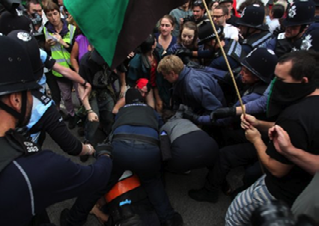
Photographs are moments, captured. The right photograph can do a lot to reveal an unspoken story through direct, authentic, and bold images.
Take a look at the example photos: What do you see? What do you think is happening in each? How does each photo make you feel?
 http://www.dailymail.co.uk
 http://www.facebook.com/allout
MEMES
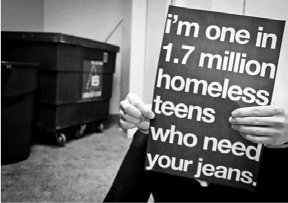
Memes are graphics and accompanying themes that spread on the Internet through repetition and adaptation to relate common experiences. Because they carry meaning and recognition on their own, they can be a useful tool for creating an immediate connection, or a-ha moment, with your audience. They can also be a light and funny way to convey controversial topics.
What does this image mean to you? What other popular memes can you think of?
 http://www.facebook.com/dosomething
 https://www.facebook.com/robinhoodtax
 https://www.facebook.com/unpac
STATEMENT IMAGES
Statement images allow the image poster to say something, whether sharing an individual perspective or supporting a shared statement of beliefs. Statement images are particularly effective for engaging lots of people around a common experience, and for putting real people behind an otherwise nameless, faceless issue.
What do these statement images make you feel? Would you share these images?
 https://www.facebook.com/pages/The-Holstee-manifes-to/184901438242277
SOLIDARITY GRAPHICS
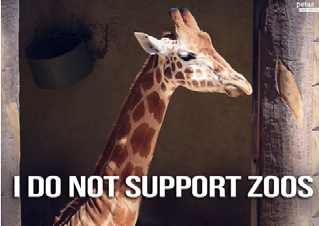
Solidarity graphics allow supporters to make a visual statement that stands in solidarity with a cause or idea. They help you to increase shares and recruit additional supporters.
What other messages do you think are behind the images included below?
 http://www.facebook.com/alloutorg
 http://www.facebook.com/peta2
INFOGRAPHICS
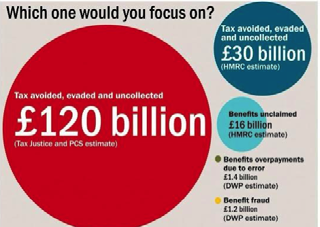
Infographics help bring your facts or data to life and are great for turning difficult or complex concepts into tangible ideas.
Would you be more likely to read and share this infographic online vs. a paragraph about the facts?
QUOTES
Quotes graphics can add credibility by showing a thought or idea is shared by others. They also add a human element as people relate to the thoughts, feelings, and words of either everyday people or individuals that they respect.
How do these images make you feel? What message do you think is behind these quotes?
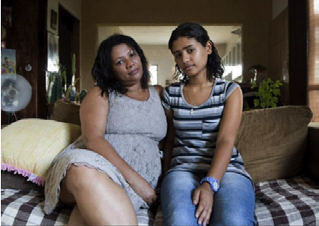 http://www.facebook.com/actionaid
 http://www.facebook.com/walkfreeorg
EVERYDAY PEOPLE AS SUBJECT
People love to see and share other people's inspiring or harrowing stories. One effective image tactic is taking a photo of an everyday person and telling a compelling story about them in the caption or post. Close-ups of faces, including ones that are particularly weird or cute, can also be effective. Often, this type of photo relies heavily on its accompanying caption or story to inspire curiosity in the reader and distinguish it from all the other photos in your feed.
What do you think about the people in these images? What do you think is going on behind the photo?
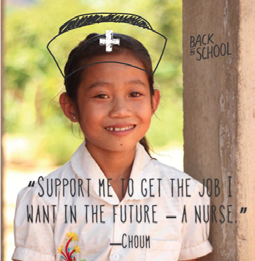 http://www.facebook.com/pencilsofpromise
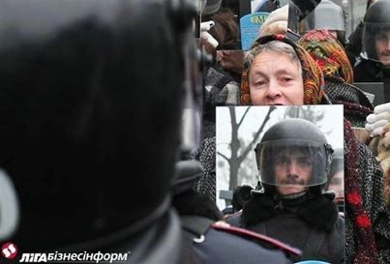 http://www.facebook.com/pencilsofpromise
THIS OR THAT
Images that show change are also an effective means of digital storytelling. Possible "this or that" images could be before vs. after, then vs. now, or good vs. evil.
What do you think the artist was trying to convey in the below images? How does he or she use the two images to convey change?
 http://www.facebook.com/peta2
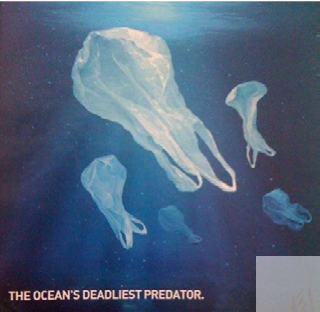 http://www.facebook.com/dosomething
ABSTRACT / THOUGHT-PROVOKING
There are many other different types of images that can be effective in also capturing people's attention, inspiring them and encouraging change. Some of these images use abstract creative elements to get people's attention.
What do you think these images are saying? Do they make you curious to read more?
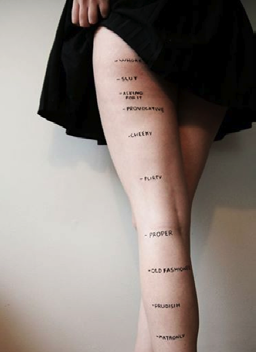 http://www.facebook.com/dosomething
Written Word
Over the next few pages, you'll find some specific types of written stories that have been used effectively to create change.
ARTICLES
Writing a blog or an article can be an opportunity to add a new angle to a story that hasn't been shared. This is an especially exciting opportunity for young people whose voices are usually left out of mainstream media and are rarely asked to comment on important issues.
A few questions to consider when trying to write an article, blog post, or other form of opinion writing
- What is the new unique thing you have to add to the conversation? You don't have to repeat the entire debate - the only thing you have to add is your own particular perspective on it, be it a debate, conversation or news event.
- What is your own unique perspective? Can you personally relate to what is being discussed in the news? Are you noticing something is being left out? Is there something you can contribute that will make the conversation move in a different direction?
- What examples do you have to back up your claims? Think about experiences you have had or have observed that will help illustrate the story for someone who doesn't know anything about it.
- Can you connect your experience to a structural problem? While people love to hear personal stories, media stories often also make clear the connection between your story and a larger social problem - i.e., racism, xenophobia, unemployment, sustainability
- What is your solution? Leave the reader with a call to action - something we can do as a society or an individual to change this situation. Effective articles don't just illustrate the problem at hand, they also offer a solution or another way of thinking that inspires the reader to think of what actions can be taken.
PETITIONS
Petitions are another way to share your social action story using written words while encouraging direct action. This tactic is most effective for engaging a lot of people around an urgent issue. To create a petition, you'll want to make sure your story includes answers to the following three questions:
- Who do you want to target with your petition?
- What do you want them to do?
- Why is this important?
The context section gives you a place to convince others to join your petition. This too should include the building blocks of social storytelling, including a powerful hook, compelling "crisitunity", choice for your allies and a call to action for joining you in signing this petition.
SOCIAL MEDIA POSTS
Another way to tell your story is to simply write it out online and share it through Facebook, Tumblr, etc. It's always a good idea to make sure your written stories have a beginning, middle and end. However, they don't have to be long - sometimes the most compelling online stories are the ones that you can tell in a quick paragraph or two! To inspire people to action, make sure to also include the building blocks of social storytelling, including:
- Introduction/Hook
- Crisitunity (Crisis + Opportunity)
- Choice
- Call to Action
Can you identify the hook, "crisitunity", choice and call to action in this short Facebook story?
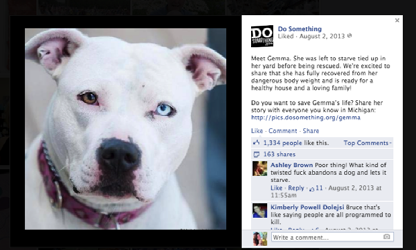 http://www.facebook.com/dosomething
Part II: Ideas into Action! A Guide to Sharing Digital Stories to Change the World
Guess what? You have the power to create change in Birmingham, TODAY. And not just because we say so... But because you – and others like you – want things to happen. So why not get those things the attention they deserve?
This guide is your toolkit for making the things that you care about happen right here in Birmingham. It's not about what the government wants, what your parents want or what we want. It's about what YOU want.
On the pages that follow you'll find all kinds of tips and resources for inspiring social change. But we know the best tool you have is yourself – so get out there, get creative and do something inspiring. Because if you don't, then who will?
EMAIL
Everyday people use email to talk with one another and share the things they care about. Using email to encourage people to join you in taking action can be its own digital art (known as 'online organising'). Two of the most important things to remember when trying to get a reader's attention through email are:
Have a descriptive or punchy subject line
This is what gets your reader's attention and entices them to open your email in the first place.
Include your most important content 'above the fold'
An 'above the fold' is the first 10 or so lines that are visible without having to scroll down your email to learn more. Here is where you want to make sure to get your point across and offer an initial call to action.
One email technique, popularised by Barack Obama's presidential campaign in 2008, encourages the following simple email structure for recruiting support:
- HOOK/ You want to grab your reader's attention right away, with a catchy and/or intriguing subject line or opening sentence.
- PROBLEM/CRISIS/ The issue that requires immediate action
- SOLUTION/OPPORTUNITY / A vision to eliminate this problem now and in the future
- ASK/ The choice people have and what they can do right now for change
- LINK/ A link to where/how they can take action (petition, sharing on social media, etc.
- BACK-UP/ Additional information that further encourages people to get involved
- FURTHER ILLUSTRATE ASK/ More detail on the direct impact their action will have
- LINK/ Another link to where they can take direction action
- BROADER NARRATIVE/ How this action is a part of something bigger, like peace and prosperity for all those in Birmingham.
- PS + LINK/ Always include a PS as a lot of people will just scan down to the bottom of the page instead of reading – and you'll be waiting with an ask for them there!
Dear Oliver,
PROBLEM
Half of us will experience mental ill health in our lifetime. Of your friends, family and colleagues, about 1 in 5 will suffer in this year alone but most won't discuss and most won't receive treatment.
SOLUTION
The largest healthcare reform in decades is on the cards this year – but without our support, mental health may be forgotten. This week Kevin Rudd and Tony Abbott debated healthcare for over an hour: neither mentioned mental health once.
ASK
Solutions are within our grasp. Hundreds of thousands of young Australians who desperately need help could receive it, if existing programs are expanded. Today, the Australian of the Year, Patrick McGorry, launches a campaign in partnership with GetUp. Click below to watch his message, share it with friends, and add your voice to his call.
LINK
www.getup.org.au/heath
BACK-UP
Take the number of young Australians killed in road accidents and double it: still more lives are ended prematurely by mental health. It is the leading killer of Australians under 45, and the leading cause of disability in Australia.
But two thirds of those who suffer never receive treatment, and for young men that figure is 90%. We wouldn't let this happen for cancer, or heart disease or even for elective surgery. Our mental health system is in desperate need of reform.
FURTHER I ILLUSTRATE ASK
To their credit recent governments have supported innovation and investment in early intervention services for young people. However, there are many overdue investments in mental health reform which are ready to go. We need a much stronger community mental health system. We need to set a target of reducing suicide to zero in a decade, and invest heavily in a national education campaign to match the campaign on road deaths.
With health reform on the agenda, this year is our chance to achieve real mental healthcare reform – but as Patrick says, "if it's going to happen, politicians need to hear from you."
LINK
Watch his video message to GetUp members and take action here:
www.getup.org.au/heath
NARRATIVE
GetUp members expose the truth, begin conversations and campaign for real change where others duck for cover. But there's one crisis in this country we've never spoken about: mental health. Now's the time to put it on the national agenda.
P.S.
With hope,
The GetUp Team
P.S. A senior official in Government told us just weeks ago that they are under little pressure for progressive change on healthcare – yet this will be one of the biggest issues in this election. In a year when massive changes to our healthcare system are on the table, we can't let that be the case.
Transmedia Storytelling
Transmedia storytelling is how a narrative can be conveyed through many different stories across various types and platforms. The digital world opens up an opportunity for reaching a bigger audience, through many different stories with multiple entry points. For example, you might create a single post on Facebook that is both a written story and an image. Later you might use this same image to start a blog, which you then tweet about on Twitter; your friends join you and decide to create a video to tell another part of your narrative you hadn't yet explored.
The more inter-connected your stories are, the stronger they'll be. Feel free to mix and match different mediums and platforms throughout the development of your stories, like pairing a petition with a Facebook image post. Today it's easier than ever to broaden your reach with the click of a button, with many of today's social networks offering direct links to other networks – For example, as you post a photo on Instagram, you can click a button to also tweet it.
Through transmedia storytelling, your narrative can continue to grow and build, like the pieces of a puzzle coming together to form a whole image, to reach new audiences and increase your impact, until you reach your goal.
By sharing your story, you're helping put all of us on a path to a better future – no matter what form your story or stories take. Since we each experience the world differently, stories are the glue that binds us together. Help others see the world as you see it by sharing your unique vision for a better world.
Each of these different types digital stories can be an effective way to tell your story. Don't forget to check out the digital tactics playbook on Pg. 82 for all the different ways you can apply your stories to directly impact social change.
1. See It: Finding Your Cause
The first step to impacting change in Birmingham is figuring out what it is that you want to change in the first place.
What problem do you want to try to solve? There are probably loads of things you've seen, heard about or even experienced yourself while living in Birmingham that you wish someone would do something about.
Ask yourself: If you could fix anything in Birmingham to make a difference for yourself or someone else, what would it be?
Food for Thought! Some Birmingham issues that we've heard from others are:
YOUTH UNEMPLOYMENT/
Why is it so hard for my friends and me to get a job after secondary school? Why can't they teach us something more useful in school?
ANTI-SOCIAL BEHAVIOUR/
Why aren't the Police very good at communicating with us when violence is happening in my neighbourhood?
STOP & SEARCH/
Why is this happening and why is it okay? I shouldn't be stopped just because of how I'm dressed or perceived.
BUDGET & PROGRAMME CUTS/
I used to love going to my youth club after school and they just shut it down last year with no warning. I feel bad for kids growing up now who don't have access to programmes like that.
HOMELESSNESS/
My friend's mum lost her job and now she's living in this shelter that makes her feel afraid. I wish there was something I could do to help her.
WASTE MANAGEMENT
I'm sick of tripping over all the rubbish on the streets. Why can't they pick it up more often?
OBESITY & HEALTH /
I feel like no one in my neighbourhood takes their health very seriously. And why is healthy food so much more expensive or hard to get than the cheap food at the pub?
ANIMAL WELFARE/
I see so many animals on my block without any food or shelter. I hate it when people just throw their pets out on the street without a care.
BULLYING/
I see people getting made fun of at my school and it makes me feel really bad, but I'm afraid to do anything about it because I might get bullied.
COMMUNITY/
My friends and I have this dream to turn this derelict land into a skate park but we don't know where to start.
Make sure to talk through why each problem bothers you and what you think you could do about it.
The more you talk about your thing, the more excited you'll get about all the possibilities you have to change it. Now let's turn that idea into action.
2. Plan It: Creating a Social Action Plan
Ready to build your roadmap to change? We find it's best to start simple and hone in on what you want to do or see happen, and let the rest follow.
What does that mean? Well, aside from being a quirky reminder that you have to try if you want to succeed, it also gives us the building blocks of a social action plan.
To create a plan for impacting change, you want to determine your :
- GOALS/Goals
What you want to change and your vision for success
- CONTEXT/Come
Everything you know about this problem
- TARGET/To
Someone who has decision-making power to impact your problem
- ALLIES/Active
Everyone who also cares or should care about this problem
- TACTICS/Toes
The action(s) you want people to take
GOALS
You know what you want to change – now it's time to figure out all the different ways you think that change could be accomplished. Things might not happen overnight, but it's a good idea to have a clear vision for what success looks like for you and all the things that you think will need to happen to make that vision a reality.
Some questions to answer in determining your goals:
- What do you want to change?
- What does success look like?
- What needs to happen for you to be successful?
- If direct change can't happen right away, what are some things that can be done in the short-term to set you on the right path?
CONTEXT
Okay – no one likes homework. But it's important to make sure that you have all the facts so people will listen. Gather all the info you can to make an informed decision on what you think should happen next.
Some questions to answer in determining the context:
- What is the problem?
- Why does this problem exist?
- Where did it start?
- Has someone tried to do something about this before?
- Why do you think they failed?
- What could you, and people like you, do to change it?
- Who are your allies in seeking to create this change? Who are the villains?
TARGET
Power is a funny thing – as citizens we have tremendous power to create change. But to be effective, we usually need to win the favour of an individual who has been empowered to make decisions on our behalf. So it's often our role to make our voices heard by targeting these individuals directly. Locally this can mean our elected representatives on the Birmingham City Council or a head teacher at school. Sometimes if a direct decision-maker cannot be identified, then targeting individuals with other forms of power, like local reporters and other members of the media, can also be effective.
Some questions to answer in determining your target:
- Who holds the keys to success?
- Who decides whether your problem gets fixed?
- Who could make your solution a reality?
- Who, if anyone, has been tasked with creating solutions to your problem?
- Whose support would be most helpful in making your change a priority?
ALLIES
Don't worry, no one expects you to create change alone! To have the greatest impact, you'll want to inspire an army of supporters who care about this problem to join you. More on how to do that later, but for now decide who you want at your side.
Some questions to answer in determining your allies:
- Who is likely to join you in taking action?
- Who else is affected by this problem?
- Who else do you want to help or support your change?
- Who else could have power to influence your target?
TACTICS
We saved the best for last: tactics! These are the actions you're going to ask your helpers to take so that change happens. Now that you know who your target is, you'll want to use your tactics to get their attention. The more allies you have, the more successful your tactics will be – so you'll want to keep your actions really easy for them to do. This can be anything from signing a petition to sharing a video or using a #hashtag on Twitter. We'll be talking about how to deploy some of these tactics in more detail later, but for now...
Some questions to answer in determining your tactics:
- Through what channels could you get the attention of your target?
- What are some easy ways people could show support for your vision of change?
- Which actions will be the most inspiring or exciting to your helpers?
3. Say It: Telling Your Story
Use the digital storytelling guide at the beginning of this manual to develop a powerful narrative and supporting stories to inspire your audience to take action for your cause.
4. Do It: Using the Internet to Create Change
What you plan to do with your story, and how you plan to share it, can be as important as the story itself if you hope to impact social change. There are many ways to be successful in creating change by creating and sharing your story online. On the pages that follow is a playbook of different digital tactics that could be deployed on platforms like Facebook and Twitter for impacting social change and decision-making at the local level.
These are just a few examples of the many ways others have been successful in using the Internet for social action, but the possibilities are endless. You don't have to take our word for it – play around with your stories, have some fun and do something great!
Twitter is a tool for instantly creating and sharing ideas and information with followers and the world. It can offer unprecedented direct access to some of the world's most otherwise inaccessible figures, from local politicians to Justin Bieber. As the 2nd most popular social network in the world, Twitter is also chock-full of useful tools for impacting social change.
A WINNING PLAY/
Twitter-drop a council representative using their @ handle and a shared #hashtag
- #HASHTAGS
Hashtags are conversations taking place on Twitter around a specific subject or topic area. By clicking on a hashtag you can see a list of all shared messages that include that hashtag in one place.
- @MENTIONS
By including someone's Twitter handle in your tweet, your message will be shared directly with that individual through their connect feed and notifications. The more messages sent on one topic, the harder it is for the individual to overlook them.
- BITE-SIZED CONTENT
Twitter's 140-character limit forces your messages and calls to action to be concise and to-the-point.
- CLICKABLE SHORT-LINKS
Shortened web links on Twitter allow you to direct the reader to another location (such as a video or blog post) for more information.
- RETWEETS (RT)
Retweets can serve as a sign of solidarity or support for a message and quickly expand it to a wider audience. RT's from people with many followers can bring in even more supporters for your cause.
The Game Plan
1. Identify one clear, individual target:
- Decide who you most want to receive your message on Twitter.
- Identify whether that person has an active twitter account, or, alternatively, whether they are overseeing a campaign that uses a specific hashtag that could be appropriated.
2. Select one hashtag to use consistently in your messages:
- Link different voices together through one common thread and show your target that your goal is shared by more than just a handful of individuals.
- Your hashtag can be unique (e.g. #DontTrashB17) or appropriated (#Birmingham). The catchier the better.
3. Frame your goal as a call to action:
- Ask and you shall receive. Let your target know what you want by being clear with what you're asking them to do.
- Use tweets as a means to recruit supporters as well; include explicit action verbs to indicate what you want them to do, like 'Watch this video.'
4. Encourage sharing:
- Your target is hopefully not the only one that will see your message. Invite other people to join by including things like 'RT if you agree.'
5. Tweet early and often:
- One tweet might not break through the Twitterfeed clutter, but hundreds of tweets are hard to ignore.
- Try many different approaches and messages to increase retweets and shares; recruit your friends and supporters to do the same.
SAMPLE PLAY/
THE PROBLEM
The after-school youth club that your brother has been going to is being shut down. The club has helped keep your brother focused on his schoolwork, letting your mum work a later shift so she can be around in the morning to take you to school.
GOAL
Get the Council to commit to reallocating funds that can save this and other youth programmes.
CONTEXT
Over 30 youth clubs and projects have already been closed around Birmingham due to budget cuts.
TARGET
A City Council member who is a parent.
ALLIES
Your friends and brother's classmates. Other people who are involved at the youth centre like volunteers and instructors.
TACTIC
Start a #hashtag campaign to pressure your Council member to commit to saving this after-school programme by showing how much it means to your community.
BrumClubMeans Mum gets to eat breakfast with Pat and //@BrigidJones @BhamCityCouncil Restore funding to our youth programs #SaveBrumClub #MyBrum
Tell @BrigidJones what #BrumClubMeans for you + urge @BhamCityCouncil to restore funding for youth programs #MyBrum #SaveBrumClub
OVERTIME/
Thunderclap
https://www.thunderclap.it/
A tool that allows you to create a twitter campaign that, when enough people join you, blasts out a timed Tweet or Facebook post from all your accounts at once, creating a wave of attention. Visit the website to start your own.
USEFUL HANDLES/
- @BhamCityCouncil – the official City Council Twitter account.
- @BCCNewsRoom – the press office account of the Council, with all their latest news.
- @hodgeHdistrict – Hodge Hill District Twitter account
- @SellyOakdist – Selly Oak District Twitter Account
- @LoveLadywood – Ladywood District Twitter Account
- @YardleyDistrict – Yardley District Twitter Account
- @politicsinbrum – Scrutinises the City Council, its elected Councillors and all things political in Brum.
- @BrumAgainstCuts – Anti-cuts group formed by local people to oppose cuts made the Con/Lib coalition nationally and locally.
- @FalseEcon – For everyone concerned about the impacts of the government's spending cuts on their community, their family or their job.
-
BhamCityCouncil
-
Bham
-
Brum
-
MyBrum
INSTANT REPLAY/
The hashtag #FoodBankDebate was used to target Iain Duncan Smith to fight back against cuts to the welfare budget that were leading to a rise in food poverty and food banks.
https://twitter.com/search?q=%23foodbankdebate
Ian Beckett @ian_beckett · Dec 23
RT if you're angry about #foodbankdebate & scandal of UK hunger - act at church-poverty.org.uk/wtb pic.twitter.com/OBUh2zxVtD via @churchpoverty
Expand Reply Retweet Favorite More
BRITAIN ISN'T EATING.
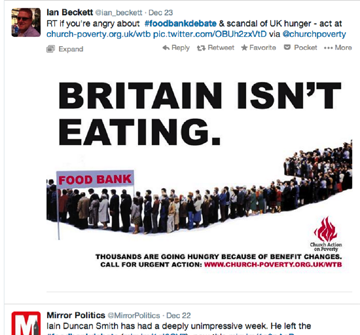
THOUSANDS ARE GOING HUNGRY BECAUSE OF BENEFIT CHANGES. CALL FOR URGENT ACTION: WWW.CHURCH-POVERTY.ORG.UK/WTB
Mirror Politics @MirrorPolitics · Dec 22
Iain Duncan Smith has had a deeply unimpressive week. He left the
Facebook
Facebook is the largest social network in the world, and we all know that it's great for chatting to friends, organising events and sharing photos. These tools can also be used to share, learn and spread ideas on social issues. Though Facebook doesn't provide the same kind of direct access to decision-makers that Twitter does, it is still a perfect environment for sharing and discussing ideas within the community, and making people aware of important goings-on and information.
A WINNING PLAY/
Create a statement image related to your issue, and ask your friends to share if they agree
STATUS
Allow you to broadcast a message - whether a statement, link, video, and/or image - to all your Facebook friends, with your message appearing on your wall and in their news feed.
WALL OR PAGE POSTS
Comment directly on your wall, a friend's profile or a public page to start discussions and share your opinion.
PICTURES OR VIDEO
Pictures and videos posted on Facebook are prominent on your wall and in news feeds, allowing you to capture a viewers' attention. Video links (like those to YouTube) will usually convert to a playable video right in your post. You can also tag friends in your photos if you want the image to appear on their wall as well as your own.
EVENTS
You can create and share virtual or physical events when bringing people together to share views or opinions. Invitees can RSVP to let you know that they are attending or support your cause.
Like Twitter, Facebook allows you to create topic areas using hashtags by adding a # symbol to the beginning of words. You can click these hashtags to see a list of all the posts around this shared topic area. You can also tag pages or individuals in your post by putting the @ symbol before their name and selecting the correct page or person from the dropdown menu.
GROUPS
Create a group page to create a central hub for discussions on Facebook. You can invite your friends and classmates to join and post from the page to everyone in the group.
PAGES
Pages are like personal profiles, but for companies, organizations and the media. They usually allow you to start conversations by posting directly on their page wall, either as an original post or by commenting on something they have posted. You can also tag pages in your posts.
The Game Plan
1
Determine how you'll influence your target through Facebook:
* Identify an individual Facebook page or profile that you can target to bring attention to your issue. Some Councillors have individual Facebook pages. Other options include the city council page, local news pages or other relevant entities.
* If you don't want to target a specific page, that's okay too. Instead you could just consistently mention one individual in your posts and try to force them to respond.
2
Create compelling image(s), video(s), or post(s) that can get people's attention:
* Determine the types of content you think will get the most attention on Facebook and build awareness and support for your case. Don't forget to check out the digital storytelling section of the guide to help you decide which type of content to create.
3
Post your content:
* Use statuses and posts to share your story and the content you created.
* Tag your target individual or page in the post or image. Use a consistent hashtag to create a topic area around your cause.
* Include a clear call to action for your helpers. This could be anything from 'share this image' to 'email so-and-so and ask for change'.
4
Keep it up and ask for a response.
* Vary your posts and experiment with ways to get people's attention and drum up additional support for your cause.
* As support grows, pressure your target to respond to your request. Use their lack of response to fuel additional support for the cause until you cannot be ignored any longer.
SAMPLE PLAY
THE PROBLEM
There's some derelict land in your neighbourhood that you want to turn into a community garden. You've talked to some people and it looks like you need permission from the city to plant anything there.
GOAL
Get the City Council's permission to turn the abandoned lot into a community garden.
CONTEXT
The lot has been abandoned for over 10 years and there are no current plans to build anything there.
TARGET
The Birmingham City Council Facebook page.
ALLIES
Friends, family and other members of your community who think the garden is a good idea.
TACTIC
Create an image that can serve as a plea to the city council to grant permission to use the lot as a community garden.
SAMPLE FACEBOOK POST
A or B? YOU DECIDE. Grant Digbeth residents permission to create a community garden at Coventry and Allison. Please LIKE + SHARE if you choose B.
WHICH WOULD YOU RATHER?
A. A demolished building and rubble.
B. Two people happily tending a community garden, asking 'Which would you rather?'
Image: Image comparing A: a demolished building and rubble, with B: two people happily tending a community garden, asking 'Which would you rather?'
I support a community garden for Digbeth.
INSTANT REPLAY
A Facebook page was created to Save Lewisham Hospital by targeting Jeremy Hunt in a fight back against recent cuts to the south-east London hospital's budget.
https://www.facebook.com/savelewishamhospitalnhs
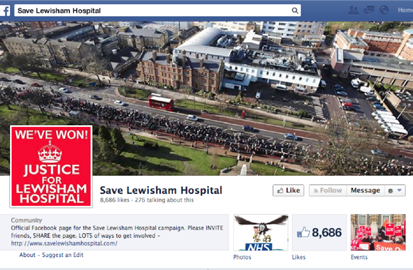

Petitions
A petition is a message from a group of people (signatories) to a decision-maker, asking them to do something. Petitions have been used for centuries and allow politicians to see the amount of people who agree with a certain viewpoint or have strong feelings about an issue – today, technology is making it easier for people to discover, sign and share petitions through their social media and the internet.
A WINNING PLAY / Create and promote a digital petition for your cause
TARGET
The person or group that your message is directed to and who will receive it. Usually this person has direct decision-making power over what you seek. Be as specific as possible to ensure your target feels personally accountable to your fellow petition signers.
CALL TO ACTION
Specifically what you're asking your petition's decision maker to do. For a petition, this should be written as if you were speaking to them directly.
DESCRIPTION
The section below or near to the petition text that explains why people should support your petition, why you started it and how it can make a difference. As your campaign develops you can also use this section to add updates at the top of your text.
PHOTO OR VIDEO
Your petition could also include a piece of eye-catching content such as a photo or video to further make the case for why someone should sign.
Where your supporters can add their name to your petition, often including their email, location and a comment box. Some petition platforms will allow you, as the creator, to send follow-up emails to your co-signers if needs be.
SUPPORTER COUNT
A petition should reveal how many people have supported the petition, especially when you're moving to a specific goal for the total signatures needed.
SHARING
You should encourage supporters to share your petition on their social media channels after they've signed so that you can recruit additional supporters as you strive for your goal.
PETITION AND CAMPAIGN SITES
38 Degrees
A UK-based, non-profit site that brings people together to take action. The site enables you to create and sign petitions, send emails to MPs and Councillors, and join like-minded people.
https://you.38degrees.org.uk/
Government e-petitions
This official government site hosts hundreds of petitions on issues that affect people in the UK, which you can create or sign. If a petition reaches 100,000 signatures then MPs automatically have to debate the petition in Parliament.
http://epetitions.direct.gov.uk
Birmingham City Council e-petitions
The Council offers its own e-petition website where you can sign and create petitions that will be seen by local Councillors. It also offers advice on how to write petitions and what they are used for, as well as a list of past petitions.
http://epetition.birmingham.public-i.tv
Change.org
A global site where anyone can post a petition, on both local and national issues. Here, people around the world could discover your petition.
www.change.org/en-GB
How to write a petition
This Wiki How page is full with useful tips on how to research, write, create and promote a petition.
www.wikihow.com/Write-a-Petition
The Game Plan
1
Decide what your petition will be about:
* A good way of doing this is to answer three key questions:
* Who do I want petition? (TARGET)
* What do I want them to do? (CALL TO ACTION)
* Why is this important? (NARRATIVE)
2
Set a goal for the number of signatures you want to collect:
* Research how many people you think you will need for a petition to make an effect. Looking at signatures and outcomes of past petitions in your city or similar can give you an idea of what your goal might be.
* Know what the rules are. For some petitions, if you gather a certain number of signatures you can force a specific action. Knowing this ahead of time can help you decide which petition platform to use.
3
Choose a petition site that suits you and create your petition:
* Weigh the pros and cons of different petition sites to choose the best one for you.
* Find the create petition button on the petition platform of your choosing and enter in all your information. One format to follow could be:
* Describe the situation (e.g. government cuts have led to rubbish collections being reduced to one a year)
* Suggest what is needed (more than one free collection is needed)
* Explain why this is needed (because rubbish is piling up from those that cannot afford extra collections).
* Use evidence to back up your petition's claims in the description. Check local news and blogs to see if people are providing facts on your issue.
4
Promote your petition:
* Decide how you want to share your petition – Will you post it on social media? Send an email to your friends, family, or school? Where else are people that might share your concerns about this issue?
* Don't forget to ask your signers to pass the petition on to even more people. Remember, the more signatures the more powerful your petition will be!
SAMPLE PLAY
THE PROBLEM
Last year, large-item rubbish collection was reduced to one free pick-up per year. Clean streets are now being littered with sofas and mattresses ruining the community's environment.
GOAL
Get the Council to commit to more large-item rubbish collections per year.
CONTEXT
Massive citywide budget cuts led to programmes such as rubbish removal being reduced.
TARGET
A city council member who is in charge of rubbish collection and the community environment.
ALLIES
Friends, family, neighbours and other Birmingham residents who have been negatively affected by the limited pick-up.
TACTIC
Create a petition on the Birmingham Council e-petition site that asks for Councillors to commit to raising collection days to 4 a year, highlighting the high cost of the reduction.
SAMPLE PETITION
Title: Stop Trashing Birmingham
Petitioning Cabinet Member James McCay
Give Brum 4 Free Bulky Rubbish Collection Days A Year
We demand that the Birmingham City Council provide at least 1 opportunity for free large-item rubbish pick-up once per quarter. The current standard of only 1 free pick-up a year is ruining our streets and polluting the local environment. This is costing the city even more money that what it intended to save, and our neighbours will not stand for it any longer. It is a right for the citizens of Birmingham to have rubbish collection provided by the Council they pay for, so please increase these pick-ups to a reasonable 4 times a year.
Signed,
INSTANT REPLAY
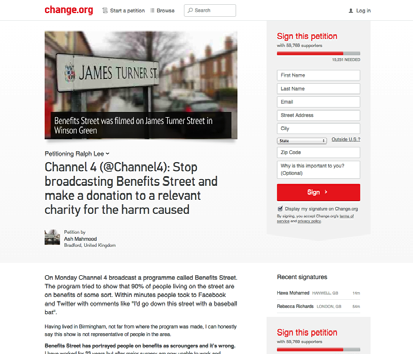
A petition was created targeting the Channel 4 network to try to fight back against the skewed perception created by their TV programme Benefits Street.
http://www.change.org/en-GB/petitions/channel-4-channel4-stop-broadcasting-benefits-street-and-make-a-donation-to-a-relevant-charity-for-the-harm-caused
Instagram
Instagram is a photo- and video-sharing network that allows you to apply filters and effects to create compelling photo and video content that you can share – a great way to bring your cause alive. Though often associated with nights out and foodporn, Instagram is increasingly being used to impact social change through photojournalism and story telling, and is fast becoming one of the most popular social networks around.
A WINNING PLAY / Take Instagram photos or videos of the things in your community that you want to change and share it with an evocative hashtag
PHOTO FILTERS
Turn an ordinary photo into an extraordinary one with Instagram filters and create compelling images that can tell your story.
Just like on Twitter, hashtags are conversations taking place around a specific subject or topic area. Think carefully about what hashtag or tags you will use. With Instagram there's no limit, so it's a good idea to use an original tag for your campaign as well as related tags that are already popular with your target or helpers (#Birmingham, #MyBrum, etc.).
VIDEO
Take up to 15 seconds of video using the Instagram camera. Edit your footage right in the app by picking up and pressing down your finger while you shoot -- don't worry, it might take a few tries to get it right.
CAPTIONS
There's no character limit to your Instagram captions, so write as much as you need to tell your story, and don't forget to end with a call to action!
PEOPLE-TAGGING
Instagram lets you tag your friends – or a target – in your photo. Just select 'tag people' and click anywhere on the image to add someone you follow.
LOCATION-TAGGING
Instagram also lets you tag the location that your photo was taken. This could be helpful if you're trying to make a point about a specific spot in your neighbourhood or community.
The Game Plan
1
Determine a theme for your Instagram photos or video:
* Decide what your photo or video represents, and whether there's a consistent message or idea that could be used again and again to make a point about your issue, either by you or your helpers.
* Select the hashtag or hashtags that you'll use in your content.
* Instagram is all about the tags: tag your posts with an original tag that conveys your theme, as well as related tags, such as the location the photo or video was taken.
2
Write your caption, include your target.
* Make sure you tell people what your photo or video is about, and if applicable, how they can create and share content of their own.
* Include a clear call to action on what you want your audience to do next (Do you want them to #regram your post, or create photos or video of their own? Maybe you just want them to like if they agree.)
* Call out your target in your post caption, and tag their account and/or agency or workplace if possible. If they're not on Instagram, be sure to cross-promote your posts with another social network they do participate in, like Twitter.
3
Share your post and repeat.
* Instagram allows you to also directly share your posts on Twitter, Facebook, Tumblr, Flickr and Foursquare through the app. Link your account to other social networks and be sure to cross-promote your content to audiences across those platforms as well.
* Create follow-up photos or video that fit within your theme and repeat the steps above, using your same hashtags. Encourage friends and helpers to do the same.
SAMPLE PLAY
THE PROBLEM
Obesity is rising in Birmingham as people eat unhealthy food and exercise less. This isn't helped by low quality food being provided by hospitals and schools and the closure of public spaces where people can exercise.
GOAL
Put pressure on your school to provide healthier lunch options.
CONTEXT
Over 25% of the population in Birmingham is obese, the third highest rate in the UK. Which isn't surprising when you consider the food being served for lunch, and the lack of information on diet and exercise.
TARGET
Your head teacher.
ALLIES
Your classmates who share your concern about healthy and tasty meal options at school
TACTIC
Create an Instagram account that posts a photo each day of the standard school lunch served, using the hashtag #BrumLunchDiaries. Encourage friends to #regram and share around school, asking for healthier lunch options.
SAMPLE INSTAGRAM POST
Mystery meat. Another day without a healthy lunch option @BrumSchool #BrumLunchDiaries #Day1 #Mybrum #Birmingham #WeWantHealthyLunch
OVERTIME
Statigr.am is a free app that provides a wealth of stats about everything and anything that is happening on your Instagram. It gives you information on everything from most liked photos to how many people are following you, where they are and which followers have engaged with you most recently. This can all be used to work out what posts are the most effective at passing on your message and what time is best to post pictures and videos to engage the most people.
INSTANT REPLAY
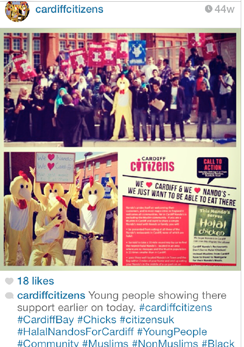
The group Cardiff Citizens targeted Nandos on Instagram and twitter using photos from their 'chicken run' to successful bring halal to their local Nandos.
HalalNandosForCardiff
YouTube & Video Sharing Sites
Video sharing sites, like YouTube and Vimeo, can be used to share, upload and views videos on everything from Innuendo Bingo to the Meaning of Life. YouTube opens up your ideas to a potential audience of hundreds of millions, even billions, while apps such as Vine provide the ability to condense stories and experiences into concise video shorts – all of which can be shared on Twitter, Facebook and blogs.
A WINNING PLAY / Create a thought-provoking video that leads to a clear call to action in support of your cause
VIDEO
It's never been easier to post videos online, with many sites like YouTube even offering the ability to edit your video after its been uploaded. Make sure you choose to make your video public once you're ready and share its unique web link with the world.
TITLE/HEADLINE
The video title indicates what it is that the viewer is about to watch. It should capture someone's attention and make them want to view to learn more.
DESCRIPTION
The description tells a viewer a little bit more about the video. It should include any keywords that people may search who are interested in your video's topic and may also provide additional information on your story and a link for where they could learn more.
THUMBNAIL IMAGE
The thumbnail image is usually a screenshot taken from your video and is what appears before the video starts to play. It should be intriguing enough to capture people's attention and make them want to watch.
CHANNELS + SUBSCRIBERS
Channels are video playlists organised around a single topic area. If you're sharing multiple stories or videos over time (or want to share other people's videos along with yours), you may want to create a channel, or use a consistent hashtag, and encourage followers. Your subscribers or followers will receive notifications when new videos are posted so they can stay up-to-date.
VIDEO STATISTICS
Some sites allow you to review whether viewers are getting bored and leaving. This can be helpful in understanding your audience and informing future video content.
Most video sharing sites offer buttons right under the video to post to social media. Some video apps, like Vine, are fully integrated with Twitter and Facebook making posting seamless and opening up the usual array of tags and mentions.
VIDEO-SHARING SITES
YOUTUBE
YouTube is chock full of videos on all imaginable subjects. You can easily upload individual videos, create your own channel that others can subscribe to, and share across a broad range of social media and networking sites. YouTube attracts over a billion views per day and has holds nearly 500 million videos.
www.youtube.com
VIMEO
Vimeo is similar to YouTube in that it allows video posting, subscribing and sharing across a broad range of sites. It has a sleeker design than YouTube and is used most often to share more sophisticated content like animation and film.
www.vimeo.com
DAILYMOTION
A French video sharing site that follows the example set by YouTube and Vimeo, though with more of European slant. Uploaded videos exceed 10 million, while it receives over 50 million views per day.
www.dailymotion.com/gb
INSTAGRAM
Instagram's video function is similar to Vine, except that videos can last up to 15 seconds. Once your video is completed, you can also apply instagram filters and select an individual frame to be your thumbnail image, while also adding hashtags.
VINE
Vine is an app that allows you to create six second looping video clips on your mobile phone that can then be posted to Twitter and Facebook, with the usual array of tags and mentions available. It has the unique feature of letting you record and edit your video at once by holding down and picking up your finger on a mobile screen.
www.vine.co
SAMPLE PLAY
THE PROBLEM
Vandalism and anti-social behaviour are on the rise at your school after the closure of the local youth club means there is little for young people to do outside of school hours.
GOAL
Get your local Councillor to bring up the closure of local youth clubs in Council meetings and mention what ends up happening when people have nowhere to go.
CONTEXT
Many young people rely on youth centres and public spaces to go and spend time, especially when they are unemployed.
TARGET
Local Councillors whose job it is to represent the interests of young people in their ward.
ALLIES
Friends and family, neighbours and young people who know why people sometimes engage in behaviour that isn't constructive.
TACTIC
Film a video that enables older people to see that a lot of petty crime is a result of key services being taken away from young people and get them to think about how to attack the root causes of this. Post the video on social media sites, sharing it with relevant people and making sure to make good use of tags and mentions to draw the attention of key groups.
The Game Plan
1
Determine your call to action and target.
* Know who you want to influence through your video and what choice you want to give them to impact change.
2
Choose a platform for your video.
* Decide where you want to host your video. What you do with your video will depend on where you upload or make it.
3
Make your video.
* Determine what type of video you want to make to build awareness and support for your case.
4
Post your video.
* Be sure to include a catchy title, informative description including a clear call to action and appropriate tags.
5
Promote your video.
* Post your video to social media and encourage sharing. Share your video where your target may see it and encourage others to do the same.
INSTANT REPLAY
17 year old Fahma Mohamed created a campaign targeting education secretary Michael Gove to fight for education for teachers around female genital mutilation.
http://www.theguardian.com/end-fgm

Tumblr & Blogging Sites
Blogging creates an opportunity to tell a multimedia story across various posts and often with various storytellers. Blogging can include writing text updates, posting animated gifs with catchy captions, or sharing a series of photos or video. Most blog sites also offer close integration with social media and video-sharing sites making sure your posts can be shared to the widest possible audience.
A WINNING PLAY / Start a blog to bring to light how an issue is affecting your community with images, video, etc. arranged around a common theme
YOUR BLOGGING TOOLKIT
BLOG POSTS
The bread and butter of blog storytelling. Here is where you can share images, video, text posts, etc. to tell an overall story. One popular blogging tactic is to use the post title to make a statement and an animated reaction gif to make a point.
BLOG TITLE AND DESCRIPTION
Where you can express the purpose of your blog and how the individual posts fit into your larger narrative. The blog description is where you will likely want to make your call to action clear.
CONTENT STREAM
Allows you to use small individual stories and "statements" to capture people's attention and weave your larger narrative as people scroll down a page.
SHARING
Most blogging sites have a built-in capacity to share your work across most social media sites.
YOUR BLOGGING AND STORYTELLING SITES
Tumblr
A micro-blogging site that prides itself on requiring only 30 seconds to set up a blog. Its simple and customisable interface makes it a popular choice and it's home to over 165 million blogs.
www.tumblr.com
Blogger
Google's blogging site, offering integration with your Google+ account, most web browsers, mobiles, Microsoft Word and SMS and MMS messages.
www.blogger.com
WordPress
The third of the "Big Three" blogging sites that have the most users and allows many customisable options for creating a robust blog site.
www.wordpress.com
Storify
Allows you to create stories by collecting media from all social network sites and put them together to tell a story that is then published on the site and shared elsewhere. For example, you can tell the story of a recent protest by bringing together the tweets, statuses and videos other have taken and shared.
www.storify.com
Cowbird
A new - and pretty interesting - idea. Your photos and videos are accompanied by text that fills the viewer in on the story. Think of it as an interactive short story that can be shared around.
www.cowbird.com
A popular social news and entertainment website that allows users to create and share their own meme-filled posts - perfect for anyone who wants to create and share a single blog post on a topic.
http://www.buzzfeed.com/community
The Game Plan
1
Brainstorm concepts for your blog:
* Select a blog that you're most excited about that you think tells the best story to support your narrative
2
Select a blog URL and write a description:
* Make sure to include your main call to action and the purpose of your blog in your description, being explicit about your larger narrative
3
Create some blog posts:
* Be sure to include rich content such as photos, videos or animated gifs to get your audience's attention
* If relevant, try to include original content such as photos and video that you've taken
* Don't forget to tag your blog posts with relevant hashtags
4
Publish and share your blog on social media:
* Encourage others to share your blog with any specific decision-makers relevant to your issue
SAMPLE PLAY
THE PROBLEM
You did really well in your A-Levels, but you haven't been able to find a job - even one you're overqualified for - and it's pretty frustrating. You've noticed a similar trend among your friends.
GOAL
Get the Birmingham City Council to address the problem of youth unemployment in Birmingham.
CONTEXT
Birmingham has the highest unemployment rate of any UK city. Unemployment and loss of benefits has also led to an increase in anti-social behaviour around the city as well.
TARGET
Local City Councillors and those in charge of improving the city's economic development.
ALLIES
Unemployed friends; parents whose unemployed children are still living at home.
TACTIC
Start a Tumblr where you publicly post rejection letters received while applying for jobs, bringing to light the plight of a typical unemployed youth in Brum. Encourage your allies to share your Tumblr with Councillors on social media.
INSTANT REPLAY
http://occupyvday.tumblr.com/ #occupyvday
http://wearethe99percent.tumblr.com/
http://mentakingup2muchspaceonthetrain.tumblr.com/
This tumblr blog was created to highlight a common 'public assertion of priviledge' and target and shame offenders of this public nuisance.
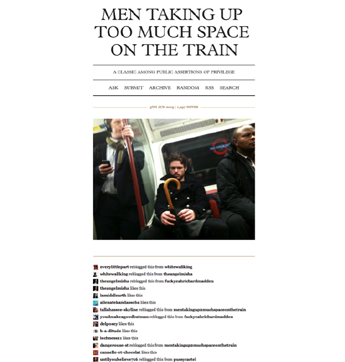
News Sites
News websites are a key source of information for keeping up-to-date with what's happening in your local community and for educating your views. Most major and local news sites now include comment boxes so that you can present your point of view – or leave links to your content – as well as having Facebook pages for discussion and feedback. But be careful, like all opinion giving, news sites can be biased and their recent record means questioning the tone and truth of news stories is a healthy habit. Show the world how critical you can be in the pursuit of the truth.
A WINNING PLAY / Target a news site to encourage them to cover a story that you care about and bring needed attention to your cause
YOUR NEWS SITES
BBC Birmingham & Black Country
provides the latest BBC news on Birmingham and the surrounding area. The very useful “Local Live” feature has been added to all local BBC news sites and gives a feed of all the latest news from reporters and other organisations and people the BBC spot. BBC West Midlands is just a click away and offers a Facebook and Twitter feed.
www.bbc.co.uk/news/england/birmingham_and_black_country
www.facebook.com/bbcwm
@bbcwm
Birmingham Mail and Birmingham Post
have the standard concoction of news items that you can comment on, a Twitter handle and a Facebook page, and have the added benefit of being run by local people. Get commenting and sharing ideas!
www.birminghammail.co.uk
www.facebook.com/birminghammail
@birminghammail
www.birminghampost.co.uk
www.facebook.com/birminghampost
@birminghampost
The Guardian
has a dedicated page for news coming from Birmingham as well as a very informative and insightful "Society" page that can keep you up-to-date with all the latest social issues. The Guardian has, arguably, kept high journalistic standards in a modern era where they seem hard to come by.
www.theguardian.com/uk/birmingham
www.theguardian.com/society
@guardiannews
ITV Central
offers a less localised and comprehensive site than the BBC and doesn't have a live news feed.
www.itv.com/news/central/topic/birmingham
@ITVCentral
Birmingham City Council
Birmingham City Council is starting to expand its social media and Internet presence, and now has numerous Twitter and Facebook accounts that deal with everything from the environment to libraries. Below is a list of the online services the Council offers and suggestions on how you can use what you've learned so far to hold decision-makers to account and build happier, safer, healthier communities in Birmingham. This section will tie together a lot of the techniques and themes covered so far.
A WINNING PLAY / Target a Councillor or government agency directly by including their handle or hashtag across your social media posts and or commenting directly on their staff-run pages (such as Facebook or YouTube)
YOUR ONLINE COUNCIL SERVICES
Your first port of call is the Council social media page. This lists the (over 85!) Twitter accounts the Council has, with each one dealing with a different aspect of city and ward communities. The accounts are monitored from 0900-1700 Monday to Friday and the Council say they will try to reply to any questions as soon as possible. The page also has the Council's Facebook and YouTube accounts – other places where you can make your ideas and experiences known.
www.birmingham.gov.uk/socialmedia
Councillors and MPs
Some (and not many!) Councillors and MPs have Twitter, and even Facebook accounts, that enable you to ask questions, provide them with evidence and hold them to account in ways that have, in the past, been impossible. Visit the appendix on Page 126 to see which Councillors have social media accounts that you could target directly.
The Council App
For those that have them, most smartphones enable you to check and report on a number of Council services - from browsing jobs, finding directions to libraries and gyms to reporting pot holes and requesting street cleaning. The app also has the contact details of all the Councillors, and so you can easily touch on a number or email to contact them from your phone. However, the app doesn't have anything in the way of a chat or feedback functions. Through app stores +
www.birmingham.gov.uk/app
The Website
offers links to all Council services, how-to pages on certain community activities, events and tips - among others. The first thing to do when going on the site is to scroll to the menu boxes about half of the way down the page. If you have any questions about where to find what you want on the site, just tweet @BhamCityCouncil or visit the (hilarious) www.meetbarbara.co.uk site to see how to use Council services online.
www.birmingham.gov.uk
Council Streaming
The Council offers live streams of Council meetings so that you can see what is being said during meetings and committees. The site has a diary of meetings so you can spot when to tune in, as well as suggested hashtags and a library of past videos. It also has a "how to use" section on the home page.
www.birmingham.public-i.tv/core
The New Website
is being built by the Council to replace the current clunky old one. This is because the Council has decided to break from the standard template used by most councils in the UK and design one that suits its citizens more effectively. They also want your help in designing this, so check out the new site and leave your feedback.
www.beta.birmingham.gov.uk for feedback - www.beta.birmingham.gov.uk/feedback
When contacting council members directly, make a point to be concise, to the point and polite – Councillors and MPs are very busy, and though you may have lots to say to them, you'll want to be clear so that they can understand you easily and pay attention to what you have to say. This way, you'll get your point across better and it's more likely they will respond.
FOLLOW
The Council Twitter, Facebook and YouTube pages that interest you and are relevant to your experiences and ideas. This enables you to keep up-to-date on developments in your area while getting an idea of what the Council is doing, and has to say, on these issues. Following these accounts also gives you an "address book" of social media contacts for when you want to share you story.
FEEDBACK
The Council services, website and app are there so that you can provide your thoughts and feedback on services. While contacting decision-makers through social media is a great way to deal with "bigger issues", the online services the Council offers are there for you to help them provide better rubbish collections, spot problems with street lamps and ask questions about police coverage - putting this to good use is also a big part of improving your community for everyone in it.
5. Prove It: Tracking Success
Phew, you've been working hard. Now it's time to brag a little and celebrate your success.
But before you plan that victory party, you'll want to make sure you're keeping track of all your many wins along the way. A lot of people probably played a role with you in making your change happen, and you'll want to make sure that you're sharing the good news with them too.
Success by Numbers
Impact can be a tricky thing to measure. There are many different factors at play that can contribute to success. Sometimes you can be successful in creating a positive impact - like bringing together the support of 100 people in your neighbourhood - even though you might not achieve your goal. And that's okay too!
One of the best ways to track your progress along the way is to keep a project diary on the things you can measure directly and reflect on the things you can't. This helps you keep a record of the important things that happen so you can share with those that helped and learn from your experiences.
INSTAGRAM
- # of likes
- # of comment
- # of regrams
- # of hashtag mentions
- # of followers
- # of comments
- # of likes / thumbs up
- # of subscribers / followers
LINKS
Total # of clicks
NOTE: Anytime you share a link, create a shortlink using bit.ly to track it
FACEBOOK
- # of likes
- # of shares
- # of friends
- Total Reach / Seen By (groups / pages only)
VIDEO
- # of views
- # of comments
- # of likes / thumbs up
- # of subscribers / followers
BLOGS
- Traffic (# of visitors to your site)
- # of reblogs
- # of comments
- # of shares
PETITIONS
- # of signatures
- # of shares
EMAIL
- # of people you sent your email to
- # of people who clicked an included link or took action
Reflection Questions
- What did you do? What do you think it accomplished?
- Did you achieve your goal? How?
- If your goal wasn't achieved, how did your action(s) take you closer to your goal? Did you force a response from someone important or rally community support around your cause?
- How successful were you at influencing your target? Did they respond?
- What would you do differently next time?
Remember, a lot of changing the world is trial and error. Very few people reach their goals on their first try.
The most important thing is that you've done even the smallest thing to move things in the right direction instead of the wrong one. And sometimes you'll even achieve something that never set out to do in the first place.
The last thing you'll want to do - and this one is really important - is thank all the people that helped you along the way. You can do this by posting another image, Facebook status, video, email or text update – whatever works best for you. You just want to let others know what you did together, what it means for you and your community, and how their support helped you succeed or move you that much closer to the change you seek in the world.
Now, turn up the music and let's party!
Your Local Politicians Appendix
MUHAMMAD AFZAL
Aston, Lab
Chairman - Employment and Human Resources Committee
[email protected]
UZMA AHMED
Bordesley Green, Lab
Employment and Human Resources Committee, Personnel Appeals Sub C Committee, Education Awards (Review) Sub Committee.
[email protected]
MOHAMMED AIKHLAQ
Bordesley Green, Lab
Social Cohesion and Community Safety
[email protected]
DEIRDRE ALDEN
Edgbaston, Con
Shadow Cabinet Member for Green, Safe and Smart City; Transport, Connectivity and Sustainability
[email protected]
ROBERT ALDEN
Erdington, Con
Deputy Leader of Conservative Group; Governance, Resources and Customer Services; Transport, Connectivity and Sustainability; West Midlands Integrated Passenger Transport Authority.
www.facebook.com/Alden4Erdington
[email protected]
NAWAZ ALI
South Yardley, Lab
Partnership, Contract Performance and Third Sector; Social Cohesion and Community Safety
[email protected]
TAHIR ALI
Nechells, Lab
Cabinet Member for Development, Jobs and Skills
@CllrTahirAli
www.facebook.com/CouncillorTahirAli
[email protected]
SUE ANDERSON
Sheldon, LibDem
Education and Vulnerable Children; Employment and Human Resources; Health and Social Care; Joint Health (Birmingham & Sandwell); Joint Health (Birmingham & Solihull)
[email protected]
GURDIAL SINGH ATWAL
Handsworth Wood, Lab
Districts and Public Engagement; West Midlands Fire and Rescue Authority
@CllrAtwal
www.facebook.com/cllrgurdialsingh.atwal
[email protected]
MOHAMMED AZIM
Sparkbrook, Lab
Planning Committee
[email protected]
CAROLINE BADLEY
Quinton, Lab
Partnership, Contract Performance and Third Sector
@CarolineBadley
www.facebook.com/CarolineforQuinton
[email protected]
SUSAN BARNETT
Billesley, Lab
Chair - Health and Social Care Overview & Scrutiny Committee, Joint Chairman - Joint Health (Birmingham and Sandwell), Joint Chairman - Joint Health (Birmingham and Solihull).
@CouncillorSue
[email protected]
DAVID BARRIE
Sutton New Hall, Con
Social Cohesion and Community Safety
@Cllr_David_B
[email protected]
VIVIENNE BARTON
Bartley Green, Con
Licensing and Public Protection
[email protected]
BOB BEAUCHAMP
Erdington, Con
Licensing and Public Protection; Planning; Trusts and Charities
[email protected]
STEVE BEDSER
Kings Norton, Lab & Co-op
Cabinet Member for Health and Wellbeing
@SteveBedser
[email protected]
JAMES BIRD
Sutton New Hall, Con
Education and Vulnerable Children
@James_Bird_
[email protected]
SIR ALBERT BORE
Ladywood, Lab
Leader of the City Council; Leader of the Labour Group; Chairman - Council Business Management Committee
[email protected]
IAIN BOWEN
Acocks Green, LibDem
[email protected]
RANDAL BREW OBE
Northfield, Con
Shadow Cabinet Member for Commissioning, Contracting and Improvement; Governance, Resources and Customer Services; Partnership, Contract Performance and The Third Sector; Audit; Trusts and Charities; Lord Mayor's Advisory Group.
[email protected]
MARJE BRIDLE
Shard End, Lab
Governance, Resources and Customer Services
[email protected]
MICK BROWN
Tyburn, Lab
Health and Social Care
@MickBrown3
[email protected]
ALEX BUCHANAN
Billesley, Lab
Chairman - Miscellaneous Appeals; Licensing and Public Protection
@cllralexbuchana
[email protected]
SAM BURDEN
Hall Green, Lab
Health and Social Care; Joint Health (Birmingham and Solihull)
@samburden
[email protected]
ANDY CARTWRIGHT
Longbridge, Lab
Education and Vulnerable Children
[email protected]
TRISTAN CHATFIELD
Oscott., Lab
The Birmingham Economy and Jobs; Audit.
@TristanJFC
[email protected]
JOHN CLANCY
Quinton, Lab
Planning
@johnclancy
[email protected]
LYNDA CLINTON
Tyburn, Lab
Chairman - Licensing Sub Committee B; West Midlands Fire and Rescue Authority
[email protected]
LYN COLLIN
Sutton Vesey, Con
Health and Social Care; Joint Health (Birmingham and Sandwell); Joint Health (Birmingham and Solihull); Education Awards
[email protected]
MAUREEN CORNISH
Sutton Four Oaks, Con
Planning
[email protected]
REG CORNS
Northfield, Con
Education and Vulnerable Children
[email protected]
JOHN COTTON
Shard End, Lab
Cabinet Member - Social Cohesion and Equalities
@CllrJohnCotton
www.facebook.com/cllrjohncotton
[email protected]
IAN CRUISE
Longbridge, Lab
The Birmingham Economy and Jobs
@TheIanCruise
www.facebook.com/ian.cruise.71
[email protected]
PHILIP DAVIS
Billesley, Lab
Heritage Strategy Group (Chair); Trusts and Charities
[email protected]
ADRIAN DELANEY
Weoley. Con
West Midlands Fire and Rescue Authority; Standards
[email protected]
PETER DOUGLAS OSBORN
Weoley, Con
Planning
[email protected]
BARBARA DRING
Oscott, Lab
Chairman - Licensing and Public Protection Committee; Health and Social Care; Joint Health (Birmingham and Solihull)
[email protected]
NEIL EUSTACE
Stechford & Yardley North, LibDem
Licensing and Public Protection; West Midlands Fire and Rescue Authority.
[email protected]
JERRY EVANS
Springfield, LibDem
Districts and Public Engagement; The Birmingham Economy and Jobs; Transport, Connectivity and Sustainability.
[email protected]
TIM EVANS
Hodge Hill, Lab
Districts and Public Engagement; Transport, Connectivity and Sustainability.
@TimEvans1503
[email protected]
MOHAMMED FAZAL
Springfield, Lab
West Midlands Integrated Transport Authority; Planning
[email protected]
EDDIE FREEMAN
Weoley, Con
[email protected]
MICK FINNEGAN
Stockland Green. Lab
Governance, Resources and Customer Services; West Midlands Fire and Rescue Authority, Integrated Transport Authority.
[email protected]
MATTHEW GREGSON
Quinton, Lab
Governance Resources and Customer Services; Trusts and Charities.
[email protected]
PETER GRIFFITHS
Kings Norton, Lab
Planning; Transport, Connectivity and Sustainability.
@petegriffithskn
[email protected]
KAREN HAMILTON
Perry Barr, LibDem
[email protected]
PAULETTE HAMILTON
Handsworth Wood, Lab
Employment and Human Resources; Personnel Appeals; West Midlands Integrated Transport Authority.
@PauletteHamilto
[email protected]
DOROTHY HARGREAVES
Soho, Lab
Planning
[email protected]
KATH HARTLEY
Ladywood, Lab
Lead Member - West Midlands Integrated Transport Authority.
@cllrkathhartley
[email protected]
RAY HASSALL
Perry Barr, LibDem
Employment and Human Resources; Personnel Appeals; Standards; Trusts and Charities.
www.facebook.com/RayHassall
[email protected]
ERNIE HENDRICKS
Moseley & Kings Heath, LibDem
Social Cohesion and Community Safety
[email protected]
BARRY HENLEY
Brandwood
Audit; Planning
@barryhenley
[email protected]
PENNY HOLBROOK
Stockland Green, Lab
The Birmingham Economy and Jobs
@cllrholbrook
[email protected]
DES HUGHES
Kingstanding, Lab
Council Business Management; Governance, Resources and Customer Services; Lord Mayor's Advisory; Miscellaneous Appeals; West Midlands
[email protected]
JON HUNT
Perry Barr, LibDem
Resources, Governance and Member Development; West Midlands Integrated Transport Authority.
[email protected]
MAHMOOD HUSSAIN
Lozells & East Handsworth, Lab
Transport Connectivity and Sustainability; Planning; Employment and Human Resources.
[email protected]
JAMES HUTCHINGS
Edgbaston, Con
Planning
[email protected]
TIMOTHY HUXTABLE
Bournville, Con
Shadow Cabinet Member for Development, Jobs & Skills; The Birmingham Economy and Jobs; Miscellaneous Appeals; West Midlands Integrated Transport Authority.
@Bournvilleward
www.facebook.com/bournvilleconservatives
[email protected]
MOHAMMED IDREES
Washwood Heath, Lab
Lead Member - West Midlands Fire and Rescue Authority; Council Business Management; Health and Social Care; Joint Health (Solihull and Birmingham); West Midlands Fire and Rescue Authority.
[email protected]
ZAFAR IQBAL MBE JP
South Yardley, Lab
Chairman - The Birmingham Economy and Jobs Overview & Scrutiny Committee
@ZafarMBE
[email protected]
ZIAUL ISLAM MBE
Aston, Lab
Districts and Public Engagement
[email protected]
BARBARA JACKSON
Stechford & Yardley North, LibDem
Miscellaneous Appeals
[email protected]
MEIRION JENKINS
Sutton Four Oaks, Con
Audit; The Birmingham Economy and Jobs
[email protected]
BRIGID JONES
Selly Oak, Lab
Cabinet Member - Children and Family Services
@brigidjones
www.facebook.com/councillorbrigid.jones
[email protected]
CAROL JONES
Stechford & Yardley North, LibDem
Planning
[email protected]
JOSH JONES
Stockland Green, Lab
Transport, Connectivity and Sustainability
[email protected]
PETER KANE
Kingstanding, Lab
The Birmingham Economy and Jobs; Licensing and Public Protection.
[email protected]
NAGINA KAUSER
Aston, Lab
Licensing and Public Protection
[email protected]
TONY KENNEDY
Sparkbrook, Lab
Licensing and Public Protection
[email protected]
ANSAR ALI KHAN
Washwood Heath, Lab
Executive Member for Local Services Hodge Hill; Governance, Resources and Customer Services; Partnership, Contract Performance and The Third Sector.
@ansar_ali_khan
www.facebook.com/ansarali.khan.3785
[email protected]
MARIAM KHAN
Washwood Heath, Lab
Education and Vulnerable Children
@mariamkhan29
[email protected]
NARINDER KAUR KOONER
Handsworth Wood, Lab
Chairman - Trusts and Charities Committee; Health and Social Care; Joint Health (Birmingham and Sandwell); Trusts and Charities.
@ClIrNKKooner
[email protected]
CHAMAN LAL
Soho, Lab
Districts and Public Engagement; West Midlands Integrated Transport Authority.
[email protected]
MIKE LEDDY
Brandwood, Lab
Lord Mayor of Birmingham 2013-2014
@CllrMikeLeddy
[email protected]
BRUCE LINES
Bartley Green, Con
Executive Member for Local Services Edgbaston
[email protected]
JOHN LINES
Bartley Green, Con
Deputy Lord Mayor of Birmingham; Shadow Cabinet Member for Health and Wellbeing.
[email protected]
KEITH LINNECOR
Oscott, Lab
Planning; West Midlands Integrated Transport Authority.
@KeithLinnecor
[email protected]
MAJID MAHMOOD
Hodge Hill, Lab
Chairman - Partnership, Contract Performance and The Third Sector Overview & Scrutiny Committee; Chairman - Licensing Sub Committee C.
@ClrMajidMahmood
www.facebook.com/councillormajid.mahmood
[email protected]
KAREN MCCARTHY
Selly Oak, Lab
Executive Member for Local Services Selly Oak; Health and Social Care; Joint Health (Birmingham and Sandwell).
@KarenInSellyOak
[email protected]
JAMES MCKAY
Harborne, Lab
Cabinet Member - Green Safe and Smart City.
@jrmckay
[email protected]
GARETH MOORE
Erdington, Con
Shadow Cabinet Member for Social Cohesion and Equalities; Licensing and Public Protection.
[email protected]
YVONNE MOSQUITO
Nechells, Lab
Executive Member for Local Services Ladywood; Licensing and Public Protection.
@Yvonne_Mosquito
[email protected]
BRETT O'REILLY
Northfield, Lab
Social Cohesion and Community Safety; West Midlands Fire and Rescue Authority.
@Bret4Northfield
brett.o'[email protected]
JOHN O'SHEA
Acocks Green, Lab
Partnership, Contract Performance and The Third Sector; Transport, Connectivity and Sustainability.
@politicalhackuk
john.o'[email protected]
PHILIP PARKIN
Sutton Trinity, Con
Partnership, Contract Performance and The Third Sector
@peparkin
[email protected]
DAVID PEARS
Sutton Trinity, Con
Districts and Public Engagement
[email protected]
EVA PHILLIPS
Brandwood, Lab
Districts and Public Engagement; Social Cohesion and Community Safety.
@EvaPhillips
[email protected]
JESS PHILLIPS
Longbridge, Lab
Governance, Resources and Customer Services; West Midlands Police and Crime Panel.
@jessphillips
None
[email protected]
ROBERT POCOCK
Sutton Vesey, Lab
Districts and Public Engagement
@RobPocock1
[email protected]
VICTORIA QUINN
Sparkbrook, Lab
Chairman - Transport Connectivity and Sustainability Overview & Scrutiny Committee.
[email protected]
HENDRINA QUINNEN
Lozells & East Handsworth, Lab
Council Business Management; Trusts and Charities; West Midlands Fire and Rescue Authority; SACRE
None
www.facebook.com/cllrhendrina.quinnen
[email protected]
DAVID RADCLIFFE
Selly Oak, LibDem
Audit
@radclifd
[email protected]
CHAUHDRY RASHID
Nechells, Lab
Education and Vulnerable Children; Lord Mayor's Advisory Group.
[email protected]
HABIB REHMAN
Springfield, Lab
Executive Member for Local Services Hall Green; Licensing and Public Protection Committee.
@habib_rehman
www.facebook.com/councillorhabib.rehman
[email protected]
CARL RICE
Ladywood, Lab
Chairman - Governance, Resources and Customer Services Overview & Scrutiny Committee
[email protected]
GUY ROBERTS
Sutton New Hall, Con
Social Cohesion and Community Safety
@Councillor_Guy
[email protected]
FERGUS ROBINSON
Edgbaston, Con
Partnership, Contract Performance and The Third Sector
[email protected]
ALAN RUDGE
Sutton Vesey, Con
Employment and Human Resources
[email protected]
VALERIE SEABRIGHT
Kings Norton, Lab
Education and Vulnerable Children; Employment and Human Resources; Education Awards; Personnel Appeals.
@CllrValerie
[email protected]
ROB SEALEY
Bournville, Con
Licensing and Public Protection; West Midlands Fire and Rescue Authority.
@CllrRobSealey
[email protected]
SHAFIQUE SHAH
Bordesley Green, Lab
Audit
www.facebook.com/shafique.shah.12
[email protected]
MIKE SHARPE
Tyburn, Lab
Chairman - Planning Committee.
[email protected]
PAULA SMITH
Hall Green, LibDem
Planning; West Midlands Police and Crime Panel.
[email protected]
SYBIL SPENCE
Soho, Lab
Transport, Connectivity and Sustainability; West Midlands Fire and Rescue Authority.
[email protected]
STEWART STACEY
Acocks Green, Lab
Cabinet Member - Commissioning, Contracting and Improvement.
[email protected]
MARTIN STRAKER WELDS
Moseley & Kings Heath, Lab
Planning; Education and Vulnerable Children.
[email protected]
PAUL TILSLEY MBE
Sheldon, LibDem
Leader of the Liberal Democrat Group; Chief Officer & Deputy Chief Officer Appointments; General Assembly of the Local Government Association.
@1oldcodger
[email protected]
LISA TRICKETT
Moseley & Kings Heath, Lab
Chairman - Districts and Public Engagement Overview & Scrutiny Committee.
[email protected]
ANNE UNDERWOOD
Sutton Four Oaks, Con
Executive Member for Local Services Sutton Coldfield; Conservative Group Secretary; Council Business Management; Districts and Public Engagement; Employment and Human Resources; Personnel Appeals; Lord Mayor's Advisory Group.
[email protected]
MARGARET WADDINGTON
Sutton Trinity, Con
Health and Social Care; Joint Health (Birmingham and Solihull).
[email protected]
PHIL WALKLING
Bournville, Lab
Audit; Social Cohesion and Community Safety.
[email protected]
ANITA WARD
Hodge Hill, Lab
Chairman - Education and Vulnerable Children Overview & Scrutiny Committee; Chairman - Lord Mayor's Advisory Group.
@HodgeHillLabour
[email protected]
IAN WARD
Shard End, Lab
Deputy Leader of Birmingham City Council; Deputy Leader of the Labour Group; Council Business Management; General Assembly of the Local Government Association; West Midlands Integrated Transport Authority.
[email protected]
MIKE WARD
Sheldon, LibDem
Council Business Management; Licensing and Public Protection; Education Awards; Lord Mayor's Advisory Group.
[email protected]
MIKE WHITBY
Harborne, Con
Leader of the Conservative Group; Council Business Management; Chief Officer and Deputy Chief Officer Appointments; General Assembly of the Local Government Association; West Midlands Police and Crime Panel.
@MikeWhitbyuk
[email protected]
ELAINE WILLIAMS
Harborne, Lab
The Birmingham Economy and Jobs
[email protected]
WASEEM ZAFFAR MBE JP
Lozells & East Handsworth, Lab
Chairman - Social Cohesion and Community Safety Overview & Scrutiny Committee.
@WaseemZaffar
www.facebook.com/waseem.zaffar
[email protected]
Written by: Megan Anhalt
Laurie Laybourn @Purpose
UpRising